
Beyond the Crown: What Defines a Fairy Tale Prince?

Introduction
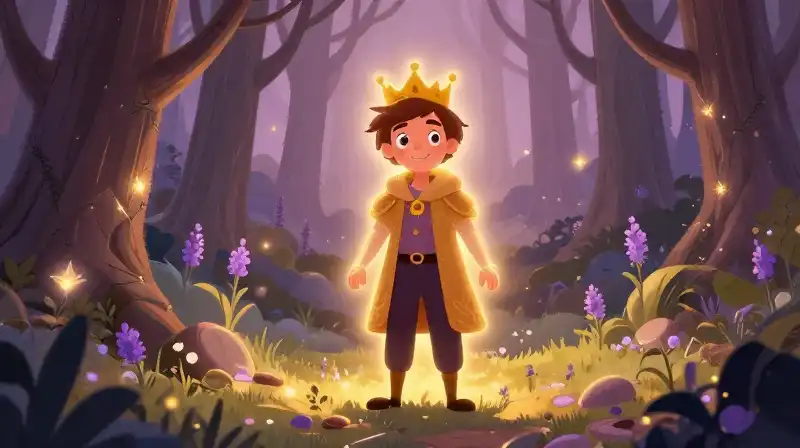
When we think of a “fairy tale prince,” our minds might conjure an image of gilded armor, a magnificent horse, and the inevitable hand-in-hand rescue of a princess. But the prince of a story is rarely just a title; he is a complex figure who serves as the pivot of a world, a mirror for our own ideals, and a vehicle for one of life’s most profound lessons—the journey from potential to becoming.
He is often seen as a romantic hero, a fixed point of courage and nobility. Yet, as storytellers have evolved, the prince has shed the weight of the crown to explore deeper truths about what it truly means to be worthy. From the noble heir of ancient kingdoms to the “thief, a rogue, and a total charmer” of modern folklore, the character represents a powerful tension between external status and internal character. For parents and educators looking to move beyond surface-level reading, the prince invites us to look beyond the sashes and jewels, examining the motivations and conflicts that make these storybook figures truly remarkable.
The Classic Archetype: Nobility and Unwavering Drive

The traditional prince typically embodies two primary traits: noble lineage and heroic agency. These characters are the foundation of the “happily ever after,” embodying a steady, unwavering commitment to a cause or person. Their status isn’t just clothing; it’s a burden or a purpose that drives their action.
The Ideal of Classical Virtue
In classical portrayals, the prince is often defined by his romantic devotion and moral clarity. Prince Eric, for instance, is depicted as a brave, romantic individual who risks his life purely out of the determination to find his mysterious rescuer [2]. This portrayal establishes a standard where a prince’s primary virtue is his dedication to a single goal—whether saving a person or restoring order.
Similarly, Prince Phillip [2] is noted for his intense persistence in winning Princess Aurora, an act he undertakes even when he faces disapproval from his father. Here, the title is matched by unwavering determination. When the role is expanded to include leadership, such as Prince Chrom of Ylisse [1], he serves as a core figure whose duty is to lead and protect, ensuring the future of his realm.
The Prince as Rightful Heir and Leader
The prince often symbolizes potential and the continuation of a lineage. We see this in Crown Prince Orlando [1], the rightful heir who leads the Partisans in his effort to dethrone his sister. The narrative functions here are important, as they explore themes of rightful governance and duty. On a more localized level of leadership, Prince Cesar [1] is described as the “mighty warrior-prince of Dunisia,” demonstrating that the classical prince is also a figure of physical and martial prowess.
Beyond the Crown: The Prince as a Learner and Seeker
Perhaps the most interesting evolution in children’s literature is the subversion of the traditional prince. Modern storytelling recognizes that true strength often lies not in inherited power, but in the hard-won internal growth of the character. In these versions, the prince serves less as a “doer” and more as a catalyst for profound internal change.
The Conflict of the Internal Kingdom
In tales involving curses or transformative magic, the prince’s journey is less about external battles and more about facing his own flaws. The Beast, a prime example of this evolution, is a prince whose internal conflict stems directly from his arrogance and selfishness. His “curse” is a metaphor for his own inability to love, requiring him to learn emotional maturity to break the enchantment [2]. His “prince-hood” is earned through self-awareness, not bestowed by birth.
The Prince Who Earned His Status
Another powerful theme is the prince who is *not* a prince by title, but by the quality of his heart. Aladdin, despite his impoverished beginnings, is considered a “true prince” because of his moral compass and spirit [2]. This trajectory is beautifully mirrored by Flynn Rider, or Eugene, in modern narratives. He is often introduced as an outsider—a “thief, a rogue, and a total charmer”—but his true identity as a “prince at heart” emerges through his actions [2].
This concept is further explored in characters like Aladdin, who must conceal his true identity [2], underscoring the thematic idea that authentic selfhood outweighs social standing. It also suggests that the prince’s value is defined by his willingness to embrace vulnerability and change, rather than simply fulfilling a pre-destined destiny.
Core Virtues: Devotion, Courage, and the Pursuit of Truth

Regardless of whether a prince is a nobleman or a charming rogue, a few core virtues consistently define their most compelling roles in children’s stories: unwavering devotion, fierce courage, and the fundamental search for truth.
The Power of Devotion and Sacrifice
The idea of selfless devotion is a hallmark of the modern prince. While Prince Florian [2] is noted for his fierce determination to track down and save Snow White, his devotion often reaches the level of profound sacrifice. Flynn’s willingness to risk his life for Rapunzel’s freedom, even when he has a criminal past, powerfully illustrates that the purest form of selflessness transcends social or ethical categorization [2]. Here, the prince embodies love as an active, sacrificial force.
The Search for Restoration and Understanding
For many characters, the prince’s role is to act as a Seeker—a figure driven to restore balance or find a lost truth. Prince Farron of the Kingdom of the Crystal Palace, serving as a main protagonist [1], represents this search. He is a seeker of restoration, guiding the narrative toward wholeness, whether it be the restoration of a lost kingdom or the restoration of a broken heart. Even in diverse media, the prince serves as a figure of profound leadership and moral inquiry, challenging the status quo through genuine kindness or sheer tenacity.
What Defines a Fairy Tale Prince? Addressing Common Questions
If you’ve ever wondered what truly constitutes a “fairy tale prince,” the answer lies in the intersection of their traits: the nobility of their intent, the scope of their courage, and the depth of their self-discovery. It is not about the sword they carry or the castle they inhabit; it is about the internal work they are willing to do.
What is a Fairy Tale Prince? (The Definitive Synthesis)
At its core, a fairy tale prince is a character whose journey from “potential” to “realization” provides a blueprint for moral growth. He is a character who demonstrates a value—be it love, sacrifice, or courage—that is greater than his title. He is the embodiment of a noble quest, whether that quest is physical (like tracking down Snow White [2]) or emotional (like learning empathy [2]).
Fairy Tale Prince Characters vs. Princesses: A Complementary Balance
While often viewed through the lens of romance, the prince and princess dynamic is fundamentally one of complement. The prince often provides the necessary outward momentum (the courage, the journey, the action), while the princess often provides the inner grounding (the wisdom, the emotional steadfastness, the purity of intent). Together, they demonstrate the balance required for a complete, meaningful story. The presence of the prince is often the impetus for the character arc of both protagonists.
The Last Lesson: Why Prince Archetypes Matter for Young Readers
For parents and educators, understanding the nuance of the prince is a valuable tool. By analyzing characters like Prince Charming—who judges individuals based on their personalities rather than their upbringing [2]—we teach children a vital lesson: worth is not externally validated. The prince offers a safe, magical framework to discuss complex human emotions like ambition, humility, and the courage required to admit one’s flaws.
The power of the fairy tale prince lies in his capacity to grow. He is the character who, in the quiet moments after the battle is won, sits with the burden of his change. He embodies the continuous striving for something better, whether it’s mastering a “Dragon Transformation ability” [1], winning a princess through persistence [2], or choosing compassion over a title. They show us that while birth might give us a starting point, it is character that ultimately decides our kingdom.
Sources
- List of fictional princes — en.wikipedia.org
- Among these 7 attractive fairy tales Princes which one are you? — medium.com
Frequently Asked Questions
What is a fairy tale prince?
At its core, a fairy tale prince is a character whose journey from "potential" to "realization" provides a blueprint for moral growth. He is a figure who demonstrates a value—be it love, sacrifice, or courage—that is greater than his title, embodying a noble quest that is either physical or emotional.
Related Articles