
The Little Red Cap: Decoding the Brothers Grimm Fairy Tale

Introduction
The color red, in children’s storytelling, is always vibrant—a sign of vitality, warning, or deep affection. Few colors evoke more complex feelings than the vibrant red of a tiny cap, the emblem of a girl venturing into the deep woods. While the world knows her primarily as Little Red Riding Hood, the tale we are exploring today, gathered and refined by the Brothers Grimm, holds a wonderfully precise and nuanced texture that offers much more than a simple cautionary tale. It is a narrative of deception, precise psychological manipulation, and a concrete, earned sense of justice.
The Grimm version, titled “Little Red Cap” (*Rotkäppchen*) [1, 2], transcends the simple trope of a girl being lured and eaten. It invites parents and educators to look closer at the tension, the specific mechanics of the wolf’s deceit, and the vital role of the red cap itself. By peeling back the layers of this historical narrative, we can find rich material for discussion—one that acknowledges the darkness while preserving a satisfying, concrete sense of moral order.
The Identity of Rotkäppchen: From Court Warning to Moral Instruction

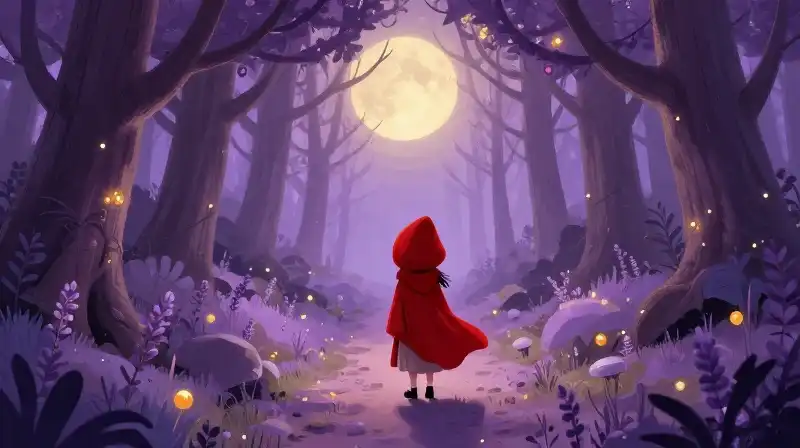
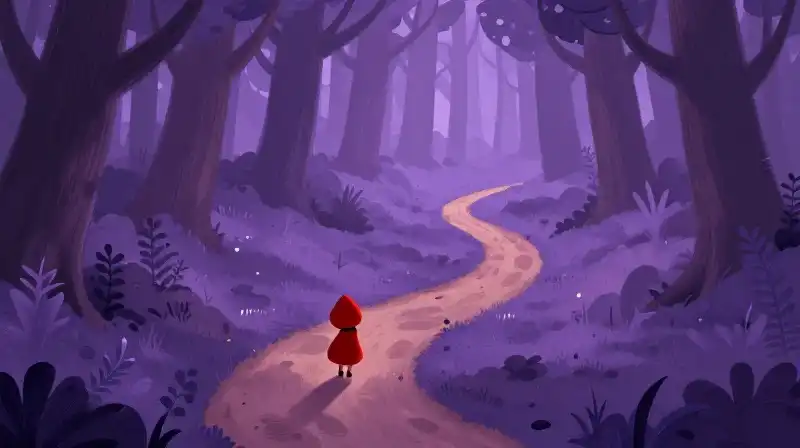
The naming alone tells us much about the tale’s journey. The Grimm brothers titled their work “Little Red Cap” because the name directly references the striking, distinctive red velvet cap her grandmother made for her [1, 2]. This detail is crucial for visualizing the narrative: the cap is not just an outfit; it is a tangible, specific artifact. The focus on the cap as a visual identifier anchors the story in a highly tactile reality that is perfect for shared reading.
Furthermore, the Grimm collection prioritized a clear moral lesson. They refined the story from the oral traditions they gathered, notably from Jeanette and Marie Hassenpflug, molding it into a lesson concerning obedience [1, 2]. This differs sharply from earlier versions, such as those by Charles Perrault, which were less about parental warning and more about serving as a sinister warning directed at the French royal court regarding predatory seducers [1, 3]. This shift shows how storytelling evolves—from a moral guide for adults to a complex, imaginative narrative for children.
The Mechanics of the Threat: Psychological Lures vs. Immediate Violence
The great difference between the Grimm and Perrault versions lies in the character of the threat. While Perrault’s wolf is often a swift, terrifying predator, the Grimm wolf is a master of psychological manipulation [1, 2]. The wolf does not immediately attack the child upon meeting her. Instead, he employs a cunning distraction that relies on the environment of the woods.
He persuades Red Cap to leave the safe, established path by describing the beauty of the forest: he points out dancing sunbeams, sings of beautiful birds, and praises the lovely flowers growing deep in the woods [1, 2]. This specific tactical choice—luring her off the path through verbal flattery and distraction—elevates the narrative, transforming the story from a simple “Don’t stray” warning into a study of trust, temptation, and the subtle power of temptation itself.
Grimm vs. Perrault: A Comparison of Narrative Stakes
Understanding the structural divergence between the two major versions is essential for grasping the cultural weight of the tale. The contrast between the two versions highlights how changing the ending changes the meaning of the story entirely.
| Feature | Brothers Grimm (Little Red Cap) | Charles Perrault (Little Red Riding Hood) |
|---|---|---|
| Setting the Scene | Mother sends child with cake and wine; explicit warning about staying on the path and not breaking glass [1, 2]. | A more direct, often more immediate meeting with the wolf [3]. |
| Wolf’s Action | Psychological distraction (sunbeams, flowers) to lure her off the path [1, 2]. | More direct predatory behavior [3]. |
| The Ending | A male rescuer (huntsman/woodcutter) arrives, cutting the wolf open, leading to definitive justice [1, 2, 3]. | Tragic, with the girl being eaten, serving as a pure cautionary tale of innocence lost [3]. |
The Symbolism of the Cap and the Woods
The red cap itself is a powerful symbol. While we often associate the bright red color with warning or danger, the Grimm narrative ties it to a deep sense of familial connection—it was made by her grandmother [1, 2]. This suggests that the cap is a marker of identity, yet it is also what draws the predator [3].
The woods, in this tale, are not just a backdrop; they are a dynamic stage. They represent the wilderness of the unknown—a place of both beauty (the birds and flowers the wolf points out) and mortal risk. The path is civilization, the woods are temptation, and the woods force Red Cap to make a choice that determines her fate.
Agency, Justice, and the Concrete Resolution
Where the Grimm version shines for young readers is in its sense of a conclusive, tangible resolution. Unlike the tragic endings of earlier tales, the Grimm narrative provides a satisfying sense of restored order. After the huntsman saves her, Little Red Cap, exhibiting a surprising measure of agency, fills the wolf’s stomach with heavy stones [1, 2].
The subsequent climax—the wolf waking, attempting to flee, and falling to his death under the weight of the stones—provides a concrete, physical form of justice. This is not a fading fear; it is a measurable, undeniable consequence. Furthermore, a lesser-known secondary episode reinforces this theme of learned caution: after being tricked by a second wolf, the now wiser girl goes directly to her grandmother, where they successfully drown the creature in boiling sausage water [1, 2]. These endings provide young readers with a powerful message: vigilance, combined with resourcefulness, leads to victory.
Understanding the “Red Hood” in Modern Storytelling
The red garment is a detail that, in the oral tradition, was not always present [3]. Early versions sometimes featured ‘bzou’ (werewolves) instead of the standard wolf, further complicating the nature of the threat. The evolution of this story is a clear path from a generalized fear of the wild (bzou) to a specific, calculated threat (the wolf) tied to a specific character (Little Red Cap) and a specific societal warning. For educators and parents, recognizing this evolution allows for richer discussion about how societal concerns—like predatory behavior or the perils of deviation—are translated into the timeless language of fairy tales.
Synthesis: Why This Tale Resonates Today
The enduring power of “Little Red Cap” lies in its multifaceted nature. It is a tale that respects the darkness of the forest while insisting upon the possibility of a moral, tangible redemption. It moves beyond the simple binary of good versus evil by detailing the psychological chess match between the cunning wolf and the vulnerable girl. For parents seeking stories for bedtime or classroom discussion, the Grimm text offers concrete tools: discussions about obedience, the power of observation (as the wolf is noted for his manipulation of the sunbeams), and the satisfying reality that even the deepest danger can be met with courage and clever justice.
Sources
- Grimm 26: Little Red Cap — sites.pitt.edu
- Little Red Riding Hood — grimmstories.com
- Little Red Riding Hood — en.wikipedia.org
Related Articles