
Bearskin: The Grimm Tale of Poverty, Wealth, and Transformation

Introduction
The Brothers Grimm’s “Bearskin” is more than just a cautionary tale about a man who acquires a beautiful bride through a cursed bargain; it is a richly complex portrait of desperation, social judgment, and the grueling price of self-improvement. Originally documented as “Der Teufel Grünrock” (The Devil Greenjacket), this story serves as a powerful example of the “monstrous bridegroom” trope, but the transformation of the protagonist is far grimmer than a traditional prince. Rather than magically turning handsome, his shift is a visceral consequence of neglect and greed. For parents and educators seeking a story that moves beyond simple “good vs. evil” binaries, Bearskin offers a genuinely illuminating exploration of human condition—the high cost of instant wealth, the rigidity of societal expectations, and the profound power of quiet, disciplined change [1, 2, 3].
What is the Story of Bearskin About?
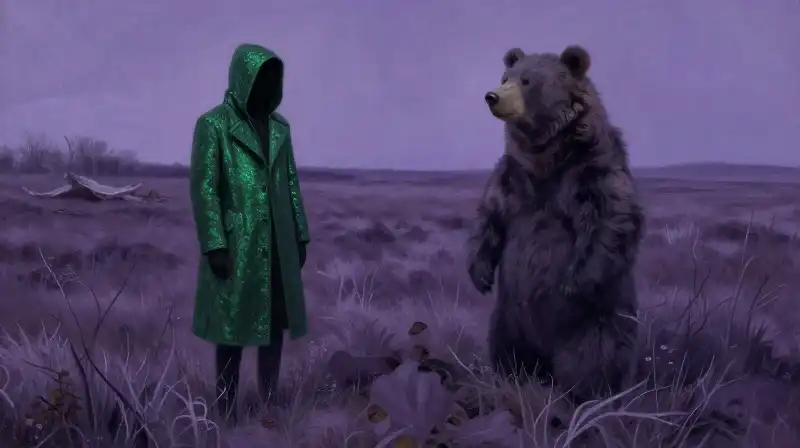 At its core, Bearskin recounts the narrative of a soldier left adrift following the end of a war, forced into a pact with the Devil himself. Facing utter destitution and starvation on a desolate heath, the protagonist kills a charging bear, only for a sinister figure in a green coat to appear [2, 3]. This encounter seals a Faustian bargain: in exchange for the bear’s skin (which becomes his cloak and bed) and the coat’s constant “fullness” of money, Bearskin must endure seven years of rigorous self-denial. He is forbidden to wash, cut his nails, or even utter the Lord’s Prayer [2, 3]. The narrative charts his physical decay as his poverty turns into deliberate squalor, culminating in a state of extreme filth where his face is so encrusted that “if cress had been sown on it, it would have come up” [2, 3]. Yet, despite his grotesque exterior, Bearskin remains a figure of moral strength, demonstrating compassion by saving an old man and his daughters from prison and starvation [2, 3]. The ultimate triumph is achieved not through the coat’s magic, but through the hero’s self-purification. After seven years, he sheds the “monster” of his neglect, cleanses himself, and restores his human form, allowing him to win his bride through the symbolic joining of the two halves of a ring [2, 3].
The Symbolism of Wealth and Transformation
The story is built upon a profound irony: the protagonist becomes monstrous not because the Devil cursed his face, but because of his refusal to adhere to basic social standards of purity and hygiene. This makes the transformation of Bearskin a powerful allegory for the dangers of unchecked desperation and the critical importance of self-discipline.
The Green Coat: The Price of Greed
The Devil’s green coat is the primary symbol of illicit, immediate wealth. It promises effortless riches, a temptation that lures a man driven by existential hunger. The “fullness” of the coat represents the instantaneous gratification of survival, but it comes with a “monstrous” price—seven years of enforced filth and isolation [2, 3]. The coat symbolizes the fleeting nature of easy fortunes, which require a moral tax that often manifests as societal regression.
Bearskin: A Study in the Monster and the Man
Bearskin, in his initial phase, is a visual representation of desperation. His dirty appearance is a mirror reflecting a socio-economic hardship [1, 2, 3]. He embodies the plight of men during periods of military conscription or economic collapse, highlighting how extreme poverty can lead to the complete abandonment of dignity. Yet, his moral choices—saving the old man and his daughters—reveal that while his appearance is “monstrous” to society, his internal character remains profoundly humane [2, 3]. His eventual cleansing represents the thematic power of discipline and spiritual restoration over inherited fortune.
Societal Judgment vs. Filial Duty: The Sisters’ Archetypes
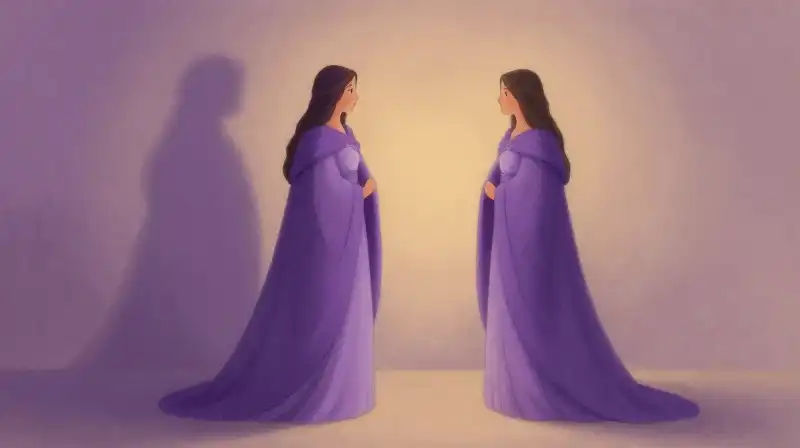
In the traditional framework of the “monstrous bridegroom,” the heroine’s family acts as the ultimate test of the protagonist’s inherent worth. In Bearskin, the sisters fulfill this archetypal role, embodying the societal pressure and conditional acceptance that men—particularly the “monster”—must face. Their reactions are a clear examination of how society often judges outward appearance over inner goodness [2, 3].
The Rejection (The Eldest and Second Daughters)
The eldest and second daughters represent the prevailing societal view: appearance dictates worth. They reject Bearskin, viewing him purely through the lens of his monstrous, filthy state [2, 3]. This represents the cold, often unforgiving nature of social structures, where a change in fortune or a supposed “stain” (in this case, extreme neglect) is grounds for immediate dismissal. This serves as a reminder of how quick we can be to judge characters based on surface-level observations.
The Acceptance (The Youngest Daughter)
The youngest daughter stands in stark contrast. Her acceptance is rooted not in a magical cure, but in filial duty and profound gratitude [2, 3]. She recognizes the man beneath the filth—the compassion and moral integrity—demonstrating that true human connection can transcend societal “monstrous” categories. She represents the possibility of kindness being the only effective counter to rigid judgment.
The Dark Irony: The True Cost of the Bargain
While Bearskin achieves a successful, triumphant ending by winning his bride, the tale concludes with a chilling, dark irony that elevates it from a simple fairy tale to a profound allegory [2, 3]. In a final twist, the Devil reveals his masterfully orchestrated scheme: the emotional distress caused by Bearskin’s horrific appearance, and the subsequent suicides of the sisters, granted the Devil two souls for the price of the hero’s one [2, 3]. This grim revelation is a crucial element for readers and educators to understand, as it prevents the tale from settling into a comfortable, simplistic resolution.
The dark ending reframes the entire story. The “victory” of Bearskin is actually a devastating double-edged sword. The Devil wins not through force, but through the emotional turmoil and resulting “unintended” consequences of the human condition—judgment, desperation, and the overwhelming pressures of the social world. This dark perspective lends the story its lasting power and makes it a fertile ground for discussing moral ambiguity.
Addressing Common Questions: Deeper Meaning and Context
When exploring “Bearskin,” it is common for readers to wonder about its broader symbolism and historical roots. These questions help ground the fantastical elements of the Grimm tale in real-world context:
What does Bearskin symbolize?
Bearskin symbolizes the thin line between human dignity and societal definition. He is the living embodiment of how external circumstances (poverty, economic crisis) can force a “monstrous” presentation, and how internal moral character remains constant. The contrast between his dirty appearance and his acts of bravery underscores the idea that true “skin” is often not what we see on the outside, but what is formed by one’s discipline and kindness [1, 2, 3].
Historical Context and Variations of the Tale
The tale likely reflects the difficult socio-economic realities faced by German soldiers and ex-military men during periods of instability [1]. Its endurance across global folklore is evident in various adaptations. For instance, Tom Davenport’s Americanized version shifts the setting to post-Civil War Virginia, changing the source of the protagonist’s crisis from military duty to the failure of a farm [1]. Furthermore, adaptations in Russia and Japan often alter the grim Grimm ending, sometimes providing a more “optimistic” resolution for modern audiences [1, 2].
Synthesis: Why This Tale Matters
Bearskin is remarkable precisely because it refuses to offer a gentle, easy ending. It challenges the reader to look past the spectacle of the Devil’s green coat and the filth of the protagonist’s skin, and instead, look at the difficult journey of human transformation. For young readers, it can serve as a powerful conversation starter about resilience—how growth requires discomfort, discipline, and the refusal to give up, even when the world insists you look like a monster. For parents and educators, it provides a rich, morally nuanced text that encourages discussion of the high price of instant gratification and the vital importance of looking at the heart of a character, rather than just their external presentation.
Sources
- Bearskin (German fairy tale) — en.wikipedia.org
- Bearskin — grimmstories.com
- Grimm 101: Bearskin — sites.pitt.edu
Frequently Asked Questions
What is the story of bearskin about?
The narrative recounts the story of a soldier who, facing utter destitution after a war, makes a Faustian bargain with the Devil for riches and a magic coat. In exchange for this wealth, Bearskin must endure seven years of rigorous self-denial and physical neglect. The ultimate triumph of the tale is achieved when he undergoes self-purification, cleansing his neglected form to win his bride.
What does bearskin symbolize?
Bearskin symbolizes the thin line between human dignity and societal definition, representing how economic hardship can force a monstrous presentation. He embodies the idea that internal moral character remains constant despite visible socio-economic struggles. The story suggests that true worth is not determined by appearance, but by one's discipline and kindness.
Related Articles