
Snow White and Rose Red: The Classic Story Explained

Introduction
There are fairy tales that comfort with their familiar beats of sleep and sweet reprieve, and then there is *Snow-White and Rose Red*—a story that captures the wild, complicated nature of childhood. It is a narrative defined by contrast: the gentle domesticity of one girl against the boundless energy of another, the initial warmth of a creature against the sharp avarice of a wicked dwarf, and the stark duality of winter’s frozen enclosure against the promise of a spring’s transformation. This tale, first captured in modern collections by the Brothers Grimm [1], offers more than just a delightful journey for children; it presents a rich tapestry of contrasting characters, primal forces, and a profound lesson in the cost of ungrateful spite.
The Origins of Contrasts: A Tale of Two Sisters
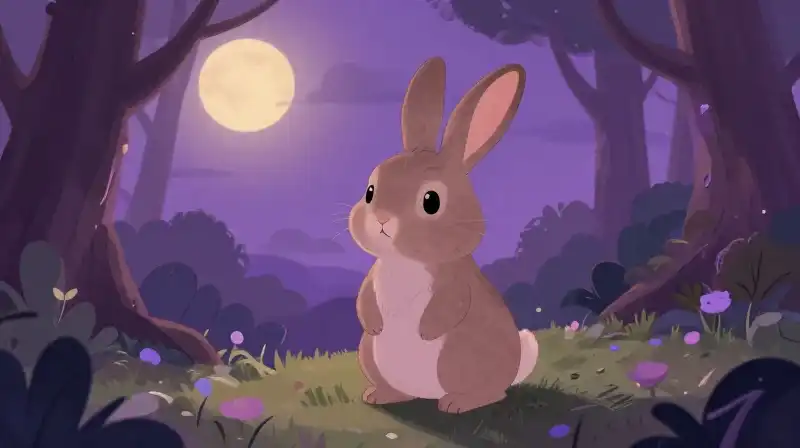
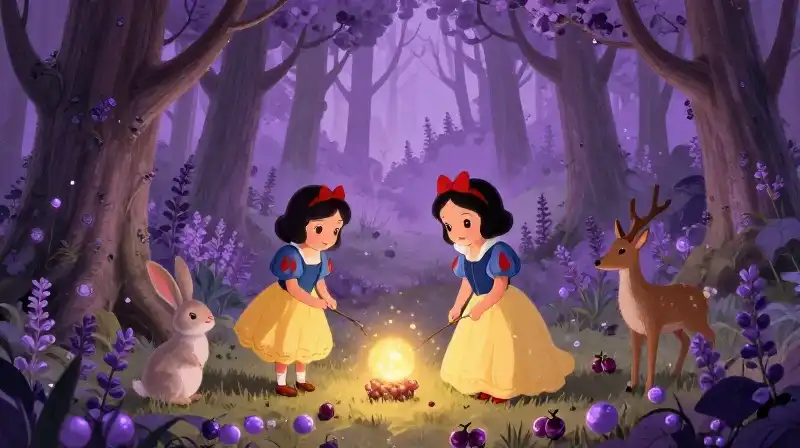 At its heart, *Snow-White and Rose Red* is the story of complementary opposites. The tale introduces two daughters, whose very names signify their natures. Snow-White is portrayed as quiet and reserved, preferring the calm of indoor tasks like reading and maintaining the household [2]. She represents the thoughtful, introspective side of childhood. Conversely, Rose-Red is a bright, spirited child, one who thrives on the energy of the great outdoors and the freedom of the meadow [2]. The story immediately establishes a connection between these children and the natural world, emphasizing innocence. When the girls gather berries in the forest without any mishap, they are treated as friends by small creatures, such as a little hare and a roe [2]. This initial harmony with nature serves as a poignant backdrop to the deeper, more dramatic conflicts that await them, specifically the shift from the peaceful, snowy months to the harsh realities of winter.
A Transformation in Winter: The Bear and the Dwarf
As winter takes hold, the narrative takes a turn that introduces the tale’s most significant figures. The conflict begins when Rose-Red, in a moment of curiosity, opens the door and finds a half-frozen bear who asks for shelter [2]. This arrival transforms the family life, as the children quickly grow familiar with their “black friend” [2]. Initially, the relationship is light and playful. The children spend time amusing themselves and playing tricks on the bear, including playfully using a hazel-switch to tease him [2]. However, the bear’s warmth soon gives way to a complex social dynamic when he reveals his true purpose: he must leave to guard his precious treasures against a malicious figure—a wicked dwarf whose original curse had turned him into a bear [2]. The subsequent summer acts as a series of trials and tests of loyalty. Despite the children’ willingness to aid the dwarf—such as rescuing him when his beard gets caught in a tree, or later saving him from a dangerous eagle and a fish [2]—the dwarf remains utterly without gratitude. His ungrateful nature eventually reaches a breaking point.
The Peak of Avarice: The Dwarf’s Transformation
 The climax of the story unfolds when the children disrespect the dwarf by cutting his beard and losing his hair in a fishing line. Enraged and fueled by their casual disregard for his suffering, the dwarf lashes out toward the bear. In a moment of terrifying malice, the dwarf urges the bear, “Dear Mr. Bear, spare me, I will give you all my treasures; look, the beautiful jewels lying there! Grant me my life; what do you want with such a slender little fellow as I? you would not feel me between your teeth. Come, take these two wicked girls, they are tender morsels for you” [2]. This moment is the ultimate confrontation between a creature of nature and an embodiment of petty, destructive greed. The bear does not succumb to the dwarf’s threats or lure. Instead, the bear proves his own moral and physical strength, killing the dwarf with a powerful swipe of his paw. This action serves to instantly break the powerful curse or spell [2], leading to a swift transformation: the dwarf is no longer a wretched sorcerer but a Prince [2].
The Two Ends: Finding Happiness in Different Ways
The narrative brings a powerful conclusion that is beautifully balanced. Snow-White, who remained indoors and was perhaps more observant of the greater shifts, ends up marrying the newly transformed Prince [2]. Rose-Red, the lively spirit, also finds her happily ever after, marrying the Prince’s brother [2]. This structure—two sisters, two distinct yet equally valid paths to fulfillment—is a classic motif seen in numerous cultural adaptations, such as the Dutch version “Rozerood en Lelieblank” or the Latvian “Lācis — princis” [1]. The ending reaffirms that even within a story focused on darker elements, redemption and love are the ultimate restorative powers. While the story contains scenes of peril and the threat of consumption, the final resolution is one of complete triumph over spite.
Understanding the Characters and Themes
The power of *Snow-White and Rose Red* lies in its specific character archetypes. This version allows for a nuanced look at personality:
The Contrast Between Innocence and Agency
The dual nature of the sisters is more than a simple plot device; it explores different forms of human agency. Snow-White represents the internal world—the quiet power of contemplation, evidenced by her preference for reading. Rose-Red represents external agency—the power of play, activity, and engagement with the world. By offering two outcomes, the tale suggests that both forms of personality are equally valid paths to happiness.
The Symbolism of the Bear and the Dwarf
The Bear is a force of nature—wild, powerful, and initially kind. He is the protector of the home. The Dwarf, however, is the personification of petty avarice. He cannot find enough, and his greed makes him vengeful. The Bear’s ability to overcome the Dwarf is a thematic declaration: the forces of nature (and genuine strength) defeat the destructive forces of greed and envy.
Addressing Reader Questions: What Happens to Rose Red in Snow White?
In the original narrative, Rose Red is not sacrificed or “lost” to Snow-White; rather, her path diverges from the initial setup. She finds her own separate and equally fulfilling destiny by marrying the Prince’s brother [2]. Her role is not simply that of a sidekick, but a distinct agent in the family structure, demonstrating that she possesses the capability for her own independence and success [2].
The Enduring Appeal: Why This Tale Resonates Today
*Snow-White and Rose Red* (ATU 426) [1] remains a vital piece of folk art because it is deeply human. It explores the complexities of gratitude and the devastating consequences of selfishness. Whether seen in contemporary adaptations, such as Patricia C. Wrede’s modern novel *The Shadow of the Bear* [1], or in classic cinematic interpretations, the story’s core message—that the greatest power is found not in glittering jewels, but in the refusal to be consumed by spite—endures. It teaches children that even the deepest darkness (represented by the wicked dwarf and the freezing winter) can be broken by kindness and courage.
Sources
- Snow-White and Rose-Red — en.wikipedia.org
- Snow-White and Rose-Red — grimmstories.com
Frequently Asked Questions
What is the story of Snow-White and Rose-Red?
The story centers on the contrasting personalities of two sisters, quiet and reserved Snow-White, and spirited and outdoorsy Rose-Red. The narrative involves a major conflict when a half-frozen bear appears, guarded by a wicked and ungrateful dwarf who holds great treasures. The bear defeats the dwarf, who transforms into a Prince, leading both sisters to happy conclusions.
What happened to Rose Red in Snow White?
Rose-Red finds her own separate and fulfilling destiny, marrying the Prince’s brother. This outcome demonstrates her agency and success, as she is portrayed as a distinct figure rather than merely a sidekick in the narrative. Her happy ending follows the same theme of fulfillment as Snow-White, though through a different path.
Related Articles