
The Charming Hero: Who Is Prince Phillip in Sleeping Beauty?

Introduction
When we think of the classic Disney fairy tale of Sleeping Beauty, the image of the enchanted castle and the slumbering princess often fills our minds. But the story is not just about waiting for a prince; it is about the character who arrives—Prince Phillip—and his struggle to bring freedom, not just a kiss, but genuine change. While sometimes distilled down to a romantic figure in a sweeping gesture, Phillip is far more complex. He embodies the tension between royal duty and personal desire, making his journey a remarkably modern tale for a timeless storybook setting.
For parents and educators seeking stories that go deeper than a simple “good vs. evil” narrative, Phillip offers a fascinating study. He is the quintessential Romantic figure who is brave enough to risk everything—his freedom, his father’s stubborn approval, and the stability of the kingdom—all for a genuine connection to Aurora [1].
The Archetype: From Perrault’s Original Tale to the Animated Screen
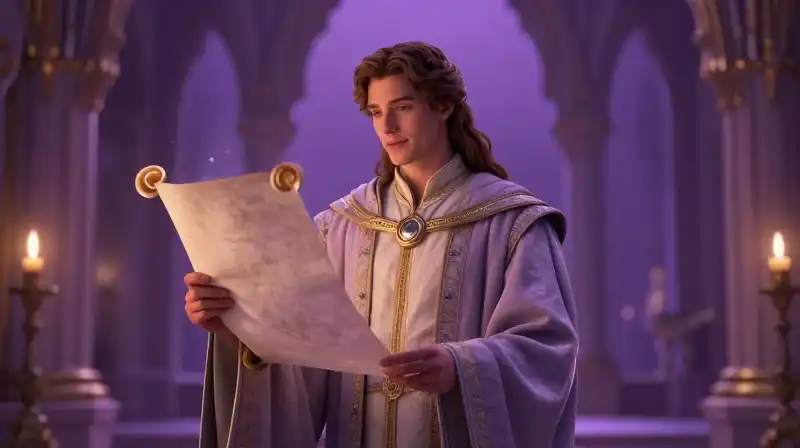
To understand Phillip’s significance, we must look back at the source material. He is the Disney interpretation of the hero from the 1697 fairy tale La Belle au bois dormant, written by Charles Perrault [1]. However, when the 1959 animated feature brought him to life, Phillip was shaped to serve a specific narrative purpose: providing a potential political alliance for his kingdom, as his father, King Hubert, intended [1].
In the narrative of the animated film, his initial presentation is tied to this arrangement, yet his development pivots entirely on his emotional truth. Phillip’s journey is not merely about waking a princess; it is about discovering that a union based on deep love surpasses any political contract. This choice, which occurs when he meets Aurora disguised as a simple peasant girl in the forest, defines his true character [1].
The Development of a Progressive Prince
One reason Prince Phillip is often singled out in children’s literature is his surprisingly nuanced personality for a classical hero. He is frequently cited as one of the first Disney princes to possess a “fully fledged” personality, rather than simply being a silent, dutiful knight [1, 2]. He is given traits that ground him in relatable human complexity, such as a certain sass and a charming wit [1, 2].
Crucially, his internal motivation extends far beyond romance. He displays genuine distaste for institutional oppression and constraint. His “dislikes” are explicitly shown to include “imprisonment” and “arranged marriages” [1]. This inner conflict highlights his resistance to the rigid expectations of royal society, marking him as a progressive figure even when trapped within a traditional fairy tale framework [1].
Tools of Valor: The Symbolism of the Dagger and Sword
In many heroic tales, the weapon is a symbol of raw power. For Prince Phillip, his tools of valor—the specific mention of the dagger and the “Sword of Truth”—serve a deeper symbolic function [1]. These items are not just instruments for combat against the forces of Maleficent; they represent the power of moral integrity and courage over magical deception. To defeat a spell of evil, Phillip cannot simply rely on brute strength; he must use these specific, symbolically charged tools of truth [1].
His confrontation with Maleficent—a sequence involving escaping her fortress and battling her magical forces, culminating in the defeat of the great dragon—is the narrative moment where his inherent moral fortitude is tested [1, 2]. The “Sword of Truth” functions as a powerful metaphor for the necessity of authentic courage when facing magical or systemic tyranny.
The Connection of Destiny: Phillip and Aurora’s Story
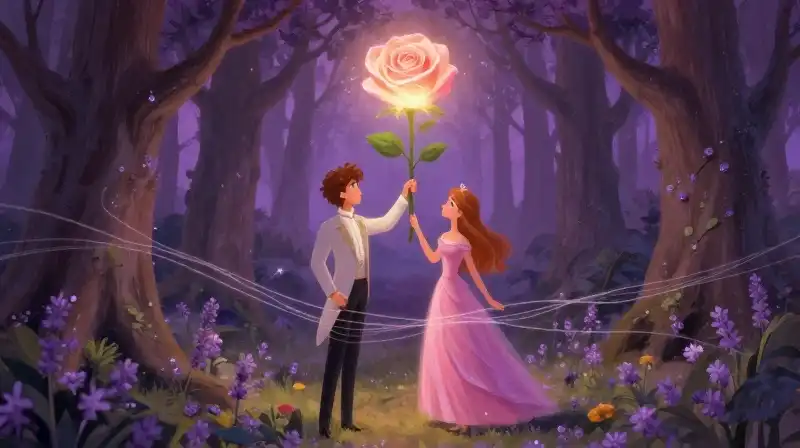
The relationship between Phillip and Aurora is framed by a sense of destiny. Although their union was originally intended as a political maneuver, the story asserts that their paths were “meant to cross” regardless of the initial arrangement [1, 2]. This thematic grounding is vital: it suggests that authentic connection transcends human planning, social standing, or political obligation.
This idea is consistent across various forms of his appearances. From the original animated film to subsequent narrative expansions like Disney Princess Enchanted Tales: Follow Your Dreams and Kingdom Hearts: Birth by Sleep, the core principle remains the same: Phillip’s devotion is the catalyst that breaks the curse and reclaims Aurora’s agency [1]. He is the hero who risks not only the curse but also the very approval of the establishment to honor a destined, genuine love [1].
Addressing Common Storybook Questions
In the realm of beloved children’s literature, many small details can lead to big questions for young readers and their families. Here, we address some of the most frequent queries regarding this charming hero.
Is Prince Phillip his actual name?
While the name “Phillip” is deeply rooted in the Disney character, many Disney characters are given names that carry specific thematic weight within the story rather than being common, historical titles. His name is intrinsically linked to his role as the heroic figure destined to wake Aurora. However, in the broader tradition of fairy tales, “Prince Phillip” is the recognized designation for the character as adapted by Disney [1].
Which Disney princess is not royal by birth or marriage?
The world of Disney is full of royal lineage, but the concept of non-royal or unconventional royalty often serves to ground characters. The Little Mermaid and Moana both feature protagonists who achieve leadership or status through merit and adventure rather than birthright. However, within the specific context of the stories Phillip is most associated with, Aurora is the one who, while a princess, finds her true self outside the constraints of her initial, pre-arranged royal expectations [1].
A Note on Consistency: Phillip Across the Disney Universe
One of the most reassuring aspects of Prince Phillip’s longevity is his persistence across diverse media. He is not confined to a single film; his character can be seen in everything from sprawling narrative expansions to specific theme park attractions [1]. This consistent portrayal ensures that whether a child sees him as a cinematic figure or an element of an elaborate world, the core traits—courage, commitment to authentic love, and progressive spirit—remain stable [1].
Why Prince Phillip Matters for Modern Storytelling
Prince Phillip offers a powerful model of the hero who is both traditional and modern. While he wears the crown and wield the ceremonial dagger, his heart is rooted in a deep understanding of individual freedom. He proves that a true hero is not defined by the ease of their path, but by the moral complexity of their choices—choosing a person over a political alliance, and choosing truth over a comfortable lie. For children, Phillip teaches that while duty is important, genuine love and personal conviction are the true forces capable of breaking even the deepest of curses. He is a testament to the fact that the most magical stories often involve the most human struggles.
Sources: Prince Phillip | Disney Wiki | Fandom — https://disney.fandom.com/wiki/Prince\_Phillip
What do you love about Prince Phillip? : r/disneyprincess — https://www.reddit.com/r/disneyprincess/comments/1db6mhu/what\_do\_you\_love\_about\_prince\_phillip/
Sources
- Prince Phillip | Disney Wiki | Fandom — disney.fandom.com
- What do you love about Prince Phillip? : r/disneyprincess — reddit.com
Frequently Asked Questions
Is Prince Charming his actual name?
The article focuses on Prince Phillip and does not mention Prince Charming. It states that while the name "Phillip" is deeply rooted in the Disney character, "Prince Phillip" is the recognized designation for the character as adapted by Disney.
What Disney princess is not royal by birth or marriage?
The article mentions that protagonists in *The Little Mermaid* and Moana achieve status through merit and adventure rather than birthright. Within the context of the stories associated with Phillip, Aurora is noted for finding her true self outside of the constraints of her pre-arranged royal expectations.
Related Articles