All About the Two-Tailed Siren: Myth, Symbols, and History

Introduction
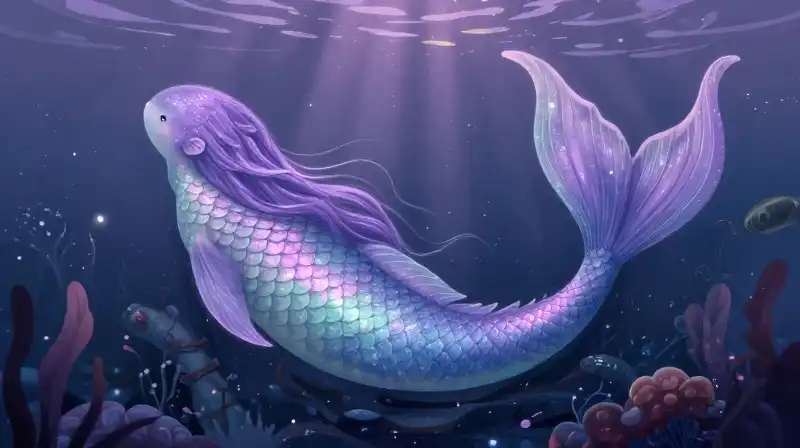
Close your eyes and picture a creature unlike the standard, single-tailed mermaid. This is not merely a fantastical being from a storybook; this is the Two-Tailed Siren—a figure laden with ancient symbolism, shifting identity, and a powerful, alluring history. With two distinctive tails trailing in the waves, this mythical being, often referred to as a *Sirena bicodula* [2], has been a cornerstone of European folklore, representing everything from dangerous temptation to profound spiritual balance. If you are looking to bring deeper meaning into your stories, or simply want to understand the powerful legacy of this captivating figure, we invite you to dive into the myths, the symbols, and the way this siren has transitioned from the deep sea to the world of modern design.
Myth and Distinction: Siren vs. Mermaid
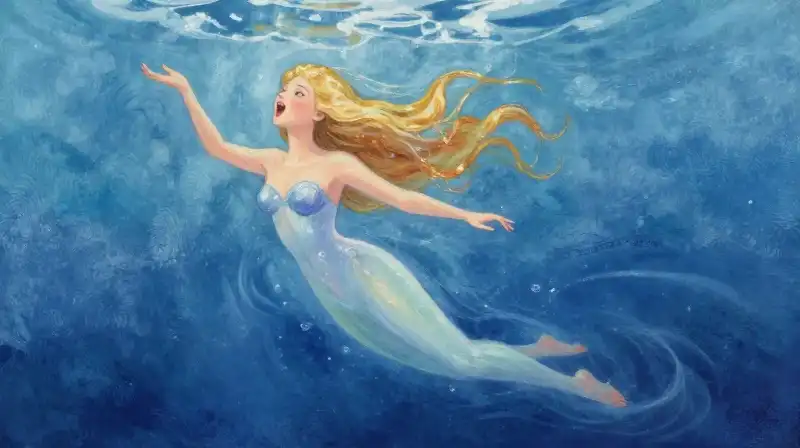
The confusion between a Siren and a Mermaid is common, but in mythology, their origins and characteristics are quite distinct. While both live near the water, their forms and functions tell different tales of the ancient world.
The True Siren Archetype
In many traditions, the Siren is not a creature, but an archetypal entity defined by its voice. Traditional sirens were often described as alluring half-woman, half-bird creatures [2, 3]. Their power lay in their enchanting singing, a siren song designed to lure sailors to their inevitable, tragic deaths [2, 3]. Figures like the daughters of Phorcus or Achelous embodied this seductive power, using their song to draw others toward peril [2]. They represent the irresistible allure of danger and the power of a voice to dictate fate.
European Variations and Transformation
As we move across European landscapes, the siren figure evolves, sometimes taking on elements of mermaids but retaining a core link to transformation. Consider the Melusine, a creature found in European mythology that resembles a siren or mermaid, but specifically inhabits freshwater and is often depicted with twin tails [2]. The Melusine is a maiden whose life involves partial transformation, sometimes changing into a siren while immersed in the water, adding a layer of fluid boundary between human and magical realms [2]. In modern Greek language references, the figure known as a *grogona* specifically denotes a two-tailed mermaid, often depicted as an evil seductress and documented in Cretan embroidery [2].
| Feature | Traditional Siren | Melusine | Modern Two-Tailed Siren (grogona) |
|---|---|---|---|
| Primary Form | Half-woman, Half-bird | Water maiden (transformation) | Two-tailed mermaid |
| Key Power | Enchanting, lethal song | Water-based transformation | Symbolic duality/Seduction |
| Cultural Role | Cautionary tale of temptation | Spirit of a freshwater environment | Powerful, mysterious figure |
The Symbolism of the Double Tail: Duality and Balance
The most striking element of this creature is the twin tails, and this feature is the key to unlocking its deeper symbolic meaning. Unlike a single tail, the two tails represent profound dualities within the tales and the minds of those who create them [2].
The Alchemical Mirror
In various alchemical and mythological representations, the two tails serve as a visual metaphor for fundamental pairings. They can symbolize the union of opposing forces—such as water and earth, or the interconnected concepts of body and soul [2]. This duality suggests that the siren is not simply a beautiful temptress, but a being of profound complexity—a balance of opposites. She embodies the tension between desire and consequence, or the wildness of nature and the human need for connection.
The Siren as a Cautionary Tale
While the siren is undeniably alluring, her historical function in folklore is often as a warning. The narratives surrounding sirens invariably involve a lesson in choice and self-control; they represent the seduction and danger that can come from yielding to unchecked desire [2]. This makes the siren an excellent figure for discussing the difference between attraction and risk in children’s literature, helping young readers understand that powerful beauty can carry a powerful warning.
From Myth to Modern Icon: The Starbucks Siren
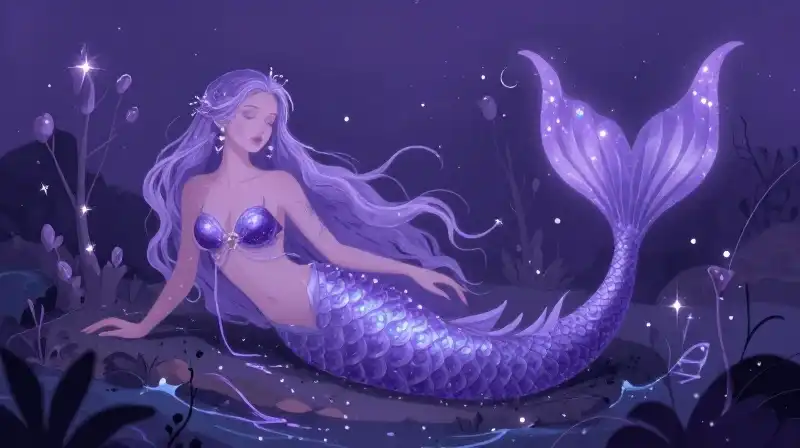
The power and mystique of the two-tailed siren have managed to escape the depths of myth and find a place in modern corporate design. This transition is a fascinating study in how a powerful, ancient archetype can be repurposed for modern meaning.
In 1971, Terry Heckler, a co-founder of Starbucks, created the siren icon [1]. While the company utilized vintage marine illustrations for its design, the choice of a two-tailed figure is deeply rooted in its mythological accuracy: in Greek mythology, a creature with two tails is correctly identified as a siren, not a mermaid [3]. The siren figure was chosen because it is both captivating and mysterious, perfectly embodying the allure of the coffee experience [1]. It took a figure traditionally used to lure sailors to their doom and transformed it into a symbol of alluring comfort and exotic mystery [1, 2]. This adaptation illustrates how themes of irresistible magnetism—whether toward a dangerous sea or a perfect cup of coffee—are timeless.
The Two-Tailed Siren in Storytelling and Education
If you are writing a bedtime story or planning an educational activity, understanding the nuances of the two-tailed siren offers more than just a cute illustration; it offers a thematic framework. The siren is a rich source of material for exploring conflict, beauty, and choice.
Exploring Themes for Kids
When using the two-tailed siren in a story or classroom setting, you can ground your analysis in these themes:
- The Tension of Choice: A story featuring a siren does not always need a tragedy. It can explore a moment where a character must choose between a comfortable, alluring path (the siren’s song) and a difficult, safer path. This is a concrete way to discuss morality.
- Nature’s Power: Since the creature lives at the intersection of water, earth, and human desire, she is a perfect character to discuss the balance and sometimes overwhelming power of the natural world.
- Inner Duality: The concept of two tails is a wonderful tool for illustrating that every person has both a “day side” and a “night side,” or internal strengths and weaknesses. The siren represents the beautifully complex self.
Navigating the Danger: Age-Appropriate Lore
Because the siren figure carries a weight of danger in mythology, educators must approach the material with care. For younger children, focusing on the *allure* and the *beauty* of the creature (the mesmerizing song, the shimmering tails) is more effective than focusing on the lethal outcome. For older children, the full complexity—the seductive danger, the moral weight, the tension—can be explored in deeper thematic ways.
Conclusion: The Enduring Allure
The Two-Tailed Siren is far more than a splash of mythical color or a piece of corporate branding. She is a living embodiment of powerful contrast—the beautiful and the deadly, the natural and the modern, the tempting and the cautionary. She stands as a permanent reminder that the most compelling stories are often found at the intersection of opposing forces. Whether she is singing in the crashing waves of an ancient tale or appearing as a captivating symbol in a modern logo, the siren invites us to look closer, to explore the shadows alongside the light, and to appreciate the rich, messy beauty of duality.
Sources
- The Story of the Siren - About Starbucks — about.starbucks.com
- Two Tailed Mermaids — thebeastiary.org
- A Mermaid with Two Tails? — medium.com
Related Articles