Baba Yaga: How This Iconic Witch Shapes Tales of Courage and Kindness

Introduction
If you have ever encountered a truly terrifying, yet oddly essential, figure in the world of children’s folklore, you have likely faced Baba Yaga. She is not merely “the witch” as Western tales might depict; she is a complex, deeply rooted entity from East Slavic tradition, primarily identified as a “bony-legged” figure [1]. For parents, educators, and story-lovers, Baba Yaga presents a fascinating challenge. She embodies both the primal fear of the woods and the strange wisdom that gatekeepers often possess. In the tales collected in the late 18th century, she often serves as a powerful and formidable obstacle for young heroines, but her role is rarely just malice; she is often a complex antagonist who tests the very limits of a child’s courage, wit, and kindness [1].
Who Is Baba Yaga? Defining the Icon
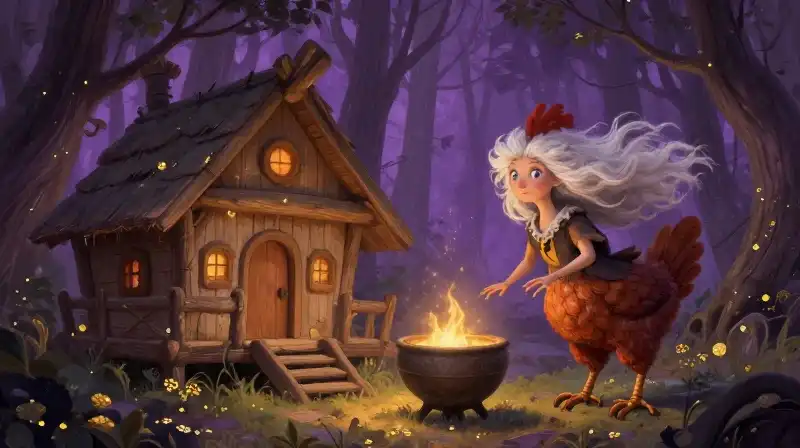
To understand Baba Yaga is to appreciate the blend of frightening and domestic elements she represents. The traditional descriptions are vivid and designed to inspire awe and slight terror [2]. She is typically visualized with scraggly white hair and a mouth full of iron teeth—a visual element that underscores her predatory nature [2]. Her physical presence is often linked to the wilderness, yet her power transcends mere sorcery.
Perhaps her most iconic, and most delightfully bizarre, attribute is her dwelling: an “evil hut” or cabin in the woods that is not stationary. This structure is narratively described as being able to walk and chase children on giant chicken’s legs [2]. When she flies, the mortar she uses is typically of monumental size, used to pursuit and capture children across the forest floor [2].
The Great Mother-In-Law: Antagonist or Gatekeeper?
One of the most illuminating aspects of Baba Yaga in academic folklore is how often she is framed not just as a simple villain, but as a mother-in-law figure. This role is often part of a broader thematic conflict: a stepparent who despises the daughter-in-law [1]. Rather than simply trying to harm the heroine physically, the conflicts often revolve around dangerous tasks designed to drive her away. These tasks elevate Baba Yaga from a straightforward “bad guy” to a formidable test of character. The heroine must often contend with tasks involving “cows” that are actually bears, or “sheep” that are actually wolves [1].
This complexity sets the stage for the deeper analysis of how her tales function—they aren’t just scary stories; they are trials. While the initial depiction may be terrifying, the stories often reveal a deeper, more subtle logic to her methods [2].
A Toolkit of Symbols: Magic and Domestic Virtue
The trials imposed by Baba Yaga often require more than brute strength; they demand cunning and emotional intelligence. Several narrative motifs highlight how a heroine can overcome a supernatural adversary not through combat, but through grace and empathy.
The Triumph of Kindness
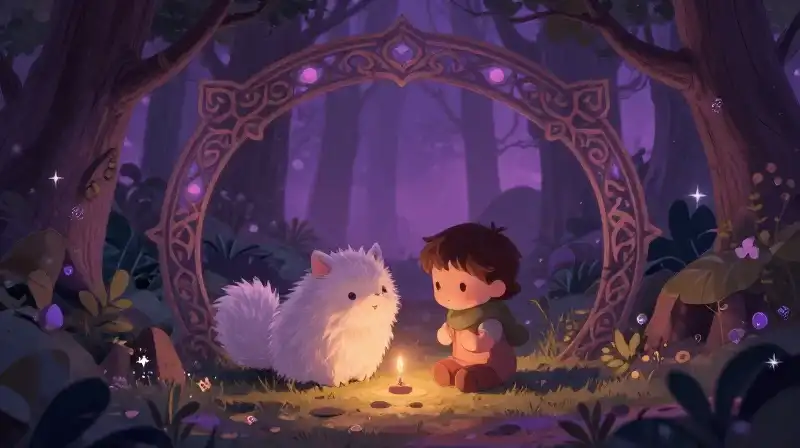
A core theme running through various versions of the tale is the power of kindness. In many narratives, the heroine overcomes a difficult trial by choosing to treat beasts like dogs and cats with genuine kindness [1]. This unexpected compassion results in the animals protecting her from the witch’s spite. This motif suggests that respect for the natural, untamed world is the heroine’s greatest asset [1, 2].
Objects as Barriers and Bridges
The witch’s pursuit is often thwarted by powerful magical symbols. Everyday domestic items—things like a comb, a tablecloth, or a towel—gain supernatural power when the heroine runs from Baba Yaga [2]. These objects transform into colossal, physical barriers to impede the witch’s progress: a dense forest, a powerful river, or a sheer mountain pass [2]. This magical transformation of the mundane is a key visual element in the tales, allowing children to imagine common objects with extraordinary power.
The Velvet Prince: A Comparison of Heroic Strategies
The differences in how a heroine succeeds against Baba Yaga help us understand the various facets of the character. Looking at the “Velvet Prince” variant of the tale, we see how clever solutions are always preferred over violence [1]. The heroine, Vasilisa, must complete the dangerous tasks by utilizing trickery and magic, such as causing a forest to sprout from a single stump [1].
The variety of solutions also highlights the resilience and resourcefulness of the heroines:
- The Power of Ingenuity: Utilizing the magic of commands or her cleverness to perform tasks while bypassing the wicked constraints of her tasks [1].
- The Wisdom of Materials: Applying domestic, tangible items like oil, lard, and salt to neutralize or bypass the witch’s defenses [1, 2].
- Strategic Alliances: A secondary trope shows the heroine seeking help from Baba Yaga’s sister for essential items, such as needles and thread, which, while increasing danger, provides opportunities to use her wits [1, 2].
Connecting to the Classroom: Educational and Bedtime Insights
For educators and parents, Baba Yaga offers rich material that can move beyond fear and into meaningful discussion. Since the tales belong to the traditional East Slavic folktale type (categorized as SUS 428, “The Girl in the Witch’s Service”) [1], they offer a timeless exploration of virtue and survival.
Why This Tale Works for Bedtime: While the imagery (iron teeth, giant chicken legs) may be startling, the core message is often one of resilience. The heroine is not destroyed; she survives through intelligence and moral fortitude. It’s a reminder that even the greatest obstacles can be navigated with a steady heart. When reading, focus on the heroine’s actions: her kindness to the bears, the cleverness of her use of domestic items, or her resilience in the face of impossible tasks. This shifts the focus from fear to inner strength.
Lesson for the Classroom: Baba Yaga’s trials demonstrate that problem-solving often requires unconventional thinking. She doesn’t ask for a sword; she asks for the heroine to transform a bear into a cow—forcing the audience to think about different perspectives and potential outcomes [1].
The Enduring Magic of the Trials
What makes Baba Yaga so captivating is the way she mirrors the deepest challenges of life. She is a manifestation of the threshold between safety and danger. She represents the wild, the unknown, and the powerful forces that demand respect, negotiation, and intelligence rather than simple force. Her ultimate undoings rarely stem from brute power; instead, they are often a consequence of her own lack of grace or her failure to appreciate kindness [2]. As we look at the various storybooks featuring the Velvet Prince or Vasilisa, we see not just a scary creature, but a profound statement on the power of empathy and human ingenuity to overcome even the most imposing, bony-legged opposition.
Sources
- The Tale About Baba-Yaga — en.wikipedia.org
- The Witch Baba Yaga — worldstoriesbank.org
Related Articles