Why the Celtic Mermaid is Both Alluring and Dangerous

Introduction
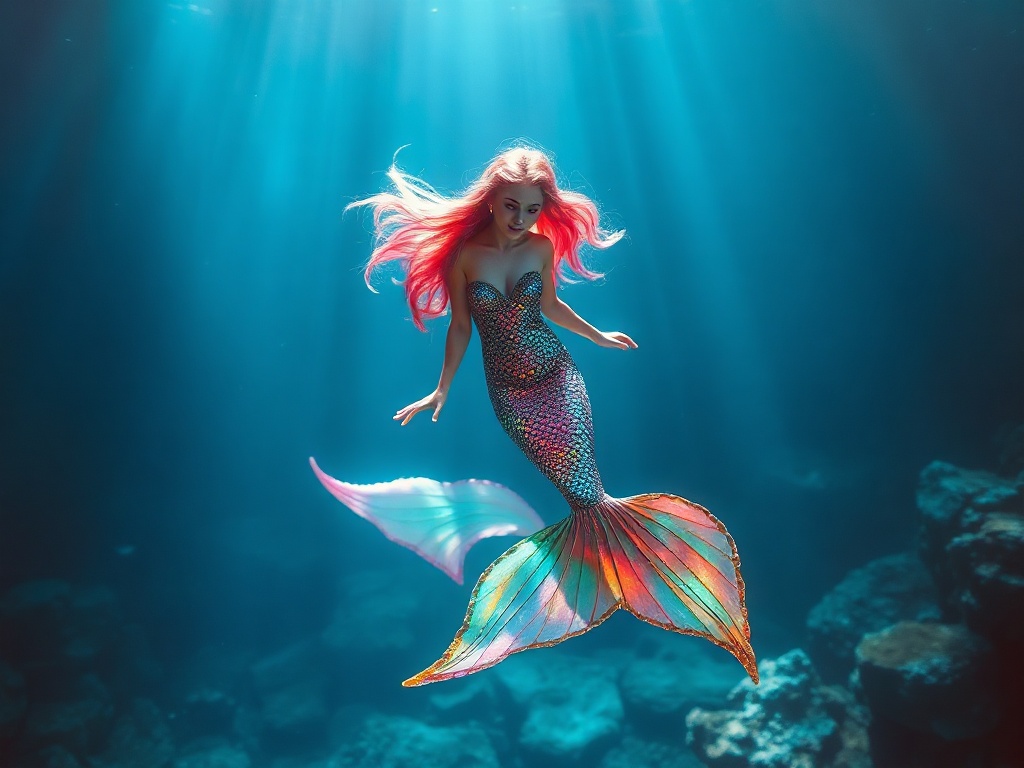
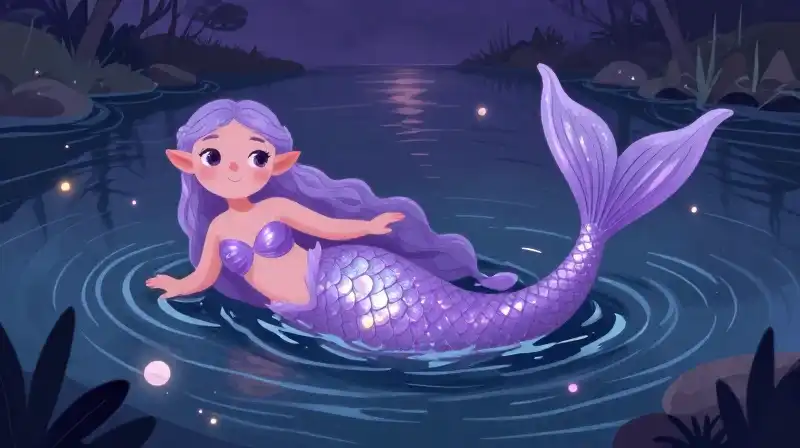
The myth of the Celtic mermaid is rarely one of simple enchantment. While the modern storybook often paints her as a glittering, passive prize—a mermaid whose greatest challenge is merely finding a boy to love—the ancient stories reveal a creature far more complex, far more potent, and quite a lot more unpredictable. She is not merely a beautiful half-woman, half-fish; she is a living embodiment of the restless ocean itself. To meet the Celtic mermaid is to encounter a profound paradox: a figure who simultaneously calls you with the irresistible melody of the waves and warns you of the storm that might follow. For parents and educators exploring these ancient narratives, the Celtic mermaid is a masterpiece of moral ambiguity, a vital character to dissect, and a powerful theme to explore when discussing the terrifying wonder of the sea.
The Core Paradox: Allure Versus Abyss
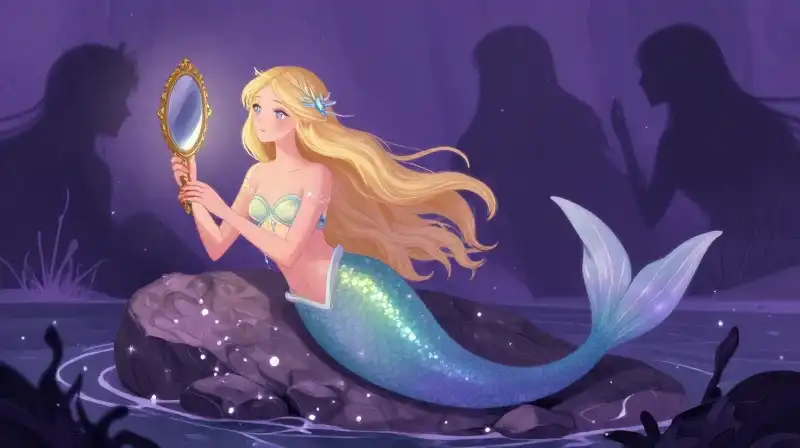
The foundation of the mermaid’s power lies in her “capricious” nature [1]. She is inherently a creature of both breathtaking beauty and profound unpredictability. The initial allure of the merrow is magnetic: she descends from the unknown depths, appearing as a perfect maiden from the waist up, her beauty enhanced by the tools she carries—a mirror and a comb—as she sings a song that proves utterly irresistible from the rocky shores [1]. This song doesn’t just charm; it foreshadow, capturing men against their will or signaling a great shift in the weather [1]. This duality establishes her core role in folklore: she is both the ultimate temptation and the herald of consequence.
The Bargain and the Trap
In many tales, this duality manifests through her ability to grant wishes, yet this gift is rarely benevolent. In Scottish folklore, for instance, the Ceasg—the maiden of the wave—can be prevailed upon to grant three wishes [1]. Here, she seems like a benevolent gift. However, her capricious nature immediately applies a caveat. She is often presented not as a savior, but as an agent of fate who might twist the outcome or, in the case of the Highland mermaid, might use a princess’s harp to trick a hero, subsequently swallowing him as part of a larger design [1]. Her willingness to enter into bargains means she is an unreliable, unpredictable force—a master of the hook, as much as she is a keeper of the secrets of the deep [1].
A Map of the Deep: Regional Variations in the Celtic Mermaid
Celtic folklore is rich with regional variations, and these nuances help us understand that the “mermaid” is actually a tapestry of different types of sea spirits. Examining specific regional figures allows for a richer understanding of the myth’s evolution and its local cultural anxieties [1].
| Creature/Term | Region | Key Traits & Narrative Focus |
|---|---|---|
| The Irish Merrow | Ireland | A complex figure; variations exist, including records of a giant 195 feet long in the Annals of the Four Masters [1]. Her relationship with men is often tied to domestic symbols like the cohuleen druith (cap), which acts as a symbol of entrapment, binding her to land. She will always escape and return to the sea when she regains her cap [1]. |
| The Ceasg | Scotland | Depicted as a maiden with a woman’s body and the tail of a young salmon, she possesses the power to grant three wishes, emphasizing her status as a minor, yet unpredictable, mythical agent [1]. |
| Môr-forwyn | Wales | This name (sea maid) features more overtly tragic consequences. Tales involve women who curse their towns with poverty unless they are allowed to return to the water, or instances where a fisherman releases a net-caught merrow who warns him just before a disastrous storm that claims his companions [1]. |
The Symbolic Power of the Cap (Cohuleen Druith)
The concept of the cohuleen druith in Irish lore is perhaps the most potent symbol of domestic versus wild power. This cap represents the fragile boundaries between the mermaid’s untamed, aquatic existence and the forced domesticity of the human world. When a husband hides it, the mermaid is pulled onto land [1]. However, her ability to regain her cap and return to the ocean symbolizes the ultimate triumph of the wild, reminding the reader that true belonging lies in the sea, even when that sea holds danger [1].
Thematic Deep Dive: Why is She Dangerous?
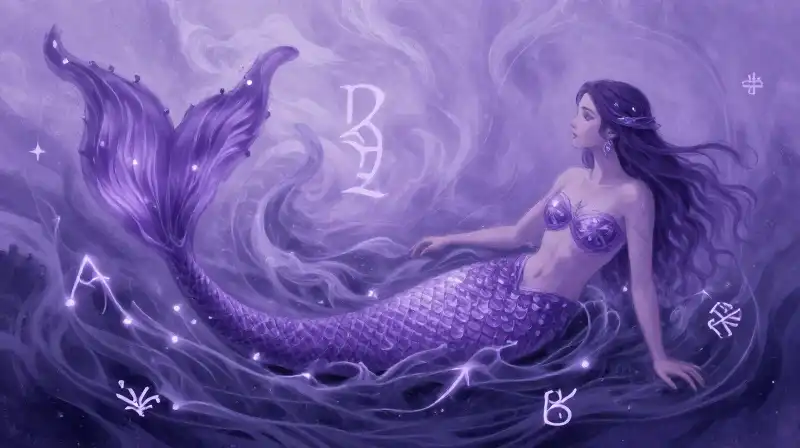
The danger posed by the Celtic mermaid moves far beyond being “a predator.” It represents existential and moral threats, functioning as a mirror to human flaws and anxieties.
1. The Fear of the Unknown “Other”
At its most fundamental, the Celtic mermaid embodies the “wonder and terror of the sea” [1]. The ocean has always been the ultimate boundary, an environment that defies human control. By personifying this boundary, the mermaid represents the “other”—the vast, feminine power of nature and the inherent fear of what lies beyond the horizon [1].
2. Moral Ambiguity and Warning
During the medieval era, the mermaid’s portrayal in Christian bestiaries solidified her trait as alluring yet dangerous. She became a powerful symbol of moral warning for the laity [1]. Her allure tempted the human soul toward distraction, while her dangerous nature symbolized the spiritual peril of giving into unchecked curiosity or temptation [1].
3. The Tragedy of Unseen Consequences
Stories like the Welsh legend—where a man releases a mermaid who then predicts a catastrophic storm—do not rely on a predator attacking. Instead, the danger is the absolute certainty of fate. The merrow acts as a catalyst, an observer, or a warning that, once delivered, precipitates an unavoidable tragedy [1]. This shifts the danger from a monster’s teeth to the sheer, indifferent power of nature, which is often her own domain [1].
Modern Readings: Challenging the Scales
While the ancient tales are fraught with peril, we must acknowledge how modern interpretations have shifted the creature’s narrative [1]. This evolution speaks to how children’s storytelling changes across eras, moving from warnings about external forces to meditations on internal strength and acceptance.
- A Symbol of Non-Conformity: Modern interpretations embrace the mermaid as a powerful symbol of challenging traditional societal beliefs, specifically surrounding femininity and sexuality [1]. She represents a deep, innate independence that resists human definition.
- Embracing Diversity: By existing halfway between land and sea, and human and creature, she encourages an acceptance of being ‘between things’—a metaphor that resonates deeply with themes of diversity and identity [1].
Navigating Mermaid Tales for Young Readers
For parents and educators, understanding this depth allows you to choose the right lens for your children’s age and emotional needs. Here is a guide to utilizing the various themes within the tales:
- For Preschoolers (The Gentle Allure): Focus on the song and the beauty of the sea. Use the “song” aspect of the merrow to discuss the beauty of nature. Keep the tales focused on the magical beauty rather than the storm [1].
- For Early Elementary (The Promise and Consequence): Introduce the concept of the wish-grantining Ceasg. Use her to discuss the idea that every choice has a consequence and that “fair things” often have hidden conditions [1].
- For Older Children (The Wild Feminine): Dive into the symbols of the cap and the Welsh curses. Use these tales to explore themes of independence, the power of women, and the inherent untrustworthiness (or independent spirit) of nature [1].
The Resonance of the Celtic Sea Story
The Celtic mermaid is a spectacular character because she refuses to settle into a simple box. She is not simply “beautiful” nor “monstrous”; she is complex. She is a brilliant, unreliable navigator of the human emotional landscape, capable of gifting and destroying in the same breath. For a child to meet her—whether in the shimmer of the sea or the pages of a book—is to encounter a profound truth: that the deepest wonders, and the deepest terrors, always reside in the spaces between.
The enduring magic of the merrow lies in this ambiguity. She teaches us that even when something seems overwhelmingly beautiful, there is an inherent weight, a fierce wildness, and a profound responsibility to understand its true nature. She is the perfect mirror for the human capacity for both greatest wonder and deepest fear, making her one of the most meaningful creatures in all of folklore [1].
Sources
- Folklore of the Capricious Celtic Mermaid — stephraemoran.com
Related Articles