
The Hidden Protagonists: What Cinderella, Snow White, and Sleeping Beauty Share


Introduction
In the grand library of childhood folklore, there are certain stories that feel perpetually draped in velvet and mystery. Cinderella, Snow White, and Sleeping Beauty—these names evoke images of shimmering gowns and perilous forests. Yet, beneath the glittering surface of magic and adversity, these tales share a profound, often unnoticed thread: the notion of the hidden protagonist.
In every one of these narratives, the hero is not found in a grand public display. They are “hidden”—under duress, obscured by a sleeping curse, or operating under social barriers—waiting for their fate to unfold. For parents and educators exploring these classic stories, understanding this “hidden” state is key to unlocking the deep thematic layers. It allows us to see that these tales are not just about wishes being granted or evil being defeated; they are about resilience, the tension between visibility and vulnerability, and the potent power of suspension.
The Architecture of the Hidden Protagonist
The concept of the protagonist being deliberately displaced or hidden appears in wildly different ways across these three tales, often reflecting the social anxieties of the eras in which they were documented. Each form of “hiding” demands a distinct kind of resilience from the heroine.
The Hiding Through Social Barrier: Cinderella
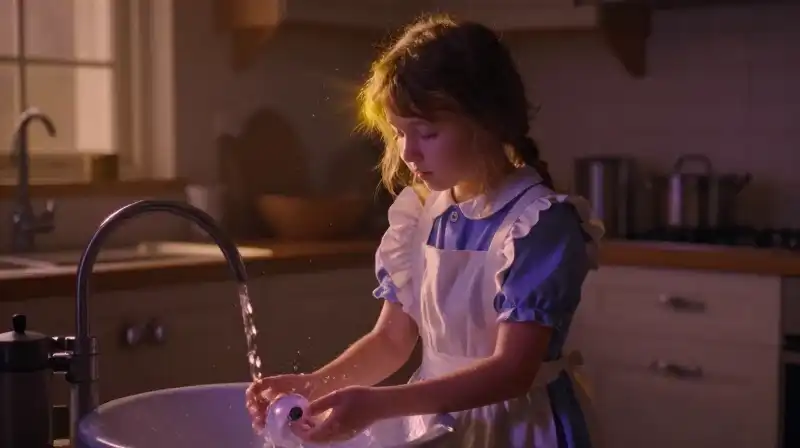
In the version of the Cinderella narrative, the protagonist is hidden not by magic or curses, but by circumstance and social stratification. Despite often possessing a noble background, the character is frequently relegated to the role of a common scullery maid [2]. This displacement highlights a barrier rooted in social class and daily labor. Her “hiding” is a constant, gritty negotiation with her environment, where survival depends on maintaining dignity while enduring abuse.
The Hiding Through Flight: Snow White
Snow White’s displacement is defined by immediate danger and flight. Unlike Cinderella, who deals with domestic subjugation, Snow White is actively running from a lethal threat—vanity and jealousy manifest in the Queen’s desire for her death [2]. Her status as a royal infant is immediately contrasted with her life on the run, illustrating a vulnerability that comes from being sought after by those who wish her harm.
The Hiding Through Magical Suspension: Sleeping Beauty
Sleeping Beauty presents the most dramatic form of hiding: suspension. The princess is not running, nor is she being scrubbed floors; she is completely withdrawn from the world due to a magical curse. Whether the trigger is a spindle or an apple, the resulting state of unconscious vulnerability defines her entire narrative [1, 2]. In Basile’s darker precursor, *Sun, Moon, and Talia*, this sleep becomes a state of complete unknowing, leading to her being unwittingly impregnated by a king before she even stirs [1]. Here, the protagonist is hidden by a benevolent, yet overwhelming, magical force.
The Nature of the Antagonist’s Threat
What causes the protagonist to be hidden? The intent of the antagonist reveals a great deal about the story’s moral landscape. The threats are rarely “random”; they are usually the expression of a deep-seated psychological or social flaw within the story’s world.
Motivations: From Ruin to Vanity to Spite
The antagonists across these tales are often driven by extreme emotional impulses. In the *Cinderella* narrative, the stepmother’s aim is primarily to ruin and abandon the protagonist to maintain her own social status [2]. However, the threat in *Snow White* is rooted in the Queen’s vanity and jealousy, making her a classic example of the deadly dangers of pride [2]. Even more complex is the fairy in the *Sleeping Beauty* motif, who often acts with spite driven by personal slights, showcasing a nuanced malice that contrasts with the simple envy of the Queen [2].
The Magic and The Message of Waiting
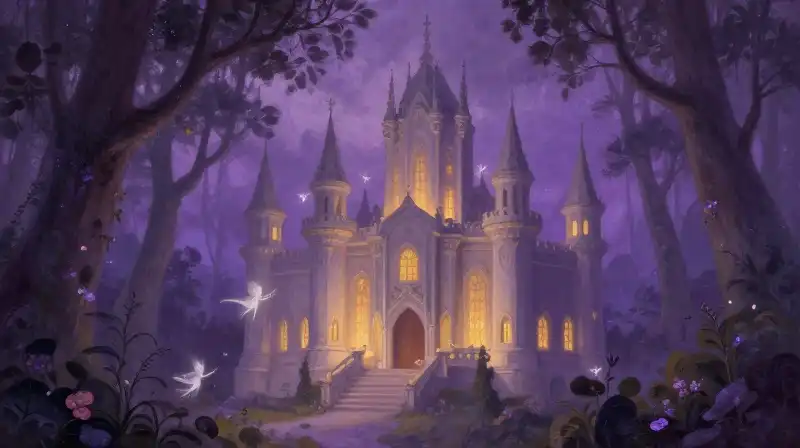
A crucial element that separates the Sleeping Beauty motif from the others is its integration of large-scale environmental magic. Unlike the personal strife in the other stories, the “Sleeping Beauty” archetype often involves powerful spells that put the entire palace, and sometimes the surrounding forest, into a state of suspended animation [1].
The Motif of Protection
While the sleep itself is dangerous, it can also function as a powerful protective state. In various versions, the princess and, in Basile’s tale, even her eventual children, are kept hidden or protected by her parents and good fairies against a foretold doom [1, 2]. This suggests that while the curse is severe, the theme of waiting is not passive suffering, but a time guarded by benevolent magic. The Sleeping Beauty motif thus moves beyond mere punishment to embody a state of waiting for destiny to arrive [1].
| Narrative | Nature of Disruption | Protagonist’s State | Key Antagonist Driver |
|---|---|---|---|
| Cinderella | Social/Domestic Subjugation | Hidden by class/labor | Envy/Desire for status |
| Snow White | Physical Danger/Poison | Hidden by flight/danger | Vanity/Jealousy |
| Sleeping Beauty | Magical Suspension | Hidden by curse/sleep | Spite/Personal grievance |
The Complex Narrative Arc: Basile vs. Perrault
To fully appreciate the depth of the Sleeping Beauty myth, we must look at the differences between its oldest and most famous iterations. The narrative arc evolves significantly, particularly in how the conflict moves beyond the initial event.
The Unconscious Vulnerability of Basile
Giambattista Basile’s *Sun, Moon, and Talia* introduces a startlingly complex arc. The protagonist’s sleep is not simply an ending, but a catalyst for unforeseen complications. Her vulnerability leads to a double-narrative where the villain attempts to serve the princess’s children as a meal to the king [1]. This version elevates the threat from mere rivalry to a dark, systemic danger that continues long after the initial curse has been triggered [1].
The Refinement of Perrault’s Version
Charles Perrault’s classic take offers a subtler shift in tone. The focus shifts to a more delicate portrayal of the prince’s awakening and subsequent interactions, often emphasizing a quiet development over the immediate, high-stakes physical action seen in other versions [1].
Addressing Reader Curiosities
Why is Cinderella defined by “displacement” rather than “magic”?
In this analysis, Cinderella’s displacement is the social reality of her life, a narrative focus intended to highlight the barriers facing ordinary women. While other tales rely on external magical forces to isolate the protagonist, Cinderella’s “hiding” is a result of the internal hierarchy of the household. Her resilience is a social one, not purely magical.
What does the “waiting” motif signify across these tales?
The waiting motif represents hope for change, but also the intense nature of transition. For the protagonists, it is a suspension of their current suffering. For the readers, it invites us to think about how long, and how powerfully, hope can endure under extraordinary pressure. In the context of Basile’s tale, the waiting is not just a pause, but a gestation of new life and new conflict.
Conclusion: The Enduring Power of the Hidden Hero
Cinderella, Snow White, and Sleeping Beauty may look like distinct stories of rags to royalty or curse to kiss, but they collectively offer a rich study in the theme of the hidden protagonist. Whether it is the quiet suffering of the displaced scullery maid, the desperate flight of the royal girl, or the deep, suspended repose of the princess, these stories teach us that even when we cannot see the struggle, the spirit beneath the surface is enduring. These narratives provide powerful, imaginative tools for young minds—allowing them to understand that power often resides not in who is visible, but in who endures the longest, waiting patiently for the light to return.
Sources
- Sleeping Beauty — en.wikipedia.org
- How does ‘Cinderella’ differ from ‘Sleeping Beauty’? What makes it different from other fairy tales, such as ‘Snow White’? - Quora — quora.com
Related Articles