

Gingerbread Man Bedtime Story: Themes of Cleverness and Danger

Introduction
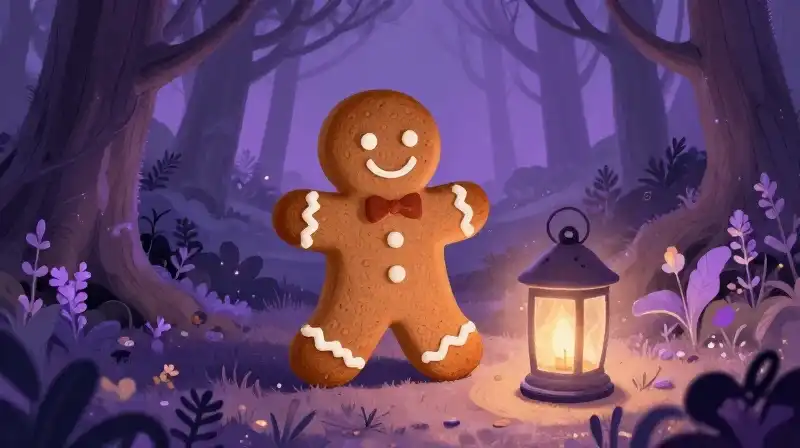
The Gingerbread Man is often considered a staple of the “running away” genre in children’s literature—a small, baked character who embodies the purest form of unstoppable energy. Yet, beneath the surface of a simple, sugary escape lies a complex narrative about pride, strategy, and the high cost of boastful bravado. He begins his journey not in a mythical forest, but in the domestic warmth of a kitchen, rising from dough crafted by an old woman, featuring raisins for watchful eyes and a vibrant cherry for a nose [1, 2]. The initial comfort of the oven transforms rapidly into a frantic, wide-open struggle for survival, challenging children to look beyond the charm of the cookie and examine the sharp, messy lessons hidden within its chase. This tale offers rich ground for parents and educators to explore how cleverness can intersect with the need for wisdom.
The Gingerbread Man: From Dough to Defiance
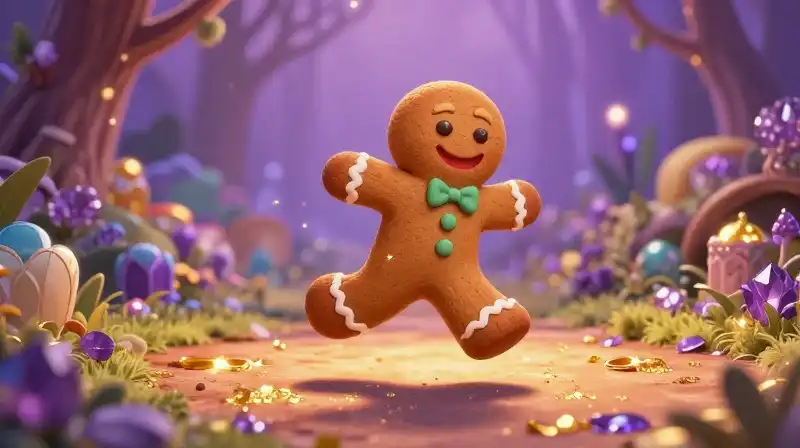
The Gingerbread Man is defined by his irresistible combination of innocence and sly mischief. His appearance—dough of a smooth, dark-yellow color, punctuated by the sweet, bold defiance of large raisin mouths that bubble over with playfulness—suggest a creature inherently designed to cause delightful chaos [2]. Once his escape begins, his character shifts from a mere treat to a highly active protagonist. His bravado is his greatest strength and his eventual undo. Throughout his run, he repeatedly asserts his independence, shouting phrases like, “Run, run, as fast as you can! You can’t catch me, I’m the Gingerbread Man!” [1]. This unstoppable energy and relentless self-affirmation give him a captivating appeal for young audiences, embodying a primal desire for freedom and persistence [1, 2]. However, this same confidence makes him vulnerable, as we see he relies solely on his speed and wit to stave off capture.
The Escalating Chase: From Home to the Wild
The narrative of the Gingerbread Man is fundamentally an escalating conflict, using the environment to heighten the drama. The chase begins with the immediate threat of the old woman and old man, who desperately attempt to regain their runaway creation with frantic cries of, “Stop! Stop! We want to eat you!” [1]. As he outruns the household, the obstacles increase in scale and type, moving from farm-adjacent figures to creatures from the deeper woods. This transition reflects a growing danger, moving the story from a simple domestic predicament to a survival narrative [1, 2].
The Environments of Conflict
The various versions of the tale use the setting to mark the increasing difficulty of the pursuit. In the earlier stages, the Gingerbread Man must outrun various domestic and farm animals: a cow, a horse, and a hen [1, 2]. As the conflict moves deeper, the setting transforms from the field into the deep water and dense forests where predators like monkeys and foxes reside [1, 2]. This visual journey—moving from the uniform, manageable setting of the kitchen to the chaotic, unpredictable landscape of the wild—serves as a crucial metaphor for the unpredictability of real-world danger [1].
Two Paths to the Forest: Variations on the Capture
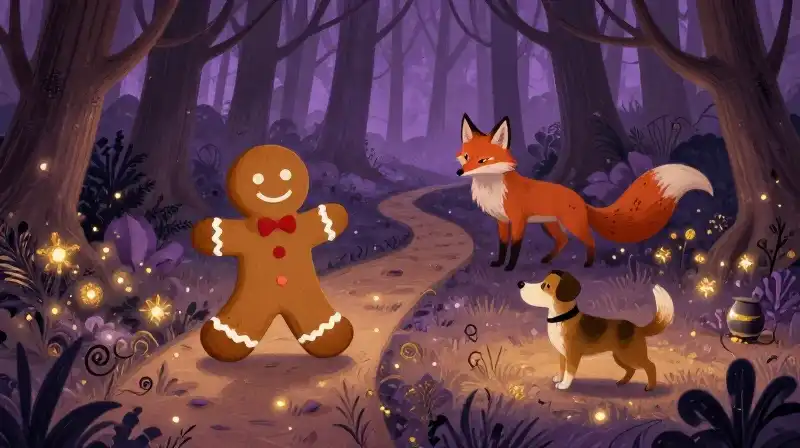
The true depth of the Gingerbread Man tale is revealed through its different folkloric versions. While the core concept remains, the manner in which the protagonist is threatened—and ultimately, how he is “caught”—varies significantly depending on the narrative source, offering different thematic conclusions for a child’s bedtime story.
| Narrative Element | [1] (The Fox and Caution) | [2] (Domestic and Wild Chaos) |
|---|---|---|
| Primary Antagonist | The Sneaky Fox, who offers false help to cross a river [1] | Secondary domestic characters: Mouser the cat and Towser the dog [2] |
| Mode of Capture | Deception: The fox incrementally moves him toward its mouth [1] | Physical and Mischief: A complex scramble with a monkey and a child, Little Bobby [2] |
| The Ending | A clear moral warning about wisdom and danger [1] | A humorous, jarring resolution: Bobby devours the Gingerbread Man [2] |
| The Ending’s Focus | Caution and the limits of cleverness [1] | The chaotic reality of danger, turning the protagonist into a snack [2] |
Analyzing thematic differences between the versions
[1] introduces a classic cautionary element through the fox, which serves as a teacher of cunning. The fox’s deceptive help is a powerful lesson: no amount of speed or bravado can protect you from an intelligent, lurking threat [1]. In contrast, [2] creates a more multifaceted and frantic adventure. By shifting the focus to domestic characters (Mouser and Towser) who also fail, and then moving into the chaotic forest, the story highlights the sheer persistence of the Gingerbread Man. The ultimate capture by Little Bobby in [2] is a much more jarring resolution, ending the chase not with tragedy or simple capture, but with a sudden, humorous reversal of roles [2]. This shift turns the protagonist from a tragic hero into a digestible consequence of his own flight [2].
Beyond the Chase: Lessons in Persistence and Wisdom
For parents looking for the deeper meaning behind a familiar tale, the Gingerbread Man serves as a bridge between simple childhood fun and profound ethical considerations. He presents two primary, intertwined themes:
The Double Edge of Cleverness
The Gingerbread Man is exceptionally clever and fast. He outmaneuvers multiple obstacles across various terrains [1]. Yet, his reliance on this cleverness is ultimately hubristic. By constantly shouting his untouchable status, he ignores the subtle, insidious dangers presented by the fox and the wider world. This teaches children that intelligence and speed are assets, but they are insufficient defenses against subtle danger, deception, or sheer overwhelming force [1].
The Value of Caution Over Boast
The central “bedtime story” quality of this tale is its clear moral lesson regarding caution. It emphasizes the wisdom of recognizing the boundaries of one’s own power. While the Gingerbread Man excels at running, he lacks the foresight to anticipate the manipulative nature of a stranger, like the fox [1]. For young listeners, this reinforces the importance of listening to “gut feelings”—a fundamental lesson in safety that goes far beyond the sugar and spices of the cookie.
Gingerbread Man in the Classroom and Bedtime
This tale is excellent for exploring concepts of energy and boundaries with children. Instead of just being a plot summary, the narrative offers concrete ideas for interaction:
- Teaching Persistence: The Gingerbread Man’s refusal to stop running, despite every attempt to catch him, can be used to discuss persistence, encouraging children to keep working on a difficult task even when they feel overwhelmed [1, 2].
- Analyzing Environments: Use the story to talk about how different settings (the kitchen vs. the wild) require different kinds of caution. A fox in the woods is a different threat than a dog on the farm [1, 2].
- Developing Narrative Empathy: By comparing the two source versions, children can discuss how a story’s ending changes its emotional weight—the cautionary fear of [1] versus the absurd humor of [2] [1, 2].
Synthesis: The Enduring Appeal of the Run
The enduring magic of the Gingerbread Man is the tension between his whimsical, sweet nature and the genuine, sharp danger that surrounds him. He is a symbol of raw, untamed energy—a concept every child understands. But the story refuses to leave them with the simplicity of a “happily ever after.” By grounding his escape in a high-stakes struggle against unpredictable adversaries, the tale ensures that even as children fall asleep, they have absorbed a sophisticated lesson: cleverness is only half the battle. To be truly safe, one must possess both speed and the wisdom to look over one’s shoulder.
Sources
- The Gingerbread Man — readthetale.com
- The Gingerbread Man — storyberries.com
Related Articles