
The Evolution of the Dark Fairy: From Forgotten Elf to Maleficent
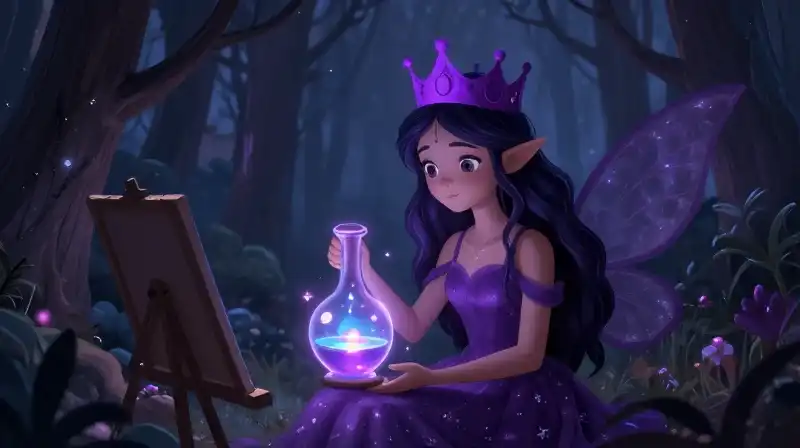
Introduction
In the rich, enchanted libraries of children’s stories, the wicked fairy often serves as a striking mirror. She is never merely a villain; she is a crystallized form of thwarted desire, misunderstood power, and the potent fear of what happens when ancient magic meets modern ambition. From the forgotten elf in a royal court to the towering, dramatically charged icon of Maleficent, the dark fairy has undergone one of the most fascinating transformations in narrative history. She is a story of escalation: how a subtle slight in a 17th-century royal court grew into a cinematic force capable of reshaping an entire fantasy franchise.
To understand the dark fairy is to trace the lineage of narrative spite. It is a study of how an early folk concept—a magical guest who feels overlooked—could evolve into the potent, theatrical dread that we recognize in the modern age. Whether she is snarling under the old name Carabosse, or commanding the shadows as Maleficent, her story is always rooted in a single, searing feeling: the injustice of being denied one’s proper place. We will explore this dramatic arc, looking at where she began and how her story continued to evolve for our reading time and classroom discussions.
The Historical Roots: The Spark of Insult
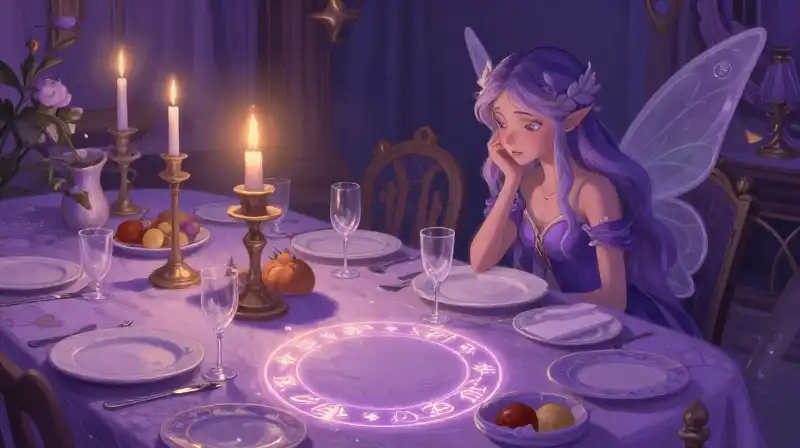
The archetype of the powerful magical figure who is wronged actually predates the classic Sleeping Beauty tales we know today. The darkest version of the dark fairy is not born out of innate evil, but out of the raw, stinging sting of being slighted. This core conflict is present in folklore from long before the first princess fell asleep.
The Precursor: Maglore and the Missing Knife
One of the earliest, most potent models of this theme is found in the 13th-century French play *Le Jeu de la Feuillée*. Here, a fairy named Maglore is granted a place setting at a feast, but she is infuriated when her setting is missing a simple knife [1]. Her response is a curse aimed at men because she was treated poorly [1]. This demonstrates that the “dark fairy” isn’t a monster who exists to hurt; she is a powerful being who uses her magic to correct what she perceives as an intolerable social or personal slight [1].
The Foundation: The Accidental Snub
As the story moves into the era of formalized fairy tale collecting, the motivation shifts from simple etiquette to specific, quantifiable snub. In Charles Perrault’s 1697 text, the dark fairy is recognized as an older eighth fairy who is accidentally forgotten and denied a golden jeweled case [1]. This denial of status, even when unintentional, sets the stage for powerful magical retribution [1].
The Brothers Grimm, however, made the snub more deliberate. In *Little Briar-Rose*, the king intentionally snub a thirteenth fairy because he only possesses twelve golden plates [1]. For dramatic effect, the Grimm version of the dark fairy delivers a chilling, highly specific quote to the royal parents, foretelling disaster: “Because you did not invite me, I tell you that in her fifteenth year, your daughter will prick herself with a spindle and fall over dead” [1]. This shift from accidental oversight to a direct, spoken threat elevates the character from a minor annoyance to a true, dread-inducing antagonist [1].
From Folklore to Icon: The Carabosse Era
The dark fairy’s journey from a forgotten sprite to a known literary entity was cemented by figures who helped codify the genre. Before the name “Maleficent” existed, the figure of Carabosse became synonymous with the powerful, spiteful witch in theatre and early literature [1].
The term Carabosse was actually coined by Madame d’Aulnoy, the writer credited with inventing the concept of “fairy tale,” in her story *The Princess Mayblossom*. In this version, Carabosse curses an infant princess simply to exact revenge over an old grudge [1]. This establishes the character’s capacity for sustained, personal resentment. She is no longer just mad about a missing plate; she is a villain driven by deep, personal spite [1].
Note that this archetype already existed before the dark fairy was fully defined. Giambattista Basile’s 1634 tale *Sun, Moon, and Talia*, which is considered the earliest known version of Sleeping Beauty, features no dark fairy at all. In this early iteration, the heroine’s fate is simply prophesied by wise men, showing that the introduction of the magical curse is a relatively modern development in the tale [1].
The Modern Zenith: The Birth of Maleficent
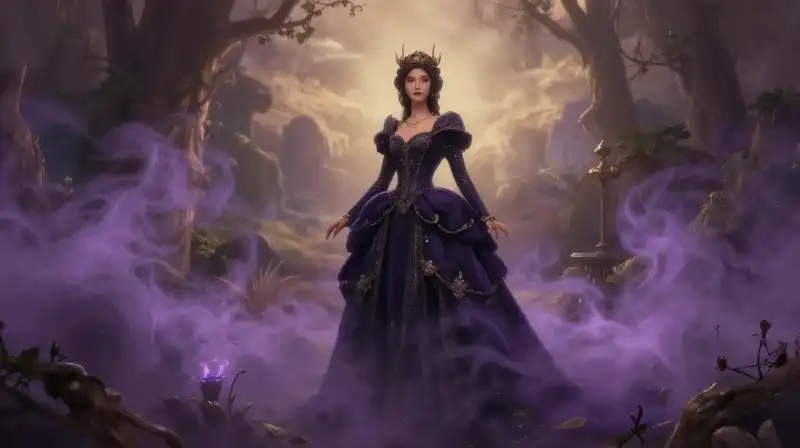
The dark fairy reaches her most visually and thematically powerful incarnation in the 20th century. Disney’s 1959 animated film introduced Maleficent, transforming the spiteful folklore figure into a stunning, formidable icon of cinematic darkness [1].
Maleficent is defined by her extreme sense of self-importance and her dramatic power. She styles herself as the “Mistress of all Evil” and presents herself as a powerful, almost Satan-like figure [1]. Her iconic, terrifying transformation into a giant black dragon to challenge the hero ensures that her presence is rarely subtle. This visual shift solidified the dark fairy’s role as the ultimate, dramatic antagonist, a powerful force of shadow against the bright world of the princess [1].
Subverting the Myth: Maleficent in a New Light
Contemporary storytelling is frequently moving away from simple “evil for the sake of evil.” Modern adaptations often explore the darker motivations beneath the spite, focusing on themes of trauma and redemption. The 2014 live-action film *Maleficent* offers a prime example of this reinvention [1].
In this version, the curse is not just born from a misunderstanding of a snub, but specifically from vengeance against King Stefan, who betrayed her by cutting off her wings [1]. Crucially, the film also alters the resolution, concluding that the princess is freed through a redemptive maternal kiss rather than a traditional prince’s true love [1]. This reinterpretation allows parents and educators to discuss complex themes of betrayal and maternal love alongside traditional folklore [1].
The Next Evolution: Modern Voices of the Dark Fairy
Modern children’s literature continues the tradition of reinventing the dark fairy, often using the established archetype to explore new psychological or thematic ground. Rather than simply seeking revenge, modern villains sometimes seek pure spite or operate outside of expected boundaries.
-
Pernicia: Pure Spite
In Robin McKinley’s *Spindle’s End*, the wicked fairy Pernicia curses the princess out of pure spite, rather than out of forgotten manners or betrayal, making her motivation purely antagonistic [1].
-
Arachne: The Familial Threat
Mercedes Lackey’s *The Gates of Sleep* reimagines the villain not as a magical creature, but as the princess’s non-magical, murderous paternal aunt, Arachne. This reinvention strips the “dark fairy” concept down to human, grounded danger, shifting the fear from magic to family [1].
Answering the Questions: The Themes and Symbols
When we look closely at these characters, deeper themes emerge that can bring a richness to bedtime reading and classroom analysis. What exactly are we looking at when we talk about the “Thirteenth Fairy”? And what does the relationship between the original folklore and the media adaptations tell us?
Is the Thirteenth Fairy Symbolic of Time? (The Lunar vs. Solar Year) [1]
Some folklorists have proposed a symbolic interpretation, viewing the “thirteenth fairy” in the Grimm stories as a representation of the lunar year (which has thirteen months) being challenged or replaced by the more “rational” solar year (twelve months) [1]. However, this specific theory remains contested, especially since Perrault’s earlier version featured an eighth, rather than thirteenth, fairy [1].
Dark Fairy Sleeping Beauty Meaning and Symbolism
The dark fairy is, ultimately, a symbolic representation of the disruptive power of overlooked things. She is the reminder that in a world ordered by royal plates, golden cases, and twelve perfect months, things that are “other”—the forgotten, the marginalized, the one who doesn’t fit the prescribed pattern—carry immense, sometimes terrifying, power [1].
Synthesizing the Spite: What Makes the Dark Fairy Notable
The remarkable story of the dark fairy is not found in her curses, but in her journey. She evolved from a minor grievance over a missing utensil into a profound commentary on social slights, and then finally, into a complex, deeply relatable figure of trauma and vengeance. She holds a unique position in storytelling because she is driven by a recognizable, human emotion—anger and resentment—but expressed through immense, impossible magic. For parents reading with their children, she is a perfect entry point for discussing the feeling of being overlooked, and how powerful the desire to be seen and valued truly is. She is a powerful, complex lesson in the cost of being forgotten.
Sources
- Wicked fairy (Sleeping Beauty) — en.wikipedia.org
Related Articles