
Thumbelina: A Story of Transformation and Finding True Love

Introduction
In Hans Christian Andersen’s rich tapestry of childhood dreams, few figures evoke the delicate balance between utter vulnerability and tenacious spirit quite like Thumbelina. Unlike tales of grand, sweeping heroes, her story is one of miniature magnitude—a journey through a world too vast and often too indifferent for her delicate form. It is a narrative perfectly suited for quiet bedtime reading, offering not just a pretty plot, but a profound meditation on how we navigate the spaces between who we are and who we are meant to become.
When we look at the original 1835 story, we see more than just a tiny girl seeking a husband. We witness a profound allegory for the human struggle: the desperate attempt to find a safe and accepting place within a harsh, large world. Thumbelina, or Little Tiny as she was originally called [2], is a fragile bloom born from a tulip, yet her existence is defined by her ability to continually navigate rejection, prejudice, and the profound chill of solitude [3]. This analysis explores the symbolic weight of her trials, examining how her journey from a rejected field mouse to a flying fairy teaches valuable lessons about resilience, acceptance, and the true nature of finding a home.
The Delicate Beginnings of a Tiny Life
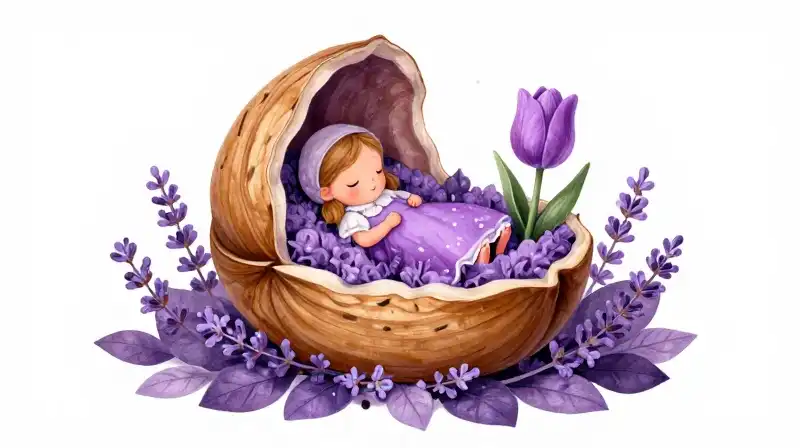
Thumbelina’s arrival is presented as a delicate, almost miraculous event. A woman, desperate for a child, receives a specialized barleycorn from a fairy, which then flourishes into a tulip [2]. From this blossom, the tiny maiden emerges, her life beginning amidst comforting, miniature luxuries. Her cradle is crafted from a walnut shell, and her bed is lined with violet leaves—a setting defined by gentle, natural beauty [3]. In these early moments, she enjoys the simple, joyful leisure of rowing on a tulip leaf using white horse-hair oars [2].
This early environment establishes a core truth about Thumbelina: she is built for tenderness, for the subtle pleasures of nature, and for small, protected spaces. This initial comfort provides a poignant contrast to the brutal landscape she must eventually encounter. She is a creature of warmth, surrounded by the sweet fragility of the spring bloom, unaware that the wider world holds immense, careless power [3].
The Trials of Smallness: Facing Prejudice and the Great Cold
As Thumbelina grows, her initial gentle world fractures. Her childhood quickly becomes defined by a relentless series of escapes from unwanted suitor figures, beginning with a large, intimidating toad and his son [2]. These early interactions introduce the first thematic layer of the story: the danger of conformity and the pressure to settle for inadequacy. She is constantly on the move, seeking a safe harbor that seems perpetually out of reach.
The true test of her spirit, however, comes from creatures of the natural world who possess a rigid, sometimes cruel, sense of categorization. When she is captured by a cockchafer, her brief refuge in their colony is violently shattered. She is ultimately discarded by the colony and later rejected by others. The reason for her rejection is specific, highlighting the sting of arbitrary judgment: she is deemed “ugly” because she lacks feelers and possesses only two legs [2, 3]. This rejection by nature’s own community serves as a powerful early warning about the dangers of judging difference. It suggests that no matter how beautiful or gentle we are, the world may have arbitrary standards that we do not meet [3].
Finding Temporary Warmth: The Field Mouse and the Threat of Utility
Fleeing the harsh judgments of the larger insects, Thumbelina finds a temporary haven with a field mouse. The mouse offers her essential warmth and a semblance of domestic life, providing a crucial respite from the freezing world [2]. This domestic peace, however, is always precarious. It is periodically threatened by the arrival of a wealthy, blind neighbor: the mole [2, 3].
The mole serves as a powerful foil to Thumbelina’s sensitive, nature-loving spirit. He embodies a powerful, yet cynical, utilitarian worldview. He possesses vast knowledge of ancient history—a deep appreciation for order and the past—but this knowledge is cold. He scorns the sun, he dismisses the flowers, and he finds no joy in the vibrant life of the birds, seeing them only as an obstacle or a source of utility, if anything [2, 3].
This contrast between the mole’s “knowledge” (rooted in cold, sterile facts) and Thumbelina’s “life” (rooted in warmth, beauty, and feeling) is a central intellectual moment in the tale. It forces the reader to consider the value of different forms of intelligence—is a knowledge that scorns life truly “wise”? The mole’s encounter with a dead swallow illustrates this perfectly; he dismissively calls the bird a “wretched thing,” failing to see the enduring, artistic essence of its song [2, 3].
The Theme of Transformation: From Fragility to Flight
The story’s deepest conflict is not merely physical survival; it is the struggle for self-acceptance and freedom. Thumbelina faces a profound emotional toll from her loneliness and the ceaseless freezing winters [2, 3]. Her evolution is marked by an increasing resilience. She moves from being a passively rescued object (captured by the cockchafer) to an agent of her own destiny.
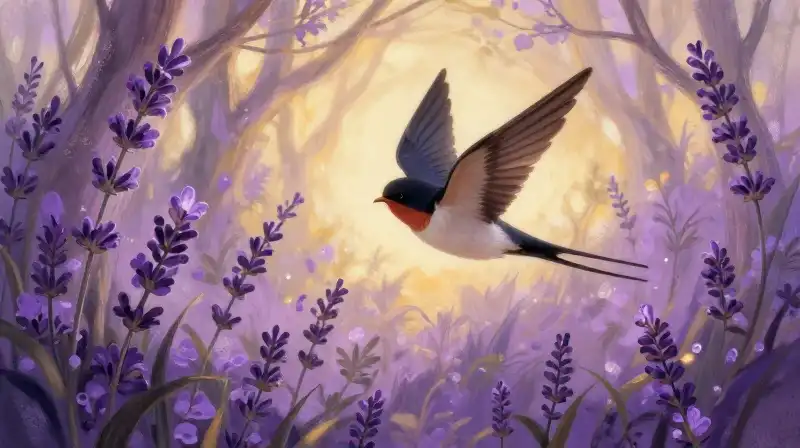
Her rescue by the swallow is a pivotal moment. The swallow, embodying the pure, free spirit that the mole rejects, carries her away, leading her toward a different sort of freedom. Later, she meets a tiny flower-fairy prince who is exactly her size. This is the encounter that bridges the gap between survival and true belonging [1, 3].
The narrative climaxes not with the marriage, but with her radical transformation. Thumbelina receives wings and is given the new name Maia [1, 3]. This is the ultimate symbol of her journey’s completion. Maia does not just escape; she transcends. She has moved past the fear of rejection, past the limitations of her physical form, and past the cold confines of the world that sought to categorize and discard her [1].
Thematic Takeaways for Parents and Educators
For parents and educators utilizing the *Thumbelina* story, the power lies in discussing the subtle layers of character and symbolism, rather than just retelling the sequence of events. This tale offers concrete material for discussing complex concepts with children:
- Embracing Differences (Addressing the Cockchafer Scene): This is a gentle introduction to the idea that differences—like having two legs instead of feelers—do not inherently make a person “less” or “uglier.” It is a perfect chance to talk about how we treat those who are different, focusing on the idea that superficial traits are rarely the most important aspects of a person [2, 3].
- The Value of Perspective (The Mole vs. The Swallow): This contrast helps children explore differing worldviews. The mole represents rigid, historical, often sterile thinking, while the swallow represents the wild, artistic, emotionally rich perspective. It prompts questions like: “What is most important—knowing everything, or feeling deeply?” [2, 3].
- The Concept of Resilience (Facing the Winter): Thumbelina must survive long, freezing periods of solitude. This is a powerful lesson in “small steps” of survival. Educators can use her enduring nature during the winter to talk about inner strength and the fact that difficult periods always lead to spring or new beginnings [2, 3].
- Finding True Home (The Name Change): Her transformation into Maia is a potent lesson that true belonging is often internal. It is not about the size of the house or the type of cradle, but about the freedom and love that allow us to become who we truly are [1, 3].
Why Thumbelina Endures: A Synthesis of Small Power
What makes *Thumbelina* so remarkable is its ability to elevate a small, seemingly insignificant life into a grand metaphor for perseverance. It strips away the trappings of scale and societal expectations, focusing instead on the universal human desire to be seen, to be loved, and to belong. She is a tale that reassures us that even the most fragile creatures possess an inner strength that allows them to find their voice, their home, and their wings, ultimately proving that true value resides in the capacity for transformation and the heart that seeks beauty amidst the mundane and the harsh [1, 3].
Sources
- Thumbelina — en.wikipedia.org
- Hans Christian Andersen: Little Tiny or Thumbelina — hca.gilead.org.il
- Hans Christian Andersen : Thumbelina — andersen.sdu.dk
Related Articles