
The Real Story of Beauty and the Beast: Origins and Deep Meaning

Introduction
When we picture Beauty and the Beast, we often see a tragic yet romantic struggle: a massive, fur-covered beast captivated by a kind and gentle maiden. This beloved image, solidified over generations, suggests a simple narrative of finding love and breaking a spell. But if you’ve ever wondered about the “real story of Beauty and the Beast,” you might find the fairy tale that appears in countless children’s stories is actually the result of several profound revisions, centuries after the original tale was first penned. To truly understand this story is to look past the “happily ever after” and peer into the rich currents of global folklore and complex literary history, discovering that the story is far more than a surface-level metaphor—it is a profound meditation on the contrast between superficial appearance and true inner worth.
Tracing the Roots: Beyond the French Remake
 The narrative we recognize—a noble figure cursed into a monstrous form—didn’t begin in a grand French court. The foundational elements of the tale were established much earlier and more globally. The first known version of the story was written by Gabrielle-Suzanne Barbot de Villeneuve in 1740 and appeared in *La Jeune Américaine et les contes marins* [1, 2]. This initial version established a much deeper, more intricate backstory for both the Prince and the heroine. Before the refined, streamlined version became popular, this “original” story carried a significantly more complex narrative weight. For instance, the Beast’s tragedy was not merely a whimsical spell but involved him being a young prince who lost his father, and subsequently left under the care of an “Evil Fairy” [1, 2]. This fairy was the source of the curse, a condition that could only be broken by “a maiden’s act of true love” [1, 2]. This level of backstory—detailing the characters’ lives and history *before* the central conflict—contrasts sharply with the brevity of modern versions [2]. Scholars even connect the tale’s origins to much older mythological cycles. There are parallels suggested between the themes found in Beauty and the Beast and the ancient Latin novel *The Golden Ass* by Lucius Apuleius, specifically the story “Cupid and Psyche,” which uses a parallel trajectory of curiosity leading to a tragic state [1, 2]. Furthermore, the global theme of unrewarded envy is mirrored in variants such as the Indian *Panchatantra* tale, “The Woman Who Married a Snake” [2].
The Shaping of the “Quintessential” Fairy Tale
While Villeneuve created the groundwork, it was Jeanne-Marie Leprince de Beaumont in 1756 who transformed the story into the “quintessential fairy tale” that became known to juvenile audiences [1, 2]. Beaumont’s version was a crucial step in making the story accessible and focused on the central romance, but in doing so, she also smoothed some of the deeper, more mythological edges of the original text [2].
The Contrast: Original Complexity vs. Popular Simplicity
The difference between the 1740 version and the version we often study in school can be vast. Where the earlier accounts provided a rich, sprawling tapestry of character motivations, the later “quintessential” version focused intensely on the moral challenge and the romance. The original narratives often include a significant focus on the social and familial duties of the characters, particularly Beauty, who is depicted as a girl of deep virtue and humility who even works to support her family as their fortunes decline [3].
Character Analysis: Inner Worth Versus Appearance
 The core power of the tale lies in the profound contrast between the physical manifestation of the Beast and the internal, intellectual quality of the heroine.
Beauty: The Beauty of Virtue and Intellect
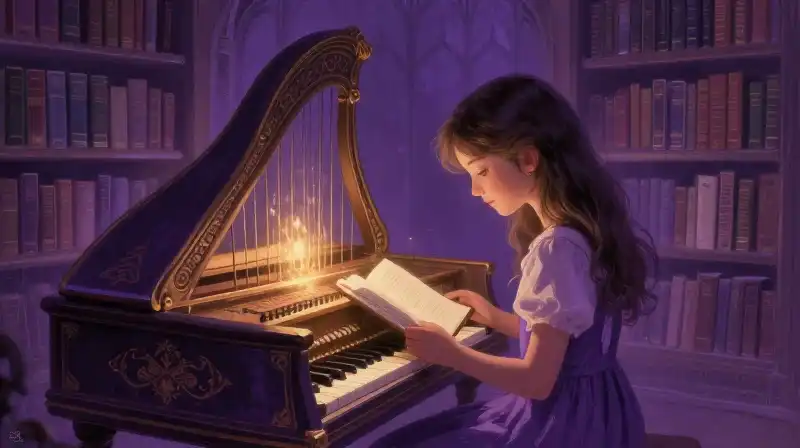
The protagonist, Beauty, is far more than simply “pretty” in the traditional sense of the word. According to the original accounts, she is portrayed as deeply engaged and intellectually curious. She is not only kind but is also someone who reads and plays the harpsichord, using these skills to maintain her dignity while managing their family’s decline [3]. Her defining characteristic is not her beauty, but her willingness to sacrifice herself for her family, even as her older, pride-driven sisters dismiss her humility and their poverty [3]. She represents the ultimate lesson in choosing inner goodness over external vanity.
The Beast: A Tragedy of the Unseen Self
The Beast is not merely a monster; he is a reflection of the curse. His monstrous appearance is the external manifestation of his internal isolation and resentment. His journey is a search for empathy. In one significant scene, the Beast uses a magical rose provided by Beauty’s father to issue a bargain: he requires the merchant to surrender one of his daughters, provided the merchant returns within three months [1]. The ensuing narrative is a quest for recognition. The climax occurs when the Beast and the “Unknown” (the figure Beauty dreams of) are revealed to be one and the same, reinforcing the ultimate theme that appearances are fundamentally deceptive [1].
A Tale of Contrast: Comparing Versions of the Story
Because the story has traveled across borders and ages, many adaptations exist. For those seeking the most authentic historical connection to German folklore, it is worth noting that the Brothers Grimm collected a distinct variant of the story, known as *The Summer and Winter Garden* (Von dem Sommer- und Wintergarten) [Competitor Snippet]. This comparison helps parents and educators distinguish between different narrative intentions:
| Feature | Original 1740 Version (Villeneuve) | Beaumont’s Quintessential Version | Grimm’s Variant (The Summer and Winter Garden) |
|---|---|---|---|
| Narrative Focus | Complex character backstories and deep mythology | Romantic moral lesson (Love breaks the curse) | Varies; often focuses on local folk motifs and specific character dynamics |
| Heroine’s Role | Intellectually engaged; works for her family | A symbol of pure, selfless love | Often specific to the geographical and social setting of the collector |
| Structural Detail | Long, detailed prose with high complexity [2] | Abridged and tightened for juvenile readers [1] | Distinct folkloric nuances (source: competitor snippet) |
The Language of Magic: Symbols and Enchantment
In these stories, the magical elements are not merely window dressing; they are crucial tools that bridge the gap between the mundane and the magical [1]. These enchanted items allow the characters to navigate a world where emotional truth is more potent than physical reality.
- The Flying Horse: This enchanted mode of transport represents the suspension of the physical world. It allows the journey to transcend the limitations of Earthly logic, symbolizing the extraordinary path Beauty must take toward true connection [1].
- Enchanted Rings and Servants Transformed: The transformation of servants into stone, or the presence of enchanted objects, symbolizes how love and emotion have the power to “stone” or freeze the current state of being. The transformation is reversible, meaning the emotional state of the characters dictates the physical reality of the castle [1].
- The Roses: Roses, particularly the one gifted by the father, serve as a concrete marker of the “bargain” and the ticking clock of the curse. They tie the human world of commerce and sacrifice directly into the magical decree [1].
Understanding the Heart of the Beast: What Does the Story Really Teach?
The ultimate message of Beauty and the Beast transcends the simple idea of finding a mate. It is a nuanced exploration of how society judges external traits and how, conversely, the cultivation of inner virtues leads to ultimate liberation. The tale operates as a powerful allegory for “superficiality versus inner worth” [3]. The sisters represent the danger of prioritizing appearance and worldly success, while Beauty’s commitment to dignity and sacrifice in the face of economic ruin is a testament to the power of humility. The Beast’s eventual release is not predicated solely on romantic passion, but on the acceptance of *who he is*—an acceptance prompted by a genuine, unadulterated act of love [1, 2]. The story affirms that the true self is always present, waiting to be recognized beneath the surface.
A Synthesis for Bedtime and the Classroom
For parents and educators, Beauty and the Beast provides a magnificent, layered text. For bedtime, the story offers a gentle invitation to reflect on inner beauty, allowing children to feel the comfort of a moral journey completed—the magic that brings resolution and light [1]. In the classroom, it serves as a potent discussion point about the difference between *being seen* and *seeing*. It allows students to delve into themes of social class, pride, and the courage required to stand up for one’s beliefs when faced with the pressures of conformity or poverty. Ultimately, the story reminds us that the most “magical” creatures are those that have the capacity for empathy, and the greatest “beauties” are those who possess genuine character, regardless of the shape they take.
Sources
- Beauty and the Beast — en.wikipedia.org
- The Original Beauty and the Beast Story — pookpress.co.uk
- Beauty and the Beast — sites.pitt.edu
Frequently Asked Questions
What happened in the original story of Beauty and the Beast?
The first known version, written by Gabrielle-Suzanne Barbot de Villeneuve in 1740, featured a young prince who lost his father and was under the care of an "Evil Fairy." This fairy caused a tragic curse which could only be broken through a maiden's act of true love.
Related Articles