

Hans Christian Andersen Stories: Heartwarming Tales of Transformation


Introduction
Imagine a world where a simple paper-cut swan can hold the entire history of a child’s journey, where tiny creatures feel the ache of being overlooked, and where the most profound magic happens in the quiet moments of change. That is the universe conjured by Hans Christian Andersen, the Danish author whose 156 literary fairy tales \[1\] have captivated hearts across generations.
While some of his narratives—such as “The Emperor’s New Clothes”—offer sharp social commentary or lessons in humility, the enduring magic of Andersen often rests in the “heartwarming” tales of transformation. These are the stories that sit perfectly in a bedroom, the ones that teach our children that their current state does not define their destiny. They are rich in symbolism, from the emotional life of a simple tallow candle \[1\] to the sweeping grandeur of a swan’s ascent. If you are looking for stories that soothe the bedtime ritual while simultaneously providing deep insights into character, resilience, and self-discovery, look no further.
The Poetry of Imperfection: Finding Magic in the Marginalized
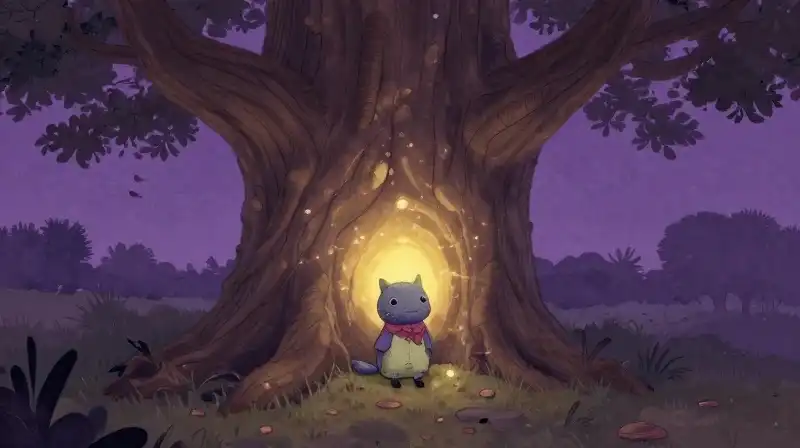
Andersen’s greatest gift to children’s literature is his unwavering focus on the overlooked. His stories are never just about princes and princesses; they are about the neglected. This gives his work a profound emotional resonance, making the reader root not just for the “winners,” but for those struggling beneath the surface.
In his narratives, transformation is rarely a simple, instantaneous event. It is usually a slow, hard-won internal process. This gradual shift—the emotional turning of a life—is what makes them so deeply satisfying for both parents and young readers. The tales contrast the perceived ideal of society with the harsh realities faced by individuals, allowing children to process their own moments of feeling “different.”
Analyzing the Symbol of Transformation in Key Tales
The metaphor of transformation is arguably the central “color palette” of Andersen’s work. It speaks to the idea of inherent worth, even when hidden.
| Story | Initial State (The Challenge) | The Transformation (The Promise) | Theme for the Reader |
|---|---|---|---|
| The Ugly Duckling | Mistreated, drab, and ostracized among his own kind. | Discovering his true, magnificent form as a swan. | Self-acceptance and the inevitability of authentic growth [1]. |
| The Little Mermaid | Desiring the surface world and a life of human complexity. | Trading her voice (her inherent self) for a chance at change. | The costs of dreams and the courage to seek change [1]. |
| The Tallow Candle | A candle that feels its own unappreciated, burning existence. | Finding its purpose by serving others, even when the flame dwindles. | The value of being useful and the dignity of service [1]. |
A Bedtime Selection: The Gentle Power of Narrative Change
For parents and educators seeking specific stories to encourage a sense of hope, resilience, or calm during a bedtime routine, Andersen offers narratives that focus heavily on the concept of inner light and change. Here are specific recommendations:
- The Ugly Duckling (The Story of Acceptance): This tale is the quintessential narrative of the outsider. While its initial chapters can be melancholic, the final, magnificent revelation is a powerful, heartwarming affirmation that true beauty and worth exist beneath the surface, regardless of current appearances. It is a perfect story for children needing validation.
- The Steadfast Tin Soldier (The Story of Inner Strength): Though the story deals with loss, it is intensely heartwarming because of the soldier’s dedication and bravery. His steadfast loyalty in the face of the wind and the fire teaches children about consistency and unwavering commitment, even in difficult circumstances.
- The Princess and the Pea (The Story of Sensitivity): This tale is often a delightful entry for the younger end of the “stories for kids” spectrum. It emphasizes a deep sense of awareness and intuition. The idea that true royal quality—or deep sensitivity—can be felt even in the smallest detail offers a beautiful way to validate a child’s feelings.
Addressing the Core Question: Which Tale is the Most Heartwarming?
Based on the universal themes of self-discovery and emotional journey, many readers find “The Little Mermaid” to be the most emotionally resonant. The core of that story is the yearning for something more. The mermaid’s choice to sacrifice her voice—her unique voice—to achieve transformation is a dramatic representation of the lengths one will go to find a better, more authentic life. While “The Ugly Duckling” provides the perfect external confirmation of transformation, “The Little Mermaid” explores the internal drive for it, making her journey exceptionally powerful and moving \[1\].
The Weight of Social Truth: When Morality Meets Magic

Andersen’s work is not purely escapist. He is a keen social observer, and many of his tales use magic to hold up a mirror to society. This is where the narratives transition from merely “heartwarming” to genuinely illuminating for older children and parents. His stories frequently explore social critique and the corrosive nature of collective delusion \[1\].
Consider “The Emperor’s New Clothes.” On the surface, it’s a tale of a child exposing a lie. But its deeper resonance is about the collective human need to maintain appearances, even when it makes us look foolish. The child’s simple truth is the only force capable of cutting through the social deception. For the child reading this, it teaches a vital lesson: it is always safe—and brave—to speak your own truth, even if it contrasts with everyone else’s perceived reality \[1\].
Art and Atmosphere: Visualizing Andersen’s Worlds
The atmosphere of an Andersen tale is as crucial as its plot. The visual elements, whether in the illustrations by Vilhelm Pedersen or the symbolic paper cutting Andersen created himself \[2], often capture the transition between life and decay. His paper motifs—such as the transformation of the “ugly duckling into a swan”—function as powerful visual metaphors for the human experience of change. For educators planning lessons, focusing on the contrasting palettes of “before” and “after” a character’s transformation (the drab browns and grays versus the shining gold of a swan) can create a potent lesson in perspective.
Synthesis: The Lasting Lesson of the Little Storyteller
The lasting significance of Hans Christian Andersen’s stories lies in their ability to take large, complex concepts like identity, societal pressure, and self-worth, and distill them into a narrative that a child can grasp. His work moves beyond simple moral fables; it offers psychological insights packaged in a magical veneer. Whether the story is a gentle exploration of a candle finding its purpose or a dramatic crossing of the sea by a mermaid seeking a voice she lost, the reader—parent or child—leaves with a renewed sense of what is possible when we dare to be exactly who we are.
Sources
- Hans Christian Andersen — en.wikipedia.org
- Hans Christian Andersen: Fairy Tales and Stories — hca.gilead.org.il
Frequently Asked Questions
What is Andersen's most heartwarming story?
Based on the themes of self-discovery, many readers consider "The Little Mermaid" the most emotionally resonant tale. While "The Ugly Duckling" offers perfect external confirmation of transformation, "The Little Mermaid" is powerful and moving because it explores the internal drive to find a better, more authentic life.
Related Articles