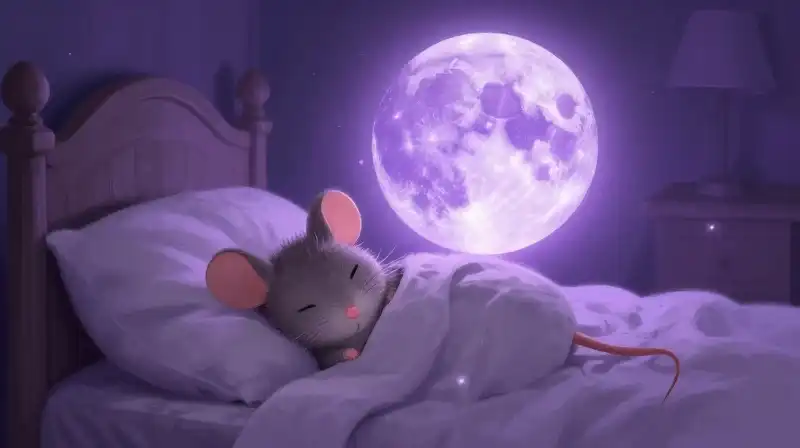

The Calming Power of the Goodnight Moon Bedtime Ritual

Introduction
For many parents and caregivers, bedtime is not just an ending, but a battlefield—a time filled with lingering energy, worried thoughts, and the quiet negotiation of a reluctant transition. When we are looking for a way to ease the night, we often turn to the predictable comfort of children’s stories. Among these, the archetype embodied by *Goodnight Moon* is more than just a cute tale; it is a meticulously crafted, psychological blueprint for transition. It transforms the chaos of a waking world into a gentle, predictable ritual, allowing a child—or a little bunny—to systematically say goodnight to the known, paving the way for the unknown.
This narrative structure is not merely a passive lullaby; it is an active, methodical process of grounding and release. It provides a “safe” sensory inventory that helps the child anchor themselves in their immediate surroundings before the big leap into sleep. As we explore the elements of this beloved story, we uncover the precise mechanisms of calm: the subtle power of repetition, the gentle broadening of scope, and the magic inherent in a quiet, assured tone.
The Mechanics of a Calming Ritual: From Present to Infinite
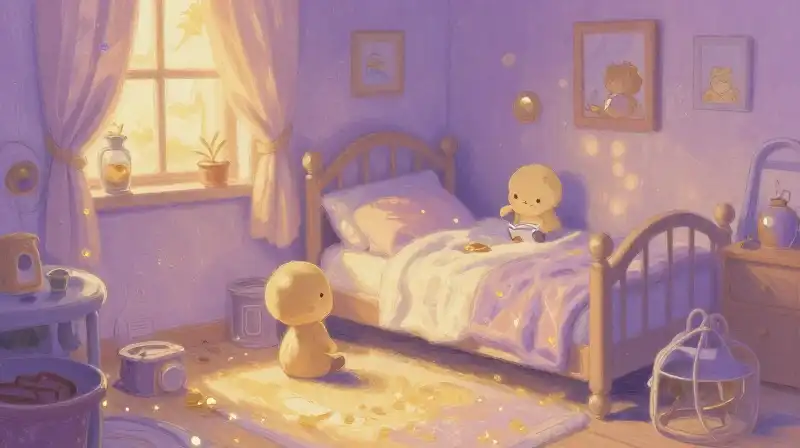
The “Goodnight Moon” narrative succeeds because it operationalizes the concept of the ritual. A ritual, by definition, is a series of prescribed actions that create a sense of reliable safety. In the story, the protagonist doesn’t just fall asleep; they embark on a structured tour of their immediate world. They methodically bid goodnight to objects, moving through a spectrum of familiarity and scale [1]. This systematic approach provides the child with a “cognitive checklist” for winding down.
The Expanding Scope of Goodnight
The narrative strategy is brilliant in its gradual broadening. The child’s focus moves seamlessly from the most concrete, tangible objects—like a comb, a brush, or a bowl full of mush [2]—to the entire enclosed space of the room. This slow expansion of focus teaches the child that safety is portable and that one can eventually transition their attention from specific items to the larger environment.
Crucially, the ritual eventually directs the child’s attention outward to the vast world just beyond the window. By whispering goodnight to the swaying trees, the nesting birds, and the glowing moon [1, 2], the story fosters a beautiful harmony. It acknowledges the existence of the wider world while simultaneously assuring the child that this vastness is also quiet, peaceful, and aligned with their own safe space. This shift from the immediate interior to the quiet exterior is a powerful tool for managing nighttime anxiety, assuring the child that the “outside” is not threatening, but merely resting.
Visual and Auditory Anchors: Building the Sanctuary
Children, especially those navigating the transition to sleep, rely heavily on sensory cues. The “Goodnight Moon” aesthetic is designed to be incredibly soothing and predictable. The use of a “great green room” immediately sets a tranquil, enclosed tone [2]. The palette—deep, harmonious, and muted—creates a visually comforting environment. Colors here are not for excitement, but for grounding. The presence of specific, distinct items, like the red balloon, or the two little kittens, provides a rich sensory inventory that serves as mental anchors [2].
The auditory environment is equally important. The consistent, calm voice of the quiet old lady, who whispers “Hush,” provides an authoritative yet tender modeling of restfulness [2]. This voice is the anchor of safety. It is not a booming command, but a gentle reassurance that the time for activity is over and the time for peace has arrived.
Light and the Embrace of the Dark
A common concern for young children is the “dark,” which can feel limitless and scary. The Goodnight Moon narrative addresses this through a form of gentle magical realism. The presence of ceiling decor, like glow-in-the-dark stars, functions as a practical, magical solution. The story explicitly highlights how these glowing points can make a child feel “brave in the dark” [1]. Furthermore, in more modern adaptations, the magic deepens—the moon itself becomes an active participant, whispering “Goodnight” back to the child, enveloping them in a protective, animated glow [1, 2]. This magical affirmation turns the dark, often perceived as empty or dangerous, into a “safe, starry sanctuary.”
The Journey from Literal to Abstract: Letting Go
One of the most profound and insightful aspects of the Goodnight Moon ritual is the psychological progression of its ending. The routine starts with the concrete (the mittens, the picture of the cow jumping over the moon) and ends with the abstract. The protagonist eventually moves beyond the objects to say “Goodnight nobody” and “Goodnight noises everywhere” [2]. This final phase is a masterful technique for cognitive release. It encourages the child’s mind to let go of lingering stimuli and expectations—both the literal objects in the room and the imagined sounds—and accept the encompassing silence of the night.
This transition mirrors the natural process of sleep itself: the conscious mind gradually quiets down until the “noises” and “things” fade, leaving only the soft, internal drift toward dreams. The narrative acts as a linguistic bridge, giving the child permission to relinquish the clutter of their day.
Dreamscape as a Bridge
As the child finally surrenders to sleep, the narrative shifts once more into a magical, expansive dreamscape [1]. The concluding imagery—imagining flying among the stars, riding a toy train through the sky, or having a picnic on the moon—offers parents a beautiful, imaginative bridge to peaceful rest. This isn’t just a metaphor; it’s a narrative reward, transforming the cessation of waking life into a magnificent adventure. It affirms that sleep is not an absence, but a joyful journey into a vast, exciting place.
Practical Uses: Personalizing the Ritual for Classroom and Home
For parents looking for a specific, personalized approach to calming rituals, modern adaptations provide a perfect model. In stories like that of a little bunny named Max, the routine is intentionally left open to customization [1]. This allows caregivers to replace the generic items in the classic text with the child’s own specific belongings. This act of personalization is vital for effectiveness; it takes the abstract ritual and roots it in the child’s tangible reality. Instead of merely saying goodnight to the generic “mush,” a child can be guided to say goodnight to their own favorite teddy bear, a specific toy train, or a beloved fishbowl [1].
Educators can utilize this structure to teach “mindfulness transitions” in a gentle way, using the ritual to help children move from a high-stimulation activity (like play) to a resting state. This structured, predictable routine reduces “switch-time” anxiety in children by giving them a manageable script for closing the day.
Synthesis: The Enduring Magic of the Quiet Goodnight
What makes the Goodnight Moon ritual so remarkably effective is its unwavering respect for the child’s internal landscape. It honors the necessity of structure while embracing the possibility of wonder. It doesn’t demand silence; it offers a path to it. By providing the concrete tools of routine—the systematic inventory, the gentle voice, the transition from object to abstract thought—it gently carries a child from the busy, bright reality of the day into the quiet, glowing possibility of dreams. It is a masterpiece of subtle magical guidance, teaching us all that sometimes, the most powerful magic is simply the magic of a peaceful, predictable close.
Sources
- Goodnight Moon — readthetale.com
- Goodnight Moon — readstoriesforkids.com
Related Articles