
Why The Ugly Duckling Matters: Lessons on Self-Acceptance and Belonging

Introduction
Few children’s tales possess the quiet power of transformation, and few themes resonate as deeply as the one found in “The Ugly Duckling.” This story isn’t just a soothing bedtime narrative about a little gray bird finding a home; it is a profound exploration of identity, resilience, and the eventual realization that our appearance does not define our worth. For parents and educators, this classic tale offers a rich roadmap for discussing self-acceptance and the arduous journey toward discovering one’s authentic self—a journey that, though filled with periods of intense isolation and rejection, ultimately leads to beautiful resolution.
The Weight of Being Different: Early Rejection and Social Misfit
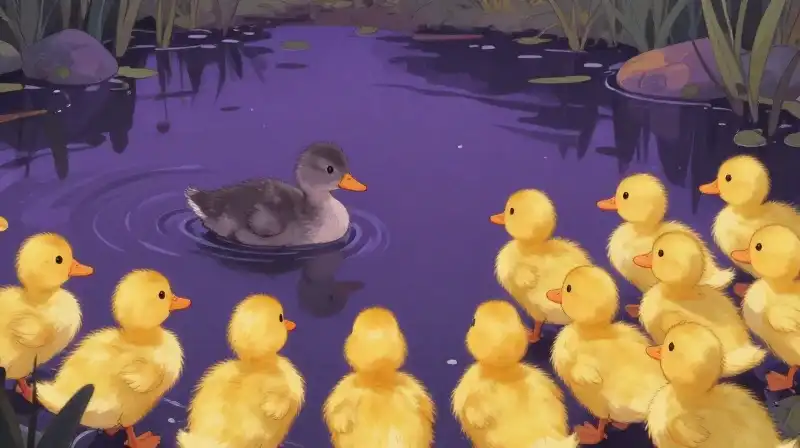
The story begins on a farm where the initial sweetness quickly curdles into social hostility. The young duckling is immediately designated as the “odd one out.” While Momma duck attempts to offer comfort, reminding him he is “just as special” despite his coloring [1], the overwhelming sentiment of the flock is mockery. He is routinely ridiculed by the bright, fluffy yellow ducklings, who mock him for being “big and weird” [1]. This pattern of escalating social rejection sets the core conflict: the gray duckling feels profoundly isolated in a world that seems designed for a certain uniform perfection.
His displacement continues when he approaches the sophisticated, graceful swans. At first glance, the swans appear as intimidating figures [1], and the duckling’s feeling of inadequacy only grows. The initial dismissal he faces is sharp, hearing others call him, “Go away! We will not play with you! You are ugly” [2]. This early cruelty is not just about aesthetics; it represents a common human experience: the feeling of not quite fitting into the established social mold.
The Crucible of Solitude: Facing the World Alone
As the farm life fails to provide him with the community he needs, the duckling embarks on a period of perilous solitude. His journey takes him through a demanding landscape, where the threats are both animal and environmental. He must contend with a massive storm during which he encounters a hungry dog, a moment that heightens the weight of his isolation and fear [2]. This period emphasizes the psychological toll of loneliness, making his later success all the more meaningful.
Further instances of vulnerability occur as he seeks temporary refuge. He takes shelter in an old woman’s hut, but even there, he faces scrutiny and mockery from a tomcat and a hen who question his right to stay [2]. These brief chapters of seeking safety without finding peace underscore a critical theme: belonging isn’t a place; it’s a realization.
The Metamorphosis: Reflection and the Discovery of Self
The most powerful moment in the story is its climax—the realization of his true nature. His transformation from a dull gray creature to a magnificent, silver-winged swan is not simply a physical change; it is a profound internal shift. As he catches his own reflection in the lake, he begins to understand the disparity between his perceived “ugliness” and his inherent, magnificent beauty [1/2]. The swans, who previously seemed out of reach, now welcome him, explaining that they accepted him because they “don’t care how birds look” [2].
This moment shifts the narrative’s focus entirely. It moves away from the simplistic idea that he *became* beautiful and instead focuses on the idea that he always *was* beautiful, and he simply hadn’t recognized his own true form or found a community that reflected it. The ultimate truth, as the story suggests, is that “true beauty was inside” [1].
The Resilient Spirit: Lessons in Bravery and Persistence
For those looking for concrete takeaways, the duckling’s journey serves as a blueprint for resilience. His survival is not guaranteed; it is earned through sheer persistence. During the harsh winter, the duckling faced extreme challenges, including diving into icy holes to find food [2]. These scenes are vital for young readers as they illustrate that overcoming personal struggles requires immense bravery and continuous effort.
The story’s ending, while hopeful, is earned. He does not become a swan by accident; he endures rejection, loneliness, storms, and a harsh winter before finally reaching his chosen flock. His ultimate decision, “This is the flock for me” [2], is a powerful affirmation of finding a community that accepts his entire self, flaws and all.
Why This Tale Matters at Bedtime: A Guide for Parents and Educators
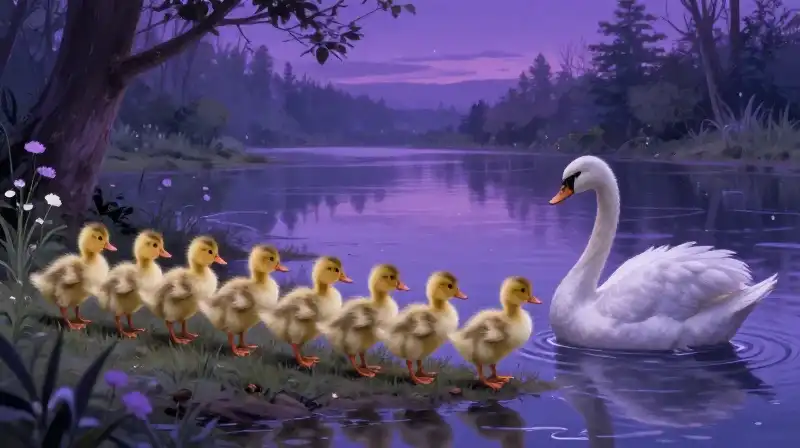
When reading this classic to children, the goal is to ground the abstract theme of “belonging” in concrete, sensory experiences. This tale, with its vivid contrasts, is perfect for a vivid, imaginative bedtime experience.
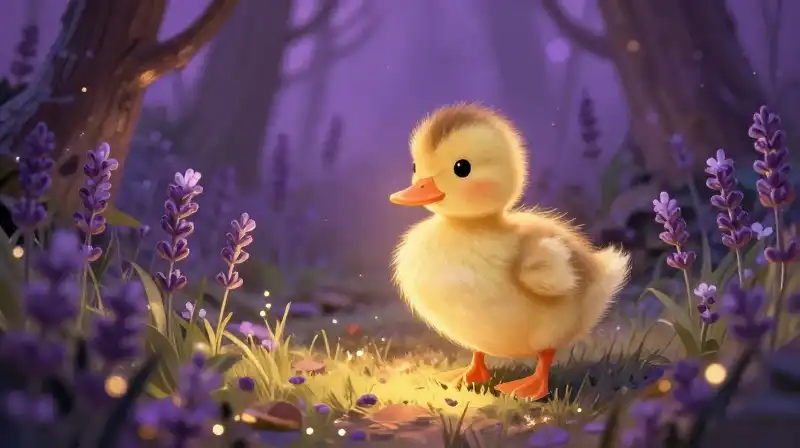
The Power of Visual Contrast: The story uses strong visual language—the contrast between the “fluffy yellow ducklings” and the “big, gray duckling” [1] is immediately accessible to a child. As you read, encourage your child to notice these specific details, making the narrative highly visual and easier for them to internalize. By the end, the “silver shining wings of the swans” [1] provide a brilliant, hopeful payoff.
- Encourage Empathy: Before the transformation, discuss how the duckling felt—not just sad, but perhaps frustrated and invisible. This validates children’s own feelings of being misunderstood.
- Validate Struggle: Don’t rush to the swans. Dedicate time to the scenes of the storm, the dog, and the hungry winter. This reinforces the idea that growth comes from enduring hard times.
- Define “Flock”: When discussing the ending, emphasize that a “flock” is not just a group of similar people, but a group that supports you, regardless of what you look like. This encourages looking for “your people” in the world.
Addressing Common Questions About the Story
While “The Ugly Duckling” is a universally loved classic, several questions often arise about its deeper meaning and practical use.
What is the moral of the Ugly Duckling?
The story offers multiple, nuanced lessons. While the most famous one is “look for your true self,” the deeper morals emphasize kindness, bravery, and the importance of authenticity [1]. The ultimate lesson is that genuine acceptance comes from others who appreciate character over appearance [2].
Is the transformation magical or just physical?
In the folk traditions, the transformation is often presented as a natural progression—a sudden, beautiful awakening. For pedagogical purposes, it is best to view it as a symbolic moment where the duckling’s internal awareness aligns with his true potential. The swans don’t *give* him beauty; they simply *see* it in him [2].
Conclusion: Why This Story Endures in the Family Library
The persistence of “The Ugly Duckling” lies in its emotional honesty. Unlike some fairy tales that offer a quick, easy resolution, this story requires the duckling—and by extension, the reader—to work. It is a narrative that acknowledges the “ugly” days—the rejections, the hunger, the cold—before arriving at the warmth of the community. It provides a comforting and powerful vision of belonging. It reminds us that everyone, even the “big and weird” one, has a place, provided they have the courage to seek out the right flock.
***
Sources
- The Ugly Duckling — readthetale.com
- The Ugly Duckling — worldstoriesbank.org
Related Articles