Pushkin’s Magical Worlds: Symbols and Meaning in His Fairy Tales

Introduction
In the vast landscape of Russian literature, Alexander Pushkin’s fairy tales do more than just entertain; they function as intricate, luminous maps of the human spirit. To follow a story like The Tale of Tsar Saltan is not merely to watch a hero gain a crown; it is to witness an enduring, beautifully complex struggle against fate, with the entire known universe folded into a singular, shimmering island of wonder [2]. These tales offer a unique window where ancient Slavic wisdom meets imaginative brilliance, creating worlds so vivid they inspire the intricate artistry of Kholuy and Palekh painting [1]. For parents and educators, exploring Pushkin’s narratives means diving into a world where a simple golden-domed kingdom is a symbol of aspiration and a singing squirrel is a conduit to pure, untapped magic. Let us look beneath the surface of these celebrated stories to discover the deep meanings, potent symbols, and lasting lessons that make Pushkin’s magical worlds so vital.
The Geography of Dreams: The Island as Symbol
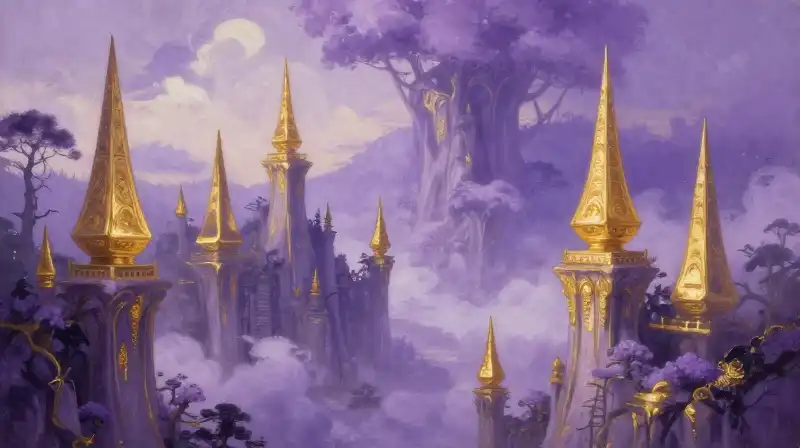
Perhaps the most potent element in Pushkin’s world is the magical setting itself. The island that often serves as the central stage—previously uninhabited, pristine, and rich with mythical bounty—is far more than just a picturesque backdrop. It is a powerful symbolic representation of possibility, a space where order and chaos can meet, and where the hero’s inner potential can fully manifest.
When Gvidon arrives, establishing his golden-domed kingdom, he is creating not just a political entity, but a realm of perfected moral balance, built upon discovery and strength [2]. This concept echoes the ancient idea of the mythical homeland or the perfect, uncorrupted space, a theme that can be found in oral epics spanning from Central Asia to ancient Greek folklore [2]. For a child, this island is the perfect visualization of a “magic” place, a sanctuary where the rules of the mundane world are suspended. It serves as a potent lesson in self-reliance and the power of a new beginning.
Protagonists and Antagonists: Mirrors of Inner Conflict
The figures in Pushkin’s stories are rarely one-dimensional. They act as mirrors, reflecting the virtues and flaws we see within ourselves, allowing children to process complex emotions through archetypal conflict.
The Hero’s Journey: Gvidon and the Barrel of Fate
In The Tale of Tsar Saltan, the protagonist, Gvidon, is the quintessential triumphant hero. His emergence from a sea barrel, cast there by envious family members, is a profound symbol. This detail signifies survival and a powerful, often brutal, triumph over familial malice and the “underworld” of rejection [2]. Gvidon’s quests—often requiring him to find specific, miraculous items like three magnificent knights or the singing squirrel—are not just adventures; they are externalized tests of his virtue and his ability to recognize and nurture the miraculous within the world [2].
The Shadow of Malice: Baba Babarikha and Deceptive Cunning
Conversely, antagonists like Baba Babarikha or the jealous sisters embody the forces of envy and deceit. They are not simply evil; their defining trait is often a deceptive cunning that serves as the catalyst for the hero’s danger and growth [2]. Understanding these characters is crucial for teaching children about the nuance of ‘villainy’—it is often a reflection of an internal lack of strength or acceptance, rather than pure, chaotic evil. They challenge the hero to prove his worth through action and morality, making them excellent tools for discussions about character in the classroom.
The Language of Magic: Symbols to Seek
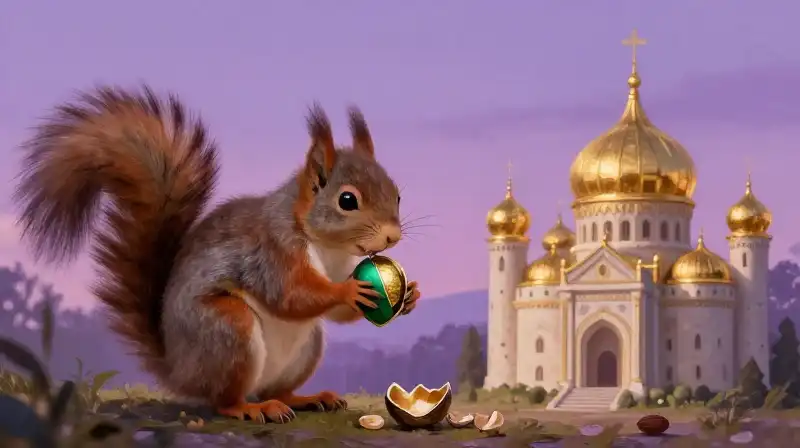
Beyond the characters and settings, Pushkin weaves a tapestry of specific, evocative symbols. These elements provide concrete, sensory details that elevate the stories beyond mere plot and offer material for imaginative play.
- The Singing Squirrel: This creature, which gnaws on nuts encased in emerald and gold shells, represents the inherent value of small, unassuming beauty and the discovery of hidden treasure. It teaches the child that the most miraculous things can come in tiny, unexpected packages [2].
- The Golden-Domed Kingdom: Gold, in this context, is rarely just wealth. It symbolizes the ideal, the “Golden Age,” and the successful application of wisdom and virtue—a kingdom built not just on strength, but on hope and perfect structure [2].
- The Sea Barrel: As mentioned, this is a potent symbol of rebirth and unexpected emergence. It signifies that even when one is cast into the depths of difficulty, one can emerge stronger and transformed [2].
- The Emerald Shell: Found on the singing squirrel’s nuts, the emerald represents life, vitality, and potent, often hidden, magic. Its appearance juxtaposed with the gold adds a depth of color that is both precious and vibrant [2].
Navigating the Depths: An Analysis of Tale Type
Scholars have traced the lineage of these powerful narratives. For instance, The Tale of Tsar Saltan belongs to the East Slavic variation of the folk tale type 707, which focuses on the themes of deceit and the miraculous survival of a child [2]. This deep folklore root—documented historically as the earlier The Tale of Katarina Saterima (1794–1795)—shows that these themes were already ancient and deeply resonant with Russian culture [2]. This historical weight adds gravity to the stories, suggesting that the lessons about patience and perseverance are not merely literary inventions, but echoes of a shared cultural wisdom.
What Does This All Mean for Bedtime and Education?
Pushkin’s tales offer rich thematic ground for both a calming bedtime ritual and stimulating classroom discussions:
- Thematic Consistency for Soothing Dreams: Tales centered on successful quests (like finding the miraculous items) can be wonderfully soothing, as they affirm that diligence and moral courage lead to a peaceful, ordered world, which is perfect for settling a child [2].
- Promoting Intellectual Engagement: By having narratives that integrate ancient knowledge and motifs (such as references to the Kievan Rus or the role of merchants), Pushkin’s work encourages parents and educators to discuss culture, history, and economics alongside the magic [2].
- Understanding the Hero’s Complexity: Discussion of antagonists like Baba Babarikha helps children move beyond simplistic “good vs. evil” thinking, fostering empathy and a deeper understanding of motivation—a key skill for critical thinking.
Did Pushkin Write Fairy Tales?
The question of authorship is handled with great historical precision: Pushkin collected, refined, and popularized these narratives, drawing heavily from existing Russian folklore and folk tale types, rather than inventing them entirely from a void [2]. His genius lay in his ability to take these ancient, powerful archetypes and polish them into the exquisitely clear, elegant prose that captivates readers today. He elevated the folk tradition, giving these stories the aesthetic weight and universal resonance that still draws collectors of beautifully illustrated editions featuring artists like Kholuy or Palekh [1].
The Enduring Spark of Imagination
Pushkin’s magical worlds do not offer simplistic answers; they offer profound questions. They ask how we survive malice (the sea barrel), how we identify hidden treasure (the singing squirrel), and how we build worlds based on hope (the golden-domed kingdom). By exploring these symbols and the complex nature of his characters, we find that Pushkin’s tales are not just beautiful stories to be skimmed, but vital pieces of cultural and moral analysis. They provide a limitless well of imaginative material—be it for soothing a child’s bedtime or deepening a student’s appreciation for global storytelling—that remains as vivid and resonant today as the first whispers of the Kievan Rus in his verses [2].
Sources
- Some books so amazing illustrated: Pushkin’s Fairy Tales : r/RussianLiterature — reddit.com
- The Tale of Tsar Saltan — en.wikipedia.org
Frequently Asked Questions
Did Pushkin write fairy tales?
Pushkin did not invent these stories entirely; he collected, refined, and popularized the narratives by drawing heavily from existing Russian folklore and folk tale types. His genius lay in polishing these ancient archetypes into clear, elegant prose.
Related Articles