
The Best Hans Christian Andersen Fairy Tales: Little Mermaid & More


Introduction
Hans Christian Andersen’s stories exist in that rare and delicate space between the whimsical dream and the sobering truth. They are not simply lists of fantastical events; they are precise emotional portraits and moral explorations disguised as tales of mermaids and trolls. For parents and educators, navigating Andersen’s vast collection—which spans 156 tales distributed across various editions [1]—requires more than a simple list. It requires understanding the *why* of the tale. What does the Little Mermaid sacrifice? What does the Ugly Duckling truly teach? And how can a child find the courage of the Emperor’s child within their own small world?
This guide moves past the predictable titles to illuminate the emotional cores of the most resonant Hans Christian Andersen fairy tales. We explore how these narratives use magical creatures, symbolic colors, and deeply human struggles to create enduring lessons that resonate from the smallest child to the most contemplative adult. We will help you select the perfect story for a bedtime ritual or a classroom discussion, transforming a simple storytime into a genuinely illuminating experience.
The Iconic Stories: A Curated List of Enduring Tales
Among the countless titles Andersen penned—including “The Tinderbox,” “Little Claus and Big Claus,” and “The Princess and the Pea” [1]—some have become cultural touchstones. These particular stories offer the most depth, making them ideal for sparking conversation and reflection.
1. The Little Mermaid: The Longing for Transformation
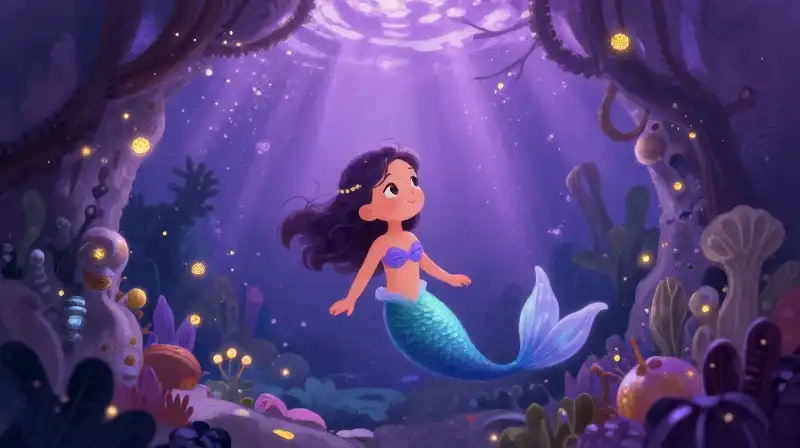
Undoubtedly, “The Little Mermaid” stands as one of his most internationally famous works [1]. It is a tale of profound sacrifice, far beyond a simple quest for a prince. The core of this story is the desperate, yearning desire for a human soul and the tragic consequences of choosing love over one’s native identity. The mermaid’s willingness to surrender her voice and her power to attain a human form speaks to a universal theme: the cost of becoming who you feel you should be.
Child-Friendly Focus: This tale is excellent for discussing intense emotion, longing, and the concept of sacrifice. For younger listeners, focus on the beauty of the ocean and the magic of the transformation; for older ones, discuss identity and the pain of necessary change.
2. The Ugly Duckling: The Virtue of Self-Actualization
“The Ugly Duckling” provides one of the clearest, most comforting lessons in the collection. It serves as a poignant metaphor for overcoming social exclusion. This tale does not shy away from the Duckling’s isolation, but its resolution—the stunning transformation from the “ugly” and the realization that he is, in fact, a swan—is a powerful affirmation of inner worth.
Symbolism of Change: The narrative frequently uses visual cues, such as the transformation depicted in the piece of paper cutting that showed the duckling evolving into a majestic swan [2]. This theme works beautifully for bedtime as a gentle reminder that external appearance is a flawed measure of internal beauty.
3. The Emperor’s New Clothes: A Lesson in Courage and Truth
Perhaps the most potent social commentary in the collection is “The Emperor’s New Clothes.” This story is a sharp look at social conformity, fear, and the quiet power of honesty. The Emperor, who is blinded by vanity and the desire to fit in, is ultimately exposed by a child. This child, by simply pointing out what he sees (nothing), shatters the collective delusion that the court has adopted.
The Power of the Observer: This tale is superb for children who are learning to speak up for themselves. It teaches them that often, the truth is the simplest thing, even when the adults in the room are too afraid to see it. It is a vital lesson in authenticity [1].
4. Tales for the Youngest Heart: Simple Magic and Morals
For very young children, some of Andersen’s shorter, more direct narratives provide excellent moral foundations. Tales like “The Tinderbox” (which features a young protagonist using unexpected ingenuity) and “Little Claus and Big Claus” offer clear lessons in reward, consequences, and simple magic [1]. These stories are perfect for early readers because their themes are focused and their plots are often very clear, providing a gentle introduction to Andersen’s unique style.
Analyzing the Themes: What Andersen’s Stories Really Mean
Andersen’s genius lies in the “chatty, informal style” that made him initially controversial among critics who expected more formal literature [1]. His tales frequently deal with strong moral lessons, but these lessons are rarely delivered as dry dictates; they are discovered by the characters.
The Colors of Transformation and Caution
In analyzing the visual elements of these stories, certain colors carry heavy symbolic weight. While many of his tales involve simple primary palettes, the transformation scenes often utilize specific contrasts:
| Color | Associated Tale/Creature | Symbolic Meaning |
|---|---|---|
| Deep Azure/Green | The Little Mermaid | The call of nature, the deep unknown, and profound yearning. |
| Muted, Muddy Browns | The Ugly Duckling (early stages) | Social isolation, feeling misplaced, and invisibility. |
| Bright Gold/White | The Swan (final stage of Duckling) | Self-realization, purity of being, and transcendent beauty. |
Morality vs. Emotion
A key difference between Andersen and other folk story writers (such as the Brothers Grimm) is that Andersen often prioritizes *emotion* and *internal struggle* alongside the moral outcome. In many of his tales, the moral is not handed to the child at the end, but rather earned through the character’s suffering or realization—a process that makes the lesson much more potent and relatable.
Which Andersen Tale is Best for Different Ages?
Choosing the right story requires matching the tale’s thematic weight and emotional complexity to the listener’s readiness. Here is a guide to selecting the best narratives from the Hans Christian Andersen fairy tales collection [1]:
- Ages 2–4 (The Beginning): Focus on “The Tinderbox” and “Little Claus and Big Claus.” These stories have simpler plots and clear, immediate magical elements, making them perfect for short, engaging listen-alongs.
- Ages 5–7 (The Social World): Introduce “The Emperor’s New Clothes.” This age group is beginning to understand social dynamics, rules, and the importance of truth. This tale is ideal for discussion in the classroom regarding honesty.
- Ages 8–10 (The Deep Dive): “The Little Mermaid” and “The Ugly Duckling” are excellent for this developmental stage. They can handle complex themes of sacrifice, self-acceptance, and enduring friendship, allowing for deeper character analysis.
- All Ages (The Classic): “The Little Mermaid” is the universally recognized classic, fitting well as an entry point for anyone exploring his famous stories [1].
Which Fairy Tale is Andersen Most Famous For?
While Andersen wrote a diverse body of work, “The Little Mermaid” is almost certainly the tale that cemented his international reputation and remains his most iconic story [1]. However, it is important to note that “The Emperor’s New Clothes” is equally famous for its unique commentary on human nature, proving that his fame rests on both sublime fantasy and sharp, insightful social critique.
What Do These Stories Teach Us About Identity?
If one common thread runs through the collection, it is the vital importance of identity. Whether it is the mermaid struggling against the pull of human society or the ugly duckling shedding his false, awkward exterior, Andersen’s characters are always searching for their true selves. This is a powerful, often quiet, lesson: that every creature, no matter how small or “out of place,” has an inherent truth and a place in the world that only they can discover.
Conclusion: The Enduring Magic of the Unconventional
The enduring appeal of Hans Christian Andersen’s fairy tales lies in their refusal to offer easy, flat answers. They require a little bit of emotional labor from the reader, inviting them to sit with a melancholy mermaid or a socially rejected duckling. By approaching the collection with an eye for theme—the sacrifice of the mermaid, the social truth of the emperor, and the self-acceptance of the duckling—you move beyond simply reading a story. You engage in a genuine act of illuminated discovery, finding colors, ideas, and emotional anchors that resonate long after the last page is turned.
Sources
- Hans Christian Andersen — en.wikipedia.org
- Hans Christian Andersen: Fairy Tales and Stories — hca.gilead.org.il
Frequently Asked Questions
What fairy tales did Hans Christian Andersen write?
Hans Christian Andersen authored 156 tales distributed across various editions. Some specific titles mentioned in the article include "The Tinderbox," "Little Claus and Big Claus," "The Princess and the Pea," "The Little Mermaid," "The Ugly Duckling," and "The Emperor's New Clothes."
Which fairy tale is Andersen most famous for?
"The Little Mermaid" is cited as the tale that cemented his international reputation and remains his most iconic story. However, the article also notes that "The Emperor's New Clothes" is equally famous for its sharp and insightful social critique.
What are the 10 classic fairy tales?
The provided article does not list a specific selection of ten classic fairy tales. It highlights several notable stories such as "The Little Mermaid," "The Ugly Duckling," "The Emperor's New Clothes," and "The Tinderbox" as examples of cultural touchstones.
What are the best Andersen fairy tales?
The best tale for the listener depends on the intended age group and complexity. For older children (Ages 8-10), "The Little Mermaid" and "The Ugly Duckling" are suggested due to their complex themes. For younger listeners, "The Emperor's New Clothes" is noted as ideal for ages 5-7.
Related Articles