
Hans Christian Andersens Best Fairy Tales for Bedtime and Magic

Introduction
Some stories offer a comforting embrace, while others provide a gentle push toward brave growth. Hans Christian Andersen, the Danish author whose body of work encompasses 168 distinct tales [1], is a master of both emotional landscapes. His stories—ranging from the delicate flight of a butterfly to the weighty sacrifices of a swan—are not merely entertainment; they are complex mirrors reflecting the human condition, often wrapped in breathtaking magic [2]. For parents and educators, Andersen’s world offers more than just colorful illustrations; it provides rich themes of family, emotion, and the quest for independence that can be used for genuine reflection and discussion.
Andersen’s Legacy: Depth Beyond the Fairy Tale Trope

Andersen’s magic lies in his ability to weave moral complexity into whimsical settings [2]. Unlike simplistic tales, his narratives often require the reader to navigate shades of gray, prompting a deeper understanding of characters and choices. Whether we are examining *The Little Mermaid*‘s yearning or *The Swineherd*‘s dignity, Andersen explores the nuanced friction between human desires and the demanding world of nature and society [2]. This foundational work remains a cornerstone for literary study and adaptation globally [1], because it treats the imagination with a level of precision and emotional honesty that few other authors have matched.
The Architecture of Sleep: Andersen’s Best for Bedtime
Choosing a bedtime story often depends on whether you seek a story to soothe the heart or one to inspire peaceful contemplation. Some of Andersen’s narratives move through a quiet sense of wonder that is perfect for winding down after a long day. These tales often feature gentle transformations or deep connections to nature, which are inherently calming for young minds [2].
- The Butterfly: This whimsical tale often serves as a gentle introduction to themes of transformation and natural beauty, offering a light, non-confrontational narrative that encourages quiet observation.
- The Nightingale: While the story of the nightingale is tied to the search for a thing “more beautiful, e.g., one made of gold” [2], the act of the bird finding its inner, purest value offers a lovely metaphor for finding peace and contentment within oneself, which is ideal for bedtime reflection.
- The Story of the Swineherd: This story exemplifies quiet dignity and loyalty. It focuses on a virtuous character whose steadfast nature provides a comforting, grounded narrative that reassures children about the value of kindness and perseverance.
The Power of Transformation: Tales of Choice and Courage
While some stories soothe, others are intended to inspire and challenge—lessons on growth that are particularly potent for slightly older children or for discussions after sleep. Andersen’s tales are powerful pedagogical tools, addressing feelings, emotions, and the struggle for independence [2].
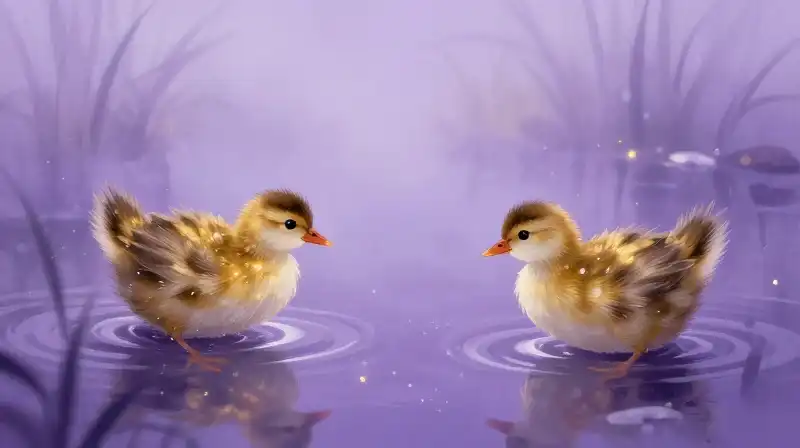
Two of the most resonant stories in this category are The Wild Swans and The Ugly Duckling.
| Tale | Central Conflict | The Moral Choice | Visual and Emotional Tone |
|---|---|---|---|
| The Wild Swans | A sister risks her life and comfort to save her brothers, who have been magically transformed. | Ultimate sacrifice; the resilience required to restore the natural order. | Gothic, high-stakes, deeply empathetic, emphasizing family bonds [2]. |
| The Ugly Duckling | A creature struggles with feeling different and out of place, being ostracized by its peers. | Self-acceptance; discovering one’s true, beautiful nature despite initial rejection. | Poignant, hopeful, and ultimately rewarding, marking a profound emotional journey [1]. |
Decoding the Mythical: Creatures and Symbolism
Andersen’s world is rich with mythical figures that carry deep symbolic weight. For parents and educators, understanding these archetypes can unlock rich learning opportunities [2].
- The Swan: More than just a bird, the swan in The Wild Swans symbolizes a magical state of vulnerability and a natural, unchangeable beauty. Its transformation represents the profound bond between sister and brother, and the cost of that connection.
- The Nightingale: This creature represents the pursuit of ideal beauty and internal searching. Its role in the story encourages children to look beyond external trappings and appreciate intrinsic value [2].
- The Little Mermaid: This archetype explores the profound themes of love and sacrifice within a magical, aquatic realm [2]. It is a classic exploration of what one is willing to give up for a heart.
Andersen’s World as a Learning Tool: Themes for the Classroom
The thematic depth of Andersen’s tales makes them invaluable resources for educators. By examining specific narrative beats, we can touch upon sophisticated concepts in an age-appropriate way. As scholars have identified, Andersen’s narratives successfully touch upon family structures, the navigation of complex emotions, and the realization of individual independence [2].
- Navigating Emotions: Tales allow children to externalize big feelings—like the confusion in The Ugly Duckling or the desperation in The Wild Swans—making it easier for them to understand and name their own emotional spectrum.
- The Value of Effort and Perseverance: Many of his 168 tales feature characters who must overcome daunting obstacles, reinforcing the idea that growth comes through persistent effort rather than luck [2].
- Global Perspectives: The immense reach of his work—translated into over 125 languages [2] and sometimes published in America before Denmark—demonstrates a timeless human need for stories that celebrate diverse archetypes [1].
A Note on Visual History and Modern Translations
For the visual and sensory experience of these tales, those interested in the history of storybooks can appreciate the original illustrations crafted by Danish artists like Lieutenant Vilhelm Pedersen and Lorenz Frølich for the collected Danish editions [1]. To engage with the narrative complexity and rich symbolism of the tales, however, it is often helpful to select a modern, dedicated translation. For those seeking a distinctive, careful rendition that preserves the narrative integrity, works like The Stories of Hans Christian Andersen, translated by Jeffrey Frank and Diana Crone Frank, offer a powerful New Translation from the Danish original [1].
What to Remember: Finding Your Next Chapter
Ultimately, Hans Christian Andersen’s contribution to children’s literature is the elevation of the imagination to a sophisticated level of emotional intelligence. His tales don’t just tell you what happens; they ask you what it *means* to be human. Whether you are looking for a quiet, gentle narrative to soothe a fussy evening or a powerful tale of growth to spark classroom discussion, Andersen’s work offers concrete, deeply felt narratives that connect the magic of the page with the real world.
Sources
- Hans Christian Andersen: Fairy Tales and Stories — hca.gilead.org.il
- Hans Christian Andersen | Bedtime Stories — storyberries.com
Frequently Asked Questions
What are some of Hans Christian Andersen's short stories?
Andersen authored 168 distinct tales, and the article mentions several examples from his collection. Specific stories include *The Little Mermaid*, *The Swineherd*, *The Butterfly*, *The Wild Swans*, and *The Ugly Duckling*.
What is Andersen's most heartwarming story?
The article does not designate a specific story as 'most heartwarming.' However, it describes *The Swineherd* as providing a comforting, grounded narrative and *The Ugly Duckling* as being poignant, hopeful, and ultimately rewarding.
Related Articles