Flora, Fauna, and Merryweather: Guardians of Sleeping Beautys Magic

Introduction
In the tapestry of classical children’s literature, few figures are as instantaneously recognizable or as emblematic of gentle power as Flora, Fauna, and Merryweather. They are more than just colorful supporting roles in a story about a long sleep; they are the watchful keepers of virtue and the tireless agents of change. Whether you are looking for inspiration for a bedtime reading, analyzing the architecture of benevolent power in a classic film, or simply trying to understand why these three benevolent characters hold such a significant place in storybook history, we invite you to step into their shimmering world. These three companions operate as guardians and magical mentors, providing the necessary tools and emotional warmth to steer a young royal through a web of enchantment and peril [1].
The Three Guardians: A Study of Color and Character
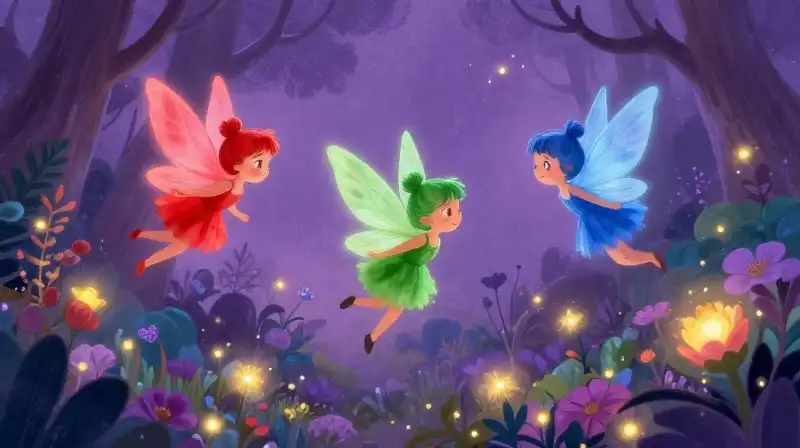
The defining characteristic of these fairies is their distinct, intentional visual coding. The use of red, green, and blue allows readers to immediately categorize their gifts and personalities, moving them beyond generic magical beings into specific agents of protection and nurturing [1, 2]. While their combined purpose is to safeguard Princess Aurora, each fairy contributes a unique facet of the human experience—beauty, kindness, and courage.
Flora: The Eldest Architect of Beauty
Known for her commanding presence as the eldest and the natural leader of the trio, Flora is universally identified by her vibrant red gown [1]. Her role is intrinsically tied to the concept of perfection and presentation. She is the one responsible for gifting Aurora the virtue of beauty, but her influence extends beyond surface appearance. She is instrumental in conjuring powerful artifacts, such as the Shield of Virtue and the Sword of Truth, preparing the princess for the trials she must face [1]. Flora embodies the disciplined strength of leadership.
Fauna: The Heart of the Story
Fauna, standing as the middle fairy, is characterized by her gentle nature, wearing a comforting shade of green [1, 2]. Within the group, she is described as the kindest and most sensitive, focusing her magic on the realm of the soul and the spirit. Her primary contribution to Aurora’s magical legacy is bestowing the gift of song, a melody that can eventually serve as a powerful instrument in the story’s resolution [1]. Fauna represents the deep, resonant well of empathy that fuels true strength.
Merryweather: The Feisty Agent of Change
The youngest of the bunch, Merryweather brings the necessary spark of fiery agency to the group, represented by her striking blue attire [1, 2]. Unlike the gentle bestowal of beauty or song, Merryweather is the most aggressive and feisty of the group [1]. Her critical moment in the narrative demonstrates this assertive power. While she was initially destined to provide happiness, she is the one who intervenes in the moment of crisis, softening Maleficent’s death curse into a deep and necessary slumber [1]. She shows that even the “smallest” members of the family can possess the greatest, most active magical agency.
Thematic Analysis: Beyond the Gift of Gifts
While often simplified as characters that give Aurora presents, the fairies’ function in the narrative is far more complex and deeply psychological. They are not merely delivery mechanisms for “good traits”; they are active participants in the plot, functioning as powerful magical mentors and protectors [1].
Upon the casting of Maleficent’s curse, the fairies transition from mentors to clandestine operatives. They assume the disguise of human peasants to take Aurora into their custody, moving her away from Maleficent’s reach and influencing the course of her life while she is captive [1]. This shows a theme of benevolent protection—they don’t just give advice; they actively protect the individual from external malice, utilizing stealth, wit, and powerful magic to maintain safety [2].
The fairies are portrayed as “cunning” and “busy little ladies” who are never idle. They are often depicted utilizing wands and possessing the ability to shrink down to “glowworm size” to navigate the complexities of the castle and the curse [2]. This physical depiction of diminutive but immensely powerful figures serves to remind the audience that great power often comes in unexpected, humble packages, operating through clever planning rather than brute force.
Practical Magic: Color, Symbol, and Atmosphere
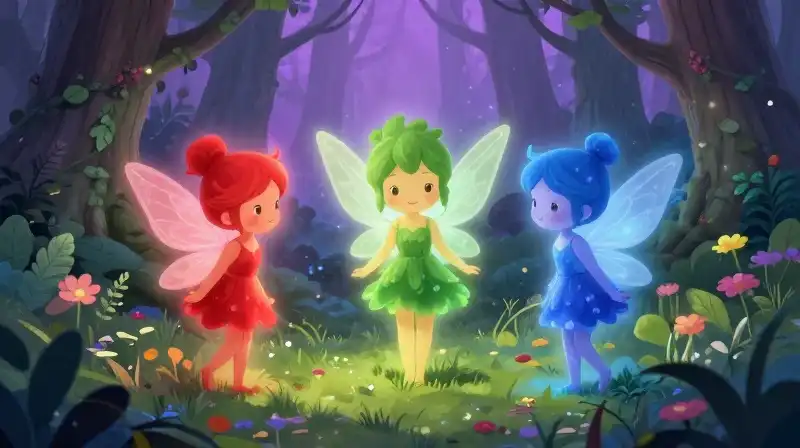
For parents and educators seeking color guidance for storybook illustrations or classroom themes, the triad offers a potent palette rooted in specific, identifiable energy. Rather than generic pastel shades, the 1959 adaptation utilizes distinct primary colors to communicate character traits instantly. This clarity of color provides a stable visual anchor for young viewers navigating the complex emotions of the fairy tale.
-
Red (Flora): Evokes action, passion, and leadership. Use this color to represent conviction and the protective shield of virtue.
-
Green (Fauna): Represents growth, nurturing, and inner harmony. This is the ideal shade for themes of kindness, empathy, and quiet strength.
-
Blue (Merryweather): Signifies calm, depth, and powerful intervention. Blue captures the essence of the unpredictable but essential change required to turn a curse into a peaceful sleep.
Addressing Common Questions About the Fairies
A frequent point of gentle confusion among readers is the exact hue associated with these characters. For example, a common question asks whether Flora is red or pink. In the established 1959 animated adaptation, Flora is characterized by her vibrant red gown [1]. This specific color reinforces her role as the eldest and leader, maintaining a consistent visual language throughout the narrative.
Beyond the Castle: The Fairies in Modern Storytelling
The enduring appeal of Flora, Fauna, and Merryweather lies in their incredible narrative versatility. They are not confined to the walls of the castle. Their presence demonstrates how foundational “good” characters can be adapted across various media while retaining their core essence. In the contemporary animated series Sofia the First, the trio retains their status as magical mentors, taking on the roles of headmistresses at Royal Prep Academy, continuing their mission of guidance and protection [1, 2]. Furthermore, their influence extends into broader video game universes, such as the Kingdom Hearts series, where they assist protagonists in significant battles against Maleficent, showcasing their power and commitment to good across different storytelling mediums [1, 2].
The Lasting Magic of Benevolent Guardians
Flora, Fauna, and Merryweather embody the timeless theme of benevolent protection. They teach children that protection does not always come from a giant, roaring hero; often, it comes from careful observation, dedicated kindness, and small, persistent acts of magical intervention. By providing Aurora with a “toolkit” of gifts and by physically and strategically protecting her, they illustrate that the tools of empathy (Fauna), courage (Flora), and necessary change (Merryweather) are essential to surviving the shadows. They are the constant, guiding light in the fantastical gloom, reminding us that the smallest cast of characters can carry the deepest meaning in a story.
Sources
- Flora, Fauna, and Merryweather — en.wikipedia.org
- Flora, Fauna, and Merryweather | Disney Wiki | Fandom — disney.fandom.com
Frequently Asked Questions
Is Flora red or pink?
Flora is identified by her vibrant red gown. The established 1959 animated adaptation characterizes her using this specific color, reinforcing her role as the eldest and leader of the trio.
Related Articles