
The Evil Queen: Understanding the Archetype of Vanity and Ambition

Introduction
Few antagonists in the realm of children’s literature inspire as much discussion, fear, or even deep curiosity as the Evil Queen. While many storybook villains are driven by simple malice or misguided revenge, the Queen who holds the mirror and wield the poison is driven by a far more nuanced, though equally dangerous, obsession: vanity. She is the living embodiment of the phrase “be careful what you wish for,” turning a desire for perfection into a deadly, murderous quest. To understand the Evil Queen is to look into the complex intersection of beauty, power, and envy. She serves as a potent archetype, representing the societal pressure placed upon figures of high regard, and she teaches a cautionary tale about how the pursuit of an ideal can corrupt the soul. While her likeness has been molded into iconic Disney glamour, her roots lie in the older, sometimes darker, world of folk tales. This guide explores the Queen’s journey from a traveling peddler’s disguise to a mesmerizing cinematic villain, examining how her character functions as a profound study of ruthless ambition and the terrifying power of perceived perfection.
From Humble Archetype to Iconic Femme Fatale
 The Evil Queen is not a single character in all of storybook history; rather, she is a recurring archetype that has evolved across different cultures and media. Before she was the glittering, gothic monarch of Disney’s animated world, she often appears in a less regal form, which allows for a crucial distinction between the foundational folklore and the modern cinematic interpretation.
The Peddler’s Mask in Folk Tradition
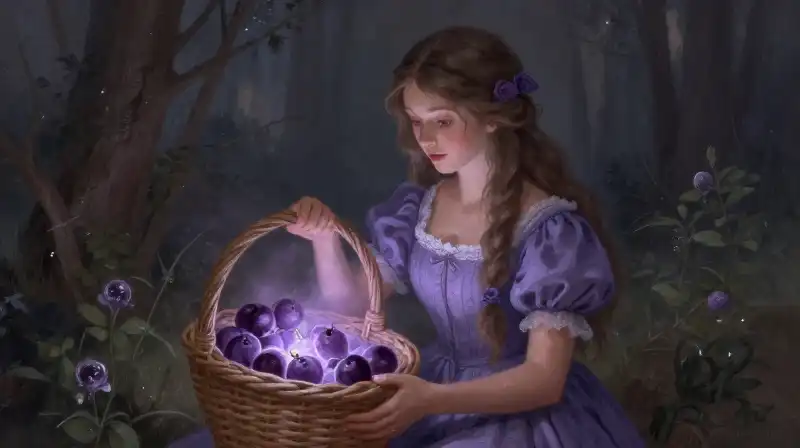
In the original Brothers Grimm fairy tale, *Schneewittchen* (Snow White), the Queen uses a more cunning and less visually dramatic approach to achieve her goals [1]. Here, the Queen does not immediately wield the power of dark magic as a primary tool of confrontation. Instead, she adopts the guise of a humble traveling peddler, using her disguises and wit to deceive and stalk Snow White. This version emphasizes cunning and social deception, framing her as a master of disguise rather than a sorceress.
The Disney Transformation: Magic and Obsession
Walt Disney fundamentally changed the Queen’s nature in his 1937 adaptation, transforming her from a trickster peddler into a dark sorceress. This version dramatically heightened the stakes and intensified her internal conflict. The Queen’s ambition was no longer just about physical disguise; it became an existential struggle for her status as the “fairest one of all” [2]. Key elements of the Disney version include:
- The Dark Transformation: Unlike the peddler, the Disney Queen actively uses dark magic to transform herself into a wizened, menacing “Wicked Witch” [2]. This magical transformation visually represents her descent into villainy, stripping away her initial regal beauty for a sinister facade.
- The Love Triangle Envy: A significant departure from the Grimm tale is the introduction of romantic rivalry. The Queen’s envy extends beyond Snow White’s physical beauty; she becomes obsessed with the attention the young prince gives to the girl [2]. This addition deepens her motivation, showcasing a character driven not just by vanity, but by a wounded, insecure ego.
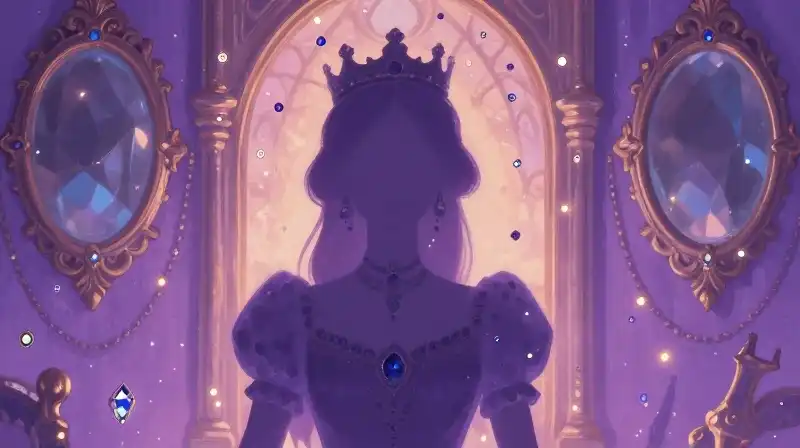
- Visual Aesthetics: Her design, conceived by Walt Disney and Joe Grant and brought to life by Art Babbitt, merges 1930s Hollywood glamour with medieval villainy [2]. She draws inspiration from sophisticated actresses like Greta Garbo and Marlene Dietrich, resulting in a striking “femme fatale” aesthetic. Her clothing, predominantly black and other “negative” dark colors, is highly symbolic, acting as a visual shroud for the evil concealed beneath her elegant exterior [2].
The Mechanics of Ambition: Symbols and Tools
How does a character as obsessed with appearance manage to enact such violent plans? The Evil Queen’s plot is driven by her specialized relationship with magical artifacts, which function as both catalysts and plot devices.
The Magic Mirror: The Ultimate Judge
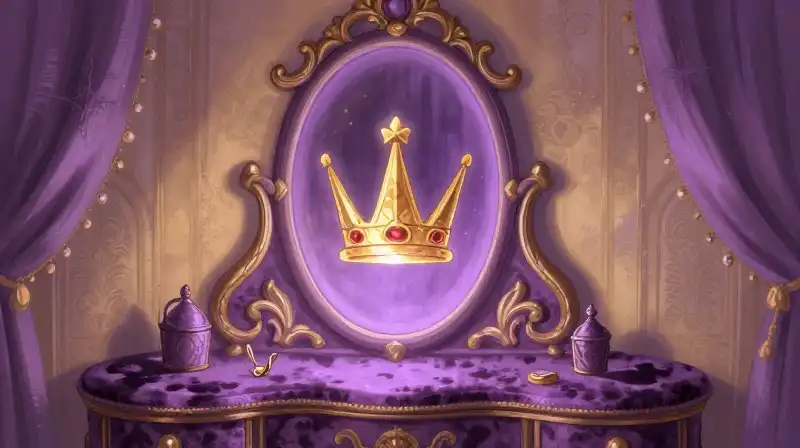
The magic mirror serves as the foundational tool of the Queen’s scheme. It is her external source of truth and her relentless judge [2]. The mirror does not merely show her reflection; it provides a constant, objective comparison, repeatedly informing the Queen that Snow White has surpassed her in the eyes of beauty. The mirror thus becomes a symbol of unchecked external validation, proving that her vanity is fueled by a dependence on outside approval.
Paraphernalia of Malice
Her specific tools for murder—the heart box, the poison, and the poisoned apple—are classic storybook implements, each serving a different purpose in the narrative’s rising tension:
- The Poisoned Apple: This is the most iconic weapon, representing a “temptation” that lures Snow White into a vulnerable state. It symbolizes the fatal allure of appearing perfect—the irresistible fruit of flawless beauty.
- The Dark Magic: Her use of dark sorcery represents her active defiance of natural order and goodness. She forces change upon the world (e.g., transforming herself) rather than accepting the natural progression of life and youth.
- The Castle as Control: Her domain, the castle, is more than just a backdrop; it is designed to symbolize “domestic control and imperial power” [2]. It represents the boundaries she seeks to control and dominate, both physically and in the narrative space around her.
Understanding the Wicked Queen Archetype (People Also Ask)
 The Evil Queen inspires several questions about her role, motivations, and placement within the storytelling tradition. We can look deeper into these common curiosities:
Why is the Evil Queen considered the first true villain in the Disney animated canon? [1] [2]
The character is widely credited with being the first definitive and enduring villain in the Disney animated universe [1]. Prior antagonists were often misguided figures or simple threats; the Evil Queen, however, is motivated by a deeply personal, internal flaw—vanity—and her malice is intricately linked to her character’s core identity and obsession. She is not just a force in the world; she is a reflection of the destructive power of personal insecurity and the desire to control one’s external image.
What is the difference between the Queen Grimhilde and the Disney Evil Queen?
“Queen Grimhilde” is the name of the Queen in the original Brothers Grimm *Schneewittchen*. While she shares the same title and fundamental goals as the Evil Queen, the Grimm version is defined more by her cunning (using the guise of a peddler) and is absent the romantic rivalry and the heavy focus on dramatic, visually dark magic that defined Disney’s adaptation. Disney’s version is an artistic interpretation, whereas Grimhilde is the folkloric root.
Thematic Lessons in a Tale of Envy and Ambition
At its core, the story of the Evil Queen is a potent lesson in the dangers of prioritizing external perfection over internal goodness.
Parenting and Storytime: Acknowledging Complexity
For educators and parents, the Evil Queen offers a fascinating way to discuss the complexities of emotions. She is not simply “bad”; she is deeply envious, and her ambition is rooted in a fear of replacement. This allows a parent to guide a child toward a more nuanced understanding of motivations. You can discuss how jealousy manifests and how true strength comes from within, regardless of external appearances.
The Contrast of Light and Darkness
The narrative arc is one of transformation and destruction. The Queen’s initial regal appearance gives way to monstrous traits as she schemes [2]. The physical contrast between the soft, natural world of Snow White and the heavy, shadowed castle of the Queen symbolizes the conflict between genuine life and destructive, rigid perfection. Her ultimate destruction—falling from a precipice and being destroyed by a lightning bolt [2]—is the violent dismantling of a façade built on dark control.
The Lasting Legacy of the Wicked Queen
The Evil Queen holds an enduring place in the history of storybook villains, recognized as a powerful, foundational antagonist in cinema [1]. She represents the eternal struggle between inner peace and outer obsession. By studying her—her motivation, her wardrobe, her magical tools—we find rich threads for children’s bedtime discussions, for costume design, and for deep character analysis. She reminds us that even the most beautiful exterior can conceal a heart driven by the deepest forms of envy, and that true worth resides far beyond the reflection in any magic mirror.
Sources
- Evil Queen | Disney Wiki | Fandom — disney.fandom.com
- Evil Queen (Disney) — en.wikipedia.org
Related Articles