
The Evil Queens Obsession: Why She Became the Witch of Snow White
Introduction
>There are villains in fairy tales who are defined purely by their wickedness—they are a simple force of shadow. But the Evil Queen in Disney’s *Snow White and the Seven Dwarfs* is not purely evil; she is a portrait of powerful, internal pressure. She is a character whose obsession with perfection isn’t just a vanity, but a terrifying, defining trait that curdles into true malevolence. The transformation from the “stately” Queen to the snarling, maniacal “hag” is far more than a simple plot device; it is a visual and psychological externalization of her rage and deep-seated fear of being replaced [2]. > >For parents, educators, and anyone interested in the architecture of stories, the Queen serves as a compelling case study in how internal insecurity can drive a narrative. She embodies the terrifying idea that power is often a brittle mask, and that beneath the most regal exterior, a volatile and desperate self is brewing. This deep dive explores the psychological gears turning behind the Black Mirror, examining the visual motifs, the historical roots of her character, and the themes of control and chaos that make her one of the most enduring figures in cinematic storytelling. >
The Mirror, the Motivation, and the Seeds of Obsession
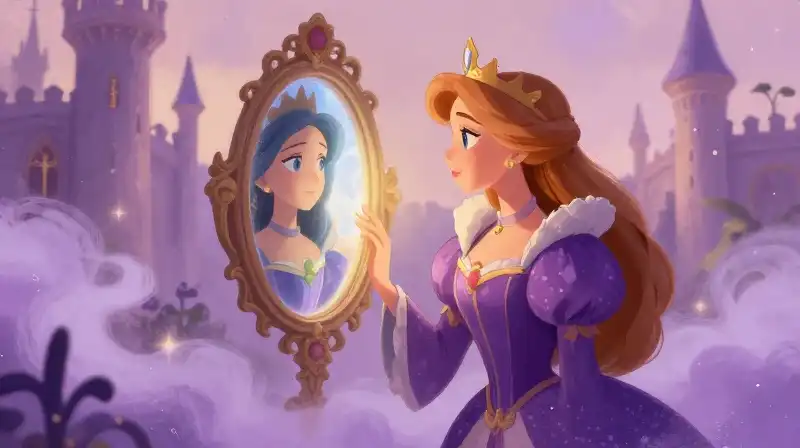
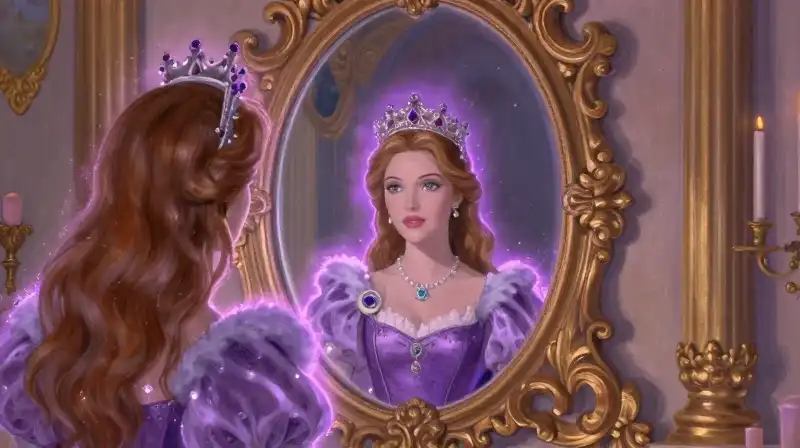 >The primary engine driving the Queen’s sinister actions is her relentless obsession with beauty, which is meticulously tracked by her Magic Mirror. She doesn’t just want to be the fairest; she needs constant confirmation of that state [1]. This relationship with the mirror serves as a microcosm for her entire internal life: her happiness, her authority, and her sense of self are tied entirely to external validation. When the Mirror begins to reveal a competitor—Snow White—the Queen’s response is not mere jealousy, but a violent, calculated sense of threatened sovereignty. > >Disney’s adaptation dramatically altered the original 1812 German fairy-tale by introducing the critical element of a love triangle, a detail not found in the source material [1]. The Queen’s focus on Snow White’s radiant beauty, coupled with the Prince’s burgeoning attention, transforms her vanity into a desperate, territorial aggression. This love triangle fuels her quest, moving the story from a simple comparison of beauty to a high-stakes struggle for dominance. >
Visualizing Duality: The Queen vs. The Witch
>The power of the Evil Queen lies in her drastic, almost operatic transformation. She is not simply a one-note villain; she possesses two distinct, psychologically contrasting forms [2]. > >
The Stately Royal Persona
> >In her initial royal guise, the Queen is depicted with a sophisticated, controlled, and regal demeanor. She commands her environment, often portrayed wearing “stately” high-collared attire that reinforces her status [1]. Her initial presentation is one of icy control and polished authority. > >
The Maniacal Witch Persona
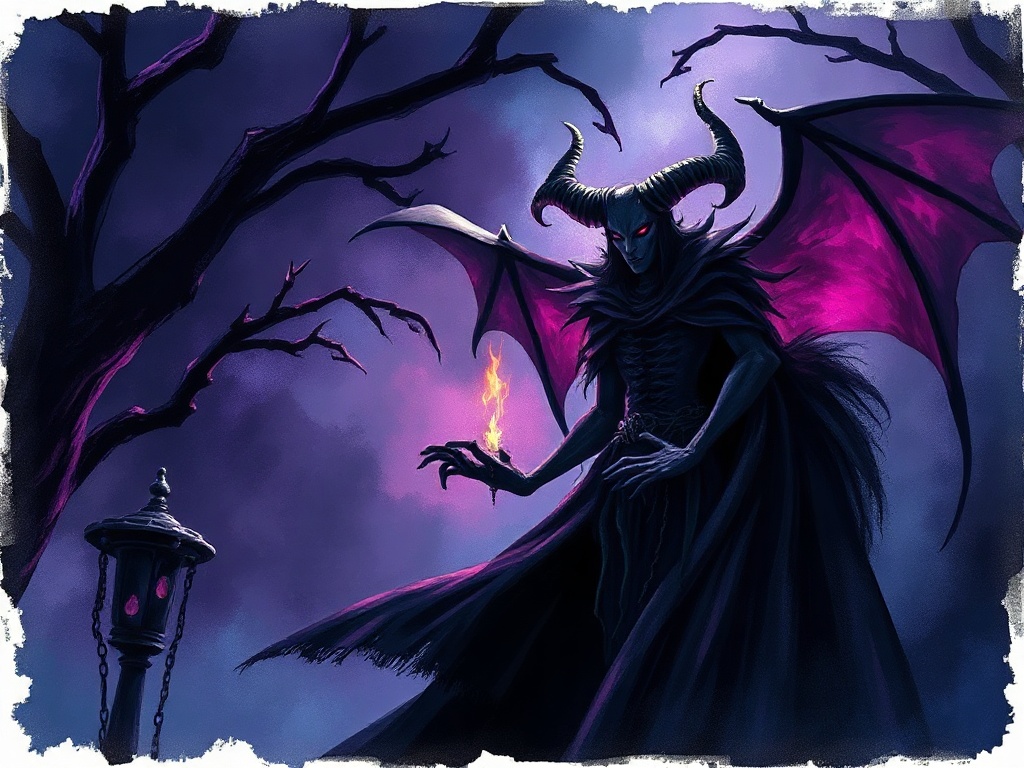
> >However, this control is precarious. The transition into the witch form is the moment her true, unvarnished nature breaks through. The animators found this shift challenging, as she had to move from a character who was “regally beautiful, with confined but graceful movements,” to one who became “ugly and menacing when scheming” [1]. The witch form unleashes a maniacal, unrestrained cackling persona—a chaotic, physical eruption of the repressed wickedness that the Queen had maintained [2]. This stark contrast highlights a profound theme: her royal status could mask, but never truly eliminate, her internal agitation and inherent nature. >
Color, Motif, and Symbolism: A Study in Contrast
 >The visuals of the film are highly intentional, using color and motif to define the moral landscape of the story. > >
| Element | Symbolism | Character Association |
|---|---|---|
| Color Palette | Contrast (Black vs. Color) | The Queen and the Hag |
| Dark Palette | Evil, Isolation, Danger, Negative Energy | The Evil Queen |
| Bright Palette | Purity, Innocence, Life, Optimism | Snow White |
| Architecture | Order vs. Wildness | The Queen vs. The Dwarfs |
| Peacock Motif/Castle | Extreme Vanity, Rigid Control, Structured Power | The Queen’s Domain |
| Rustic Cottage Setting | Nature, Simple Life, Unstructured Community | The Dwarfs’ Sanctuary |
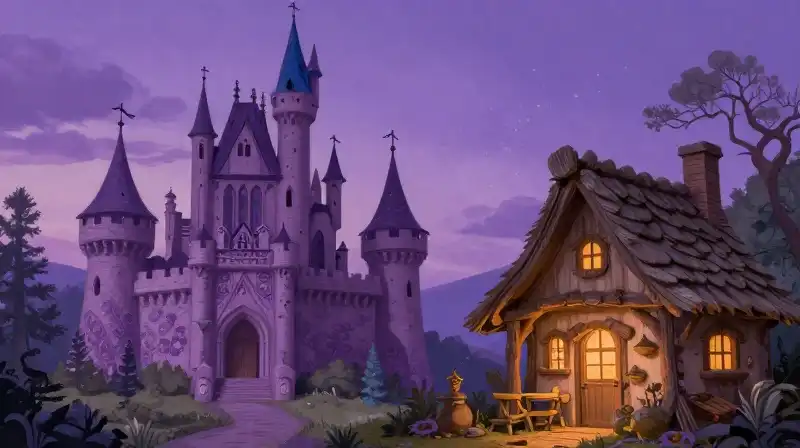
The Queen’s world is defined by her structured, powerful castle, which often features a peacock motif—a symbol of extreme vanity and status. Conversely, this is visually contrasted with the rustic, wild, and unpretentious setting of the Seven Dwarfs’ cottage [1]. Her entire existence is predicated on an artificial, controlled environment that mirrors her need for perfection, which is always on the brink of shattering. >
The Roots of the Villain: Archetypes and Influences
>The Evil Queen does not exist in a vacuum. Her character is a sophisticated amalgamation of historical and cinematic archetypes. > >
A Fusion of Eras
> >The Queen successfully blends several iconic roles: she functions as a 1930s femme fatale—a figure of potent, dark allure—while simultaneously embodying the figure of the medieval, magical villainess [1]. This blend allowed the character to feel both modern and timeless. > >Furthermore, she draws inspiration from actresses like Greta Garbo and Marlene Dietrich, whose screen presence embodied sophisticated, controlled, and dangerous power [1]. This helps cement her image not just as a cartoon monster, but as a highly intentional, theatrical force. > >
The Peddler’s Transformation
> >An interesting layer of continuity from the original folklore is that the Queen once used a “disguise” as a traveling peddler [1]. Disney enhanced this concept by giving her the power to transform herself into a hag, transforming a humble disguise into a manifestation of raw, magical power. >
Addressing Related Questions: Thematic Impact and Demise
>How does her complexity help a child understand themes of emotion? > >The Queen is a powerful teaching tool for young children, not because she provides a simple “good vs. evil” narrative, but because she offers a glimpse into *why* cruelty happens. Her actions are driven by fear—the fear of irrelevance and the fear of loss—rather than purely from malice. This provides a complex, albeit dark, lens through which parents can explore the importance of self-worth outside of external validation. > >What does the shift in her music signify? > >The film uses music to reinforce her mood. The use of dark, low-celio musical notes, specifically basses and bassoons, is foundational to establishing her sinister authority and her dark, menacing aura [1]. This auditory landscape matches her visual darkness and provides a clear auditory signifier that the rules of the world have become dangerous. > >Ultimately, the fall of the Queen and her dark reign is represented by a final, dramatic scene: a lightning bolt striking between her and a boulder. This leads her to a chasm, symbolizing her downfall into the consequences of her unchecked pride and ambition [1]. >
Beyond the Mirror: Why the Queen’s Story Matters in Children’s Literature
>The lasting impact of the Evil Queen lies in her refusal to be a flat caricature. She is a character defined by her ambition and her internal conflict. She is simultaneously a 1930s cinematic archetype and a medieval figure, a “high collar, stately” beauty who can also become a screeching hag [1, 2]. Her dual nature forces the viewer—and the parent—to consider that evil is rarely monolithic; it often begins as a corrosive insecurity. > >For the reader at bedtime or in the classroom, the Queen offers more than just a frightening encounter with a monster. She provides a dramatic framework for understanding themes of hidden truths, the consequences of excessive pride, and the difference between appearance and reality. While her story contains darker elements that require parental guidance, her complexity makes her one of the most intellectually rich and engaging villains in the history of children’s media. >
Sources
- Evil Queen (Disney) — en.wikipedia.org
- I still find it hard to believe that the Evil Queen and the Old Witch are the same person : r/disneyprincess — reddit.com
Related Articles