
Meet the Trickster: How Loki, Maui, and Coyote Shape Global Myths

Introduction
What happens when the rules are broken? When the most certain things—like the order of the day, the calm of the night, or the lines between right and wrong—suddenly shift? In mythology, the characters who cause that shift are the Tricksters. They are rarely heroes in the traditional sense; they might be chaotic, selfish, or utterly confusing. Yet, they are also the most profound: the boundary-crossers who force worlds to change [2]. If you have ever wondered why a seemingly malicious or mischievous character holds such a powerful place in our oldest tales, it is because the trickster is a magnificent mirror. They hold up a piece of ourselves—our own contradictory desires and impulses—and force us to look at the world’s complexity, reminding us that the greatest creation can sometimes spring from the most disruptive mischief [3].
These characters—from the Norse mischief of Loki to the ambitious feats of Polynesian Maui and the dual nature of American Coyote—are not merely troublemakers. They are “amoral” agents, driven by their own passions and appetites [2, 3]. In the context of children’s stories, learning about the trickster is about learning about multiplicity. It teaches us that life isn’t black and white, but a vibrant tapestry of conflicting forces. It’s an accessible gateway to understanding that even the loudest disruptions can lead to necessary, powerful new foundations.
The Archetype of the Boundary-Crosser
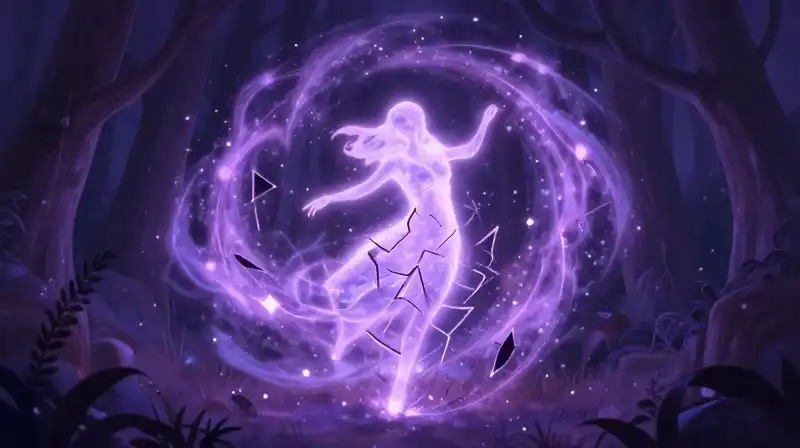
At their core, tricksters are defined by their refusal to stay in a lane. They are the cosmic rule-breakers who violate physical laws and societal norms alike [2]. However, this violation serves a specific purpose: destabilization. They tear down the status quo, which can be seen as a necessary evil, before creating a new, often more complex, order [2].
Creating the New Order from Chaos
Some of the trickster’s most important roles are actually generative. They are “one and the same time creator and destroyer, giver and negator” [3]. This means they are not inherently good or bad; they are simply *catalytic*. They introduce new elements into a story or a world, whether it is a new value, a new technology, or even a new concept like the art of lying—a gift Hermes gave to the clever hero Odysseus [2]. Without the trickster’s disruption, many mythological worlds would remain stagnant. In Native American traditions, the trickster figure (like Winnebago’s Wakdjunga) is often essential to creation and contact with the sacred, symbolizing a mix of necessary foolishness and profound wisdom [2].
Character Deep-Dives: Three Famous Faces of Myth
To understand this concept better, let’s look at three of the most vivid and distinctly different tricksters from different parts of the world. While they all share a DNA of rule-breaking, their “why” changes the story entirely.
Loki: The Selfish Catalyst of Conflict
Loki, from Norse mythology, is the quintessential selfish trickster [2]. His motivations are often pure personal gain or chaotic amusement. He delights in instigating conflict and disruption. A classic example of his boundary-crossing nature is the time he cut the hair of the goddess Sif, leading to the birth of Odin’s mighty eight-legged horse, Sleipnir, through a cunning transformation into a mare [2]. Loki doesn’t care if the consequences are good or bad for the community; his actions are driven by his personal desires. He reminds us that pure, self-interested chaos can be a powerful force for change, even if it’s destructive.
Maui: The Labor-Loving Demigod of Action
In Polynesian mythology, the demigod Maui presents a trickster who is actually quite helpful. He takes his mischief and directs it toward benefit. His “great deeds” are acts of grand labor disguised as trickery, designed to help his people thrive [3]. Imagine him slowing the sun to allow agriculture to flourish, or using his cunning to fish up the very island of New Zealand. Maui’s story shows that being a boundary-crosser doesn’t mean you’re always a villain. His play and his cunning lead to positive, life-giving outcomes for his community, illustrating a trickster driven by an ultimate sense of shared benefit [3].
Coyote: The Embodiment of Duality
In various American traditions, Coyote is the ultimate study in duality. He serves as a living personification of both the best and worst human traits. Unlike more selfish tricksters, Coyote’s behavior is deeply “amoral”—he acts based on immediate impulse without moral restraint [2]. We might see a Coyote who is a “noble trickster,” sharing vital resources like water with other creatures, but he is just as likely to be malicious and harm others for a selfish gain [2]. Coyote’s fascinating complexity allows children (and adults) to see the messy reality that good and bad impulses often exist side-by-side within one character. He embodies the “multiplicity and paradoxes” of life [2].
What Does the Trickster Teach Us at Bedtime?
The trickster archetype can sometimes be seen as frightening—they violate what we consider “normal.” However, their purpose in story structures is often to destabilize the status quo and reveal underlying societal hypocrisies [2, 3]. For children, this translates into a sophisticated understanding of their own internal world. They teach flexibility.
If a child is worried about feeling “too much” of one trait—too loud, too naughty, or too clever—the trickster gives them a narrative home. They are encouraged to understand that having “dark” or disruptive parts of ourselves is okay, as these traits are often the same ones that allow us to be creative, funny, and resilient. The trickster allows a child to explore the “other side” of behavior in a safe, imaginative space. The inherent “callow joy” in figures like Kwaku Ananse [1] reminds us that we can be cunning and joyful simultaneously without being categorized as simply “good” or “bad.”
Mythology in the Classroom and Beyond
The trickster doesn’t just appear in the big, grand myths; they are everywhere. From the gatekeeper Papaga Legba in Vodou mythology, who handles the communication between the living and the dead with playful, childlike energy [1], to the manipulative Gwydion in *The Mabinogion* who continually tricks his family to break curses [1], the function remains constant: to mediate the impossible. In modern culture, these roles shift into symbols of rebellious energy—from the cheeky Bugs Bunny to the enigmatic Cheshire Cat—they are the essential catalysts whose very antics cause the other characters discomfiture, yet they remain gracefully untouched by the chaos they create [2].
| Trickster | Cultural Background | Core Motivation | Narrative Outcome |
|---|---|---|---|
| Loki | Norse | Selfish gratification/Chaos [2] | Conflict, necessary death, creation through disruption [2] |
| Maui | Polynesian | Benefit to his people/Pride [3] | Life-giving outcomes, improved civilization [3] |
| Coyote | Native American [2] | Immediate impulse/Impression [2] | Duality, reflection of human nature (good and bad) [2] |
Looking for More Trickster Stories: Finding Your Next Adventure
If you enjoy the logic of the trickster, there are many other fascinating figures to explore beyond the three we discussed. These figures demonstrate the incredible range of the archetype, from the cunning spider Kwaku Ananse who uses trickery purely for self-interest [1], to the Australian Crow, Waa, a figure of mischief [1]. Whether you are seeking more examples of trickster myths, or looking for female tricksters like those in various Indigenous traditions, the theme always returns to the idea that there is more to be known than what fits neatly into a single category.
Ultimately, the trickster archetype encourages a healthy curiosity. It invites the reader to accept ambiguity. Instead of seeking a “perfect” hero, the trickster allows us to admire the cleverness, the wild spirit, and the sheer power of someone who exists outside the polite lines of conventional expectation.
Sources
- What are some relatively unknown (and known) Trickster Figures/Gods? : r/mythology — reddit.com
- Trickster — en.wikipedia.org
- Mythology of Tricksters — emilyfoytek495esm.wordpress.com
Related Articles