
Politically Correct Bedtime Stories: How They Redefine Fairy Tale Agency

Introduction
Have you ever picked up an old, treasured fairy tale and wondered why the characters feel so… restrained? In the traditional story, power often comes from a handsome prince, or a prince arrives to save the day. But what if the magic wasn’t in waiting for rescue, but in the character’s own ability to stand up for themselves? >The concept of “politically correct bedtime stories” isn’t just a dry term; it marks a significant cultural moment in children’s literature. Emerging strongly in the early 1990s with works like *Politically Correct Bedtime Stories* (1993/1994), these narratives engage in a subtle but profound re-envision of classical folklore [1]. These retellings invite us to look past the glossy pages of tradition and examine what it means to grant real agency to the small, overlooked figures—the forest girl, the overlooked duckling, or the reluctant stepmother.
The Tension Between Satire and Sincerity
 To understand these narratives, we must first recognize that the original purpose of the collection, penned by James Finn Garner, was satirical [1]. It serves as a commentary on the era’s obsession with inclusion and the anxiety surrounding what was considered acceptable in literature [1]. The humor, exaggerated by the nature of satire, frequently centers on themes of homosexuality and broad inclusion [1]. >However, the critical complexity lies in the fact that these tales are often “fascinating and slippery” [1]. While the book uses parody, it often blends that humor with genuine, meaningful updates to the narratives—creating versions that feel sincerely progressive even if they were originally intended as a comedic critique [1]. The core tension for parents and educators is determining where the satire ends and the genuine invitation to explore themes of self-advocacy and empowerment begins [1].
Character Agency: The Shift from Victim to Villain-Mender
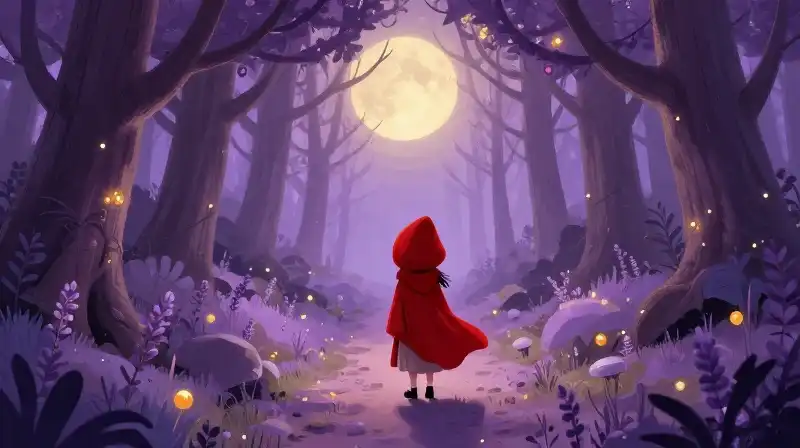
One of the most striking transformations occurs in the familiar story of Red Riding Hood. Traditional versions often leave Little Red as a fragile figure whose safety depends on external intervention, such as the huntsman [1]. However, the modern, satirical re-imagining offers a striking counterpoint.
Little Red’s Empowerment
In the satirical retelling, Little Red Riding Hood is presented not merely as a victim, but as a figure capable of active, empowered decision-making [1]. She is shown actively forging a “kind of peace between women and wolves” [1]. This interpretation transforms her character into a “badass” figure [1], emphasizing a shift from passive fragility to self-directed action within a dangerous narrative framework [1].
Comparing Approaches to the Threat
The difference between this contemporary take and older, folkloric variants is illuminating. For instance, in a version recalled from Romania, Little Red gains agency by physically cutting herself free from inside the wolf using Grandma’s small scissors, while the huntsman is relegated to being a mere witness to the outcome [1]. Both versions, however, shift the locus of power away from external, male heroes, placing the burden of survival directly onto the character herself [1].
Beyond Red: Challenging Gender and Appearance Norms
 The themes of agency extend far beyond the woods. These retellings often tackle societal pressures regarding gender roles and physical beauty, making them highly relevant for classroom discussions and bedtime reflection [1].
The Unity of Snow White
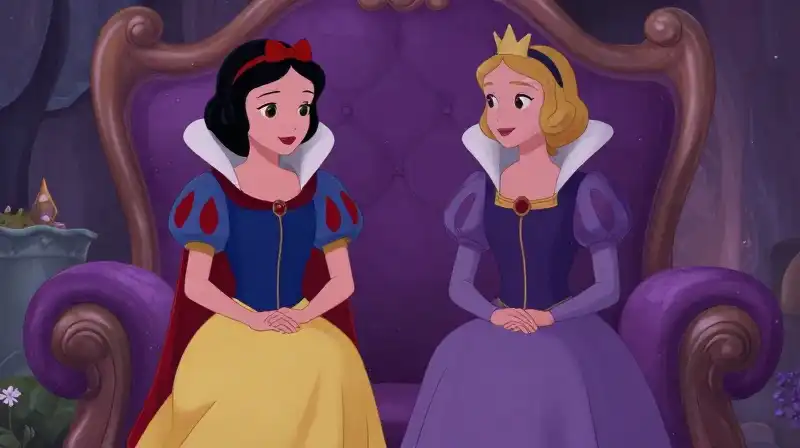
The classic Snow White narrative is often framed around her beauty and her tragic fate, tied directly to the vanity of the Evil Queen and the concept of physical worth [1]. A notable reimagining challenges this idea entirely. In one version, Snow White and her stepmother unite to rule the kingdom together [1]. This is a direct allegorical challenge to the “traditional relegation of a woman’s worth to her looks” [1]. Instead of a passive beauty, Snow White becomes an active political agent who collaborates with her former antagonist.
The Body Acceptance of the Ugly Duckling
The Ugly Duckling narrative offers a progressive look at the struggle for self-acceptance. In this particular satirical reading, the character is shown campaigning for body type acceptance [1]. This progressive message, however, takes a satirical turn: once she achieves her beautiful swan form, the narrative then mocks the superficial standards that initially oppressed her [1]. It is a nuanced lesson about the difference between external validation and internal truth, delivered through a lens of critique.
Expanding the Landscape of Modern Retellings
While *Politically Correct Bedtime Stories* focuses on satirical inversions, the movement to redefine agency is ongoing and visible across different forms of storytelling [1]. These contemporary adaptations demonstrate a broader trend of using the old canvas to explore new motivations:
-
Redefining Relationships: In one version of “The frog prince,” the character’s dignity is restored through the Queen lecturing the prince about boundaries. This shifts the focus from a magical transformation to a negotiation of respect and limits [1].
-
Rejectiving Coercion: In the Selkie bride narrative, agency is represented through the powerful act of tying up a forced husband [1]. Here, the traditional narrative of inescapable destiny is violently rejected by the protagonist.
Why This Matters for Families and Educators
The complexity of these stories—the tension between genuine progressive ideals and the comedic exaggeration of those ideals—is precisely what makes them so valuable [1]. They invite readers to stop skimming the plot and start examining the *mechanics* of the power within the tale [1].
For parents looking for stories that foster active empathy and self-advocacy, these retellings offer concrete ways to introduce complex themes like bodily autonomy and the challenging of traditional hierarchy [1]. They don’t just tell a story; they present a debate, allowing children to grapple with what strength truly means—whether it is the cunning of a fox, the courage of a duckling, or the refusal to be dictated to by a queen.
The Power of Perspective
Ultimately, labeling a story “politically correct” is often an attempt to categorize creative efforts aimed at redefining traditional character motivations and challenging established gender roles [1]. By exploring these highly charged versions of classics, we learn that a fairy tale is not a static museum piece; it is a living, adaptable mirror.
These retellings prove that the heart of children’s literature resides not in the happy ending dictated by the original source, but in the questions the character asks of themselves and the world around them. The stories become a valuable, imaginative tool, giving us the colors, ideas, and ideas necessary to view the familiar world with a newly activated sense of agency [1].
Sources
- “Politically Correct Bed Time Stories” oh boy… : r/menwritingwomen — reddit.com
Related Articles