
Mexican Folktales for Kids: Stories of Magic and Transformation

Introduction
Folklore, in its purest form, is a language spoken by the heart—a way for ancestors to pass down not just stories, but emotional blueprints for navigating the world. When these stories emerge from the vibrant tapestry of Mexican culture, they bring a unique richness, combining lush, healing natural settings with moments of intense, magical confrontation. These are not merely quaint tales; they are sophisticated explorations of life, decay, and the persistent power of truth. Whether you are looking for a soothing narrative to guide a child to sleep or a rich, symbolic backdrop for a classroom discussion, the magic found in Mexican folktales provides both profound depth and wonder. They teach children that transformation is possible, even when faced with the shadow of death or the illusion of deception.
The Alchemical Landscapes: Healing and Worldbuilding in “The Garden of Health”
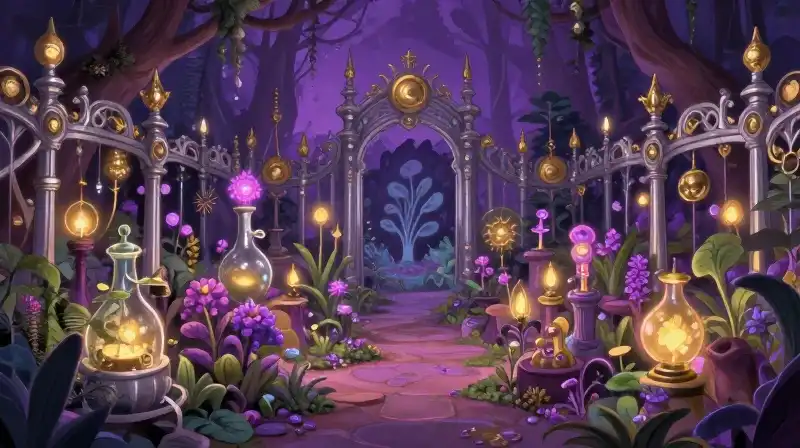
If you are searching for a setting that defines magical storytelling, consider the lush world of “The Garden of Health.” Unlike many European settings focused on castles or enchanted forests, this tale grounds its magic in botany and healing. The garden itself is a crucial piece of worldbuilding—a sanctuary defined by its physical beauty and inherent power [2]. Imagining a garden surrounded by a silver fence adorned with golden ornaments helps set the perfect sensory scene for any child, as it conveys both protection and supreme value [2].
Potions and Symbolism: The Language of Mexican Remedies
For parents seeking concrete themes of restoration or wellness for bedtime, the specific use of botanical remedies in this tale offers a wonderfully tactile lesson in nature’s power. The narrative mentions various plants that possess curative properties, such as “Red Celery” and “Spanish Onion” [2]. Furthermore, the inclusion of “Blue Ivy” adds a layer of specific, identifiable detail that makes the story feel deeply rooted in a particular culture and environment [2]. Using these specific elements allows educators to turn a simple bedtime story into an appreciation of ethnobotany, while for families, the mention of “healing” can be a gentle, calming anchor for a night’s rest.
Confrontation and Artifact: The Magic of Defiance
Mexican folklore often approaches abstract concepts like death not as a fearful void, but as a powerful, personified force—and forces with that much power can be challenged. “The Garden of Health” presents a central conflict between the young protagonist, Enrique, and the personification of Death [2]. This is a moment of high drama, yet it is navigated through ingenuity and magical tools rather than violence. The boy possesses the “Ring of Agrajes,” a singular magical artifact that serves as his power to compel the abstract into the concrete [2].
The Ring’s true magic lies in how it allows Enrique to manipulate the perception of his foe, causing Death to appear “disheveled and tied up” [2]. This is a fascinating lesson in agency—showing a child that even the most daunting, unstoppable forces can be handled, redirected, or even overcome through a clever combination of will and symbolic power. This confrontation is fundamentally about life and perseverance [2].
The Symbolic Dialectic of Life and Death
The story uses visual symbolism to explain its themes of mortality and vitality. The representation of two maidens—one dressed in white, representing Life, and one in black carrying a scythe, representing Death—provides a clear, accessible framework for discussing these weighty subjects with children [2]. This visual contrast is a perfect starting point for an art lesson or a conversation about the cycle of nature. It grounds a heavy philosophical concept into a clear, evocative visual image.
The Weight of Deception: Transformation and the Gypsy Queen
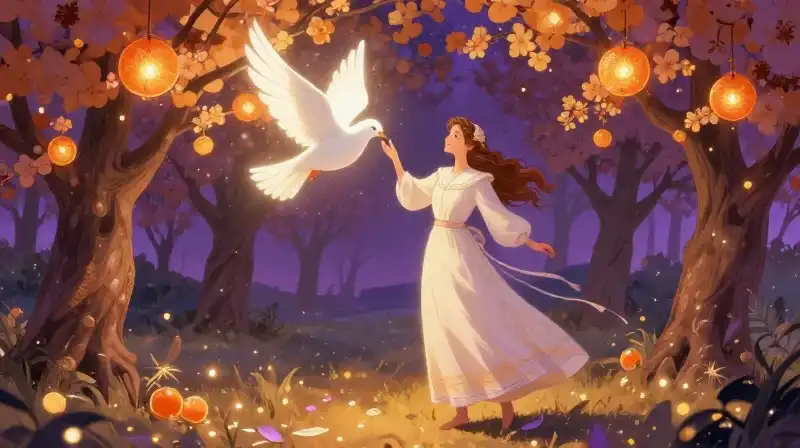
While “The Garden of Health” deals with healing the living, “The Gypsy Queen” explores the transformation of the spirit and the triumph of truth over deceit [1]. This tale centers on a prince who encounters three maidens emerging from the interior of oranges—a wonderfully vivid and tactile detail [1]. The orange, itself a symbol of warmth, light, and Mediterranean charm, serves as the vessel for these transformations.
Villains and the Cautionary Pin
Every magical story requires a source of conflict, and in “The Gypsy Queen,” the Gypsy’s Daughter serves as a powerful cautionary tale villain [1]. Her magic is manipulative and sudden; she uses a simple pin in her hair to transform a maiden into a dove [1]. This use of a mundane object (a pin) to enact a profound magical change offers a subtle, powerful lesson: deception often hides within the smallest, most ordinary things. The conflict here is not only external, against a witch, but also internal, as the protagonist must distinguish true goodness from clever mimicry.
The narrative culminates in a powerful act of restoration. The prince doesn’t simply banish the witch; he reverses the curse by physically removing the pin from the dove’s head, returning the maiden to her true form [1]. This act of physical touch and gentle intervention symbolizes the restoration of truth. The third maiden, described as the most beautiful, successfully secures the prince’s love and marriage, representing the enduring power of genuine virtue [1].
| Element | Role in the Tale | Symbolic Meaning |
|---|---|---|
| The Pin | Tool of transformation and curse. | Deception, hidden manipulation. |
| The Prince’s Action | Removing the pin from the dove’s head. | Restoration, truth, gentle power. |
| The Maiden in White | Represents life in the story of Health. | Vulnerability, healing, vitality. |
| The Maiden in Black | Carries the scythe in the story of Death. | Inevitability, mortality, the end. |
For the Parent and Educator: Practical Storytelling
When bringing these tales to life, there is more than just plot to consider. These stories are rich in thematic material that can be tailored to different stages of development. As the source material notes, these are original folklore and fairytales that require parental perusal before sharing with young children to ensure context and comfort are maintained [1].
Guidance by Age and Theme
- Early Childhood (Ages 3-5): Focus on Magic and Animals. Use “The Gypsy Queen” primarily as a story of appearance and change. The “dove” element is perfect for discussing the different colors of the birds in nature, focusing on the transformation rather than the deception, which can be too complex.
- Preschool/Kindergarten (Ages 5-7): Focus on Healing and Tools. “The Garden of Health” is excellent for this age. Focus on the specific plants like Blue Ivy and the magical function of the Ring of Agrajes to empower the protagonist. This fosters a sense of capability.
- Older Children (Ages 7+): Focus on Symbolism and Conflict. This is when the deep themes of life/death and truth/deception can be explored. Discuss the personification of Death and the complex moral choice of the Prince in “The Gypsy Queen” (restoration vs. mere beauty).
Answering the Big Questions
If you are asking what makes these tales special, the answer often lies in their grounding in rich cultural specifics. Is Mexico known for folklore? Absolutely. The tradition is one of deep, often colorful, storytelling, blending indigenous worldviews with European narrative structures [1, 2]. What is a famous Mexican folktale? The examples provided, like “The Garden of Health” and “The Gypsy Queen,” offer a window into a tradition that is incredibly rich in metaphor and setting. Does Mexico have folklore? The depth of these stories demonstrates a living, vibrant tradition of oral history that captures the beauty and struggles of its people.
Synthesis: The Enduring Magic of Mexican Narratives
What these Mexican folktales—“The Gypsy Queen” and “The Garden of Health”—share is an unwavering belief in the potency of the natural world and the possibility of profound, meaningful change. They refuse to let abstract concepts like death or truth pass unchallenged; instead, they give them color, shape, and magical consequences. Whether through the curative power of the Blue Ivy or the definitive stroke of removing a single pin, these stories remind us that power isn’t just about might; it’s about insight, empathy, and the careful tending of both gardens and relationships. They are not just for entertainment, but for cultivating a deeper, more observant love for the stories that shape who we become.
Sources
- Hispanic Heritage Month Stories: 4 Magical Fairytales from Mexico & Spain — rainbowmekids.com
Frequently Asked Questions
What is a famous Mexican folktale?
The article highlights two specific examples of Mexican folktales: 'The Garden of Health' and 'The Gypsy Queen.' These stories showcase the rich depth of the Mexican narrative tradition, blending indigenous worldviews with European structures to explore themes of life, death, and transformation.
What are some good Spanish fairy tales?
The provided article focuses exclusively on Mexican folklore, citing examples like 'The Garden of Health' and 'The Gypsy Queen.' Although the source material title mentions stories from Spain, the body of the text does not offer details about specific Spanish fairy tales or recommend any.
Does Mexico have folklore?
Yes, Mexico is known for a deep and vibrant tradition of oral history and storytelling. This folklore blends indigenous worldviews with European narrative structures, capturing the beauty and struggles of its people through these complex tales.
What are the 10 classic fairy tales?
The article does not mention a list of ten classic fairy tales. Instead, it specifically provides information and themes for two Mexican narratives: 'The Garden of Health' and 'The Gypsy Queen.'
Related Articles