Queen Mab: How the Dream-Weaver Became a Modern Fairy Queen

Introduction
Imagine a being so small, so busy, that their nightly journey across the sleeping world looks like a blur of silver and sparkle. This is the original conception of Queen Mab. She isn’t the powerful, imposing monarch of modern fantasy lore; she is a whisper, a puff of ephemeral chaos, a creature so close to the realm of pure childhood imagination that her very existence is tied to the rhythm of sleep. To understand the Queen Mab—from the microscopic dream-weaver to the powerful, multifaceted fairy monarch of today—is to trace how our ancestors processed the untameable nature of dreams: both the gentle ones that soothe and the wild ones that leave us breathless.
She embodies a fascinating duality. While contemporary fiction has often recast her as a figure of potent, icy menace, her origins are rooted in a much more complex mix of ancient British folklore. She is simultaneously a harried midwife of conception, a mischievous thief, and a literal bringer of slumber. This article explores how the tiny sprite described in Shakespeare’s play transcended the Elizabethan stage to become one of the enduring, evolving archetypes of the magical realm.
The Whisper of the Silver Chariot: Mab in Shakespeare
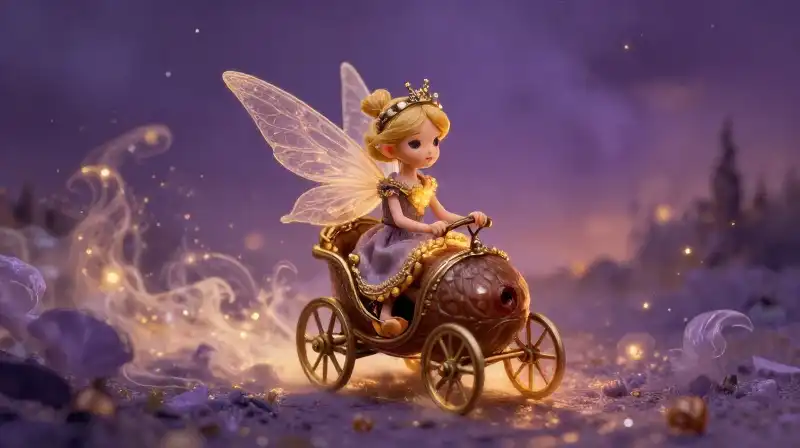
The most famous portrayal of Queen Mab comes from William Shakespeare’s *Romeo and Juliet*. Here, Mercutio delivers a rapid, vivid monologue that treats Mab as a quintessential English faery, a bustling agent of the night. She is often described as the “fairies’ midwife,” indicating her function in mediating transitions—the transition from waking life to the dream world [1].
Mercutio’s description grounds her in immediate, tangible sensory detail. He imagines her traversing the night in a tiny chariot, which itself is whimsical, described as an “empty hazelnut” [1]. Her instruments of travel and influence are similarly miniature and natural: a “whip of cricket’s bone” and “cover of the wings of grasshoppers” [1]. This depiction of Mab is microscopically small, fitting her role as a creature tied directly to the mundane activities of the sleeping world—literally galloping over slumbering humans [1].
The Dual Legacy: From Dream-Weaver to Hag
While her Shakespearean portrayal is whimsical, Queen Mab’s historical roots are far from purely ethereal. The scholarly pursuit of her origins reveals a figure far more complex and often darker than the tiny sprite Mercutio describes. She exhibits a startling duality, bridging the gentle realm of fantasy with the gritty edges of negative folklore.
Exploring the Dark Roots
In many traditional contexts, Mab’s character carried heavy connotations of the “hag” or the “slattern.” These terms connect to Middle English roots like ‘mab,’ which historically referred to a “low-class woman” or “prostitute” [1, 3]. This negative association suggests that before she became purely a dream-bringer, Queen Mab may have been used by cultural storytelling to embody the darker, less respectable aspects of the chaotic natural world or the human cycle [3].
The ambiguity of her name itself continues to spark discussion among researchers. One theory suggests a fascinating linguistic parallel to Medb, a figure from legendary Irish royalty [1, 2]. However, other etymological possibilities propose her name derives from Latin roots like *amabilis* (“lovable”) or is simply a diminutive of a common name, like Mabel, fitting the pattern of generalized, monosyllabic British faery names of the period [1, 3].
The Evolution of Power: Modern Transformations
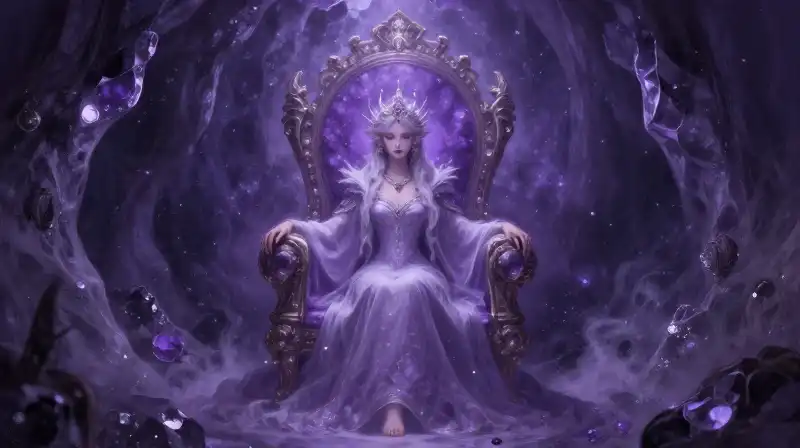
As literature shifted away from the microscopic faery and toward more epic mythology, Queen Mab began to grow. Her role expanded from a bedside visitor to a powerful, nature-bound entity and eventually, to a formidable queen of the underdark.
Shelley’s Expansion and Cinematic Darkening
Percy Bysshe Shelley played a crucial role in this expansion with his 1813 poem, *Queen Mab* [2]. Shelley vastly expanded her scope, depicting her not as a small dream-weaver, but as a queen who resided on the “edge of the universe,” separated from the purely localized sprites of Shakespeare [2]. This shifted her from a nuisance of the night to a cosmic entity.
In 20th and 21st-century interpretations, her power took a darker turn. For example, the 1998 *Merlin* miniseries presented her as an “icy wicked beauty,” an entity that actively manipulated mortals [2]. This transformation solidified the “Mab” identity as a potent, if often dangerous, figure in the landscape of modern fantasy. Even in recent works like *The Dresden Files*, Queen Mab remains a powerful, multifaceted queen who seamlessly blends her ancient mythological roots with modern literary demands [2].
| Era / Work | Primary Role | Key Trait | Scope |
|---|---|---|---|
| Shakespeare (16th Century) | Faeries’ Midwife | Mischievous/Microscopic | The physical bedroom/night |
| Shelley (19th Century) | Cosmic Queen | Mystical/Universal | The edge of the universe |
| Modern Fantasy (21st Century) | Ancient Power Broker | Powerful/Multifaceted | Modern world/Underworld |
Answering the Questions: Who is Queen Mab?
Many readers are curious about the fate and offspring of this powerful queen. Does her name appear elsewhere?
Did Queen Mab Have Children?
While the Shakespearean descriptions focus primarily on her roles in life cycles and midwifery—such as “plais the manes of horses” and pressing maids “to bear”—the texts do not specify whether she had mortal offspring. Instead, her influence is seen as shaping the life and dreams of those around her [1, 3].
What Happened to Queen Mab?
As a figure rooted in mythological folklore rather than a single narrative plot, there is no canonical “end” for Queen Mab. Her status is one of a persistent archetype—a continuous, evolving symbol of the border between imagination and reality [3].
Who Is Queen Mab Based on?
Her origins are actually based on a mix of elements: the general British faery tradition, Middle English concepts of low-status “mab,” and potentially links to legendary figures like Medb of Ireland [1, 3]. She is less a reflection of one specific person and more a recycling of ancient cultural fears and whimsical aspirations [1].
Who Is Mab in The Wicked King?
While the context does not provide a direct reference to a “Wicked King” tied specifically to the literary Queen Mab, in modern fantasy contexts like the *Dresden Files*, she often occupies the role of an ancient, formidable power structure, usually in opposition to powerful mortal leaders, embodying the wild, unpredictable forces of nature and magic [2].
Children’s Story Analysis: Why Queen Mab is Fascinating
For parents and educators looking for rich, imaginative story material, Queen Mab offers complex layers that encourage deeper inquiry. She moves beyond simple good-versus-evil storytelling, which is a valuable lesson in itself.
- The Bridge Between Worlds: Mab’s greatest strength in children’s literature is her literal ability to bridge two worlds: the physical world of the sleeping child and the boundless realm of the subconscious [1]. She allows children to explore the mechanics of imagination.
- Managing “Scary” Power: Her evolution—from the mischievous cricket-bone wielder to the icy menace—allows stories to explore the “edge” of danger. By showing a creature that is both powerful and vulnerable to human emotions, tales can gently introduce the idea of ambiguity and complexity in powerful characters.
- A Celebration of Nature’s Cycles: Whether she is baking elflocks or managing childbirth, Mab is fundamentally tied to the natural rhythms of life and the elements [1, 3]. Using her in a bedtime routine can symbolize the reliable, soothing cycles of the night and the morning.
Finding the Gentle Queen: Using Mab for Bedtime
If you wish to draw inspiration from Queen Mab for a soothing bedtime story, focus intensely on her earliest, most gentle descriptions—specifically those rooted in her functions as a gentle dream-bringer and life-giver.
Instead of focusing on her chaotic elements or her later portrayals as a sinister manipulator, picture the “fairies’ midwife” in action [1]. Focus on her journey not as a rampage, but as a quiet, shimmering passage. This approach emphasizes creation over chaos, helping to harness the imaginative power of the character while providing the necessary grounding for a calm transition to sleep.
The Enduring Significance of the Dream-Weaver
Queen Mab’s journey—from a diminutive, ambiguous presence in a Renaissance play to a grand, terrifying force in modern myths—is a profound example of how culture interprets the unconscious. She is the physical manifestation of the shifting perception of dreams: sometimes they are trivial flickers of fantasy, like an “empty hazelnut” chariot [1]; other times, they are vast, universal forces capable of commanding entire realms [2]. Her complexity demonstrates that the most enduring figures in children’s stories are not necessarily the ones with the clearest moral compass, but those who possess the most fascinating and transformative depth. She teaches us that even the smallest of creatures can hold the most potent magic, provided we look closely enough at the whispers of the night.
Sources
- Queen Mab — en.wikipedia.org
- The true history of Queen Mab : r/dresdenfiles — reddit.com
- The Origins of Queen Mab- separating fact from fiction — britishfairies.wordpress.com
Frequently Asked Questions
Did Queen Mab have children?
The texts do not specify whether Queen Mab had mortal offspring. Instead, her influence is seen as shaping the life and dreams of those around her, despite her roles in midwifery and life cycles.
What happened to Queen Mab?
As a figure rooted in mythological folklore rather than a single narrative plot, there is no canonical 'end' for Queen Mab. Her status is that of a persistent archetype, serving as a continuous, evolving symbol of the border between imagination and reality.
Who is Queen Mab based on?
Queen Mab is based on a combination of elements, including the general British faery tradition and Middle English concepts of 'mab.' She may also have links to legendary figures like Medb of Ireland, though her origins are a mix of ancient cultural ideas.
Who is Mab in The Wicked King?
The article does not provide a direct reference linking a 'Wicked King' specifically to the literary Queen Mab. However, in modern fantasy contexts like The Dresden Files, she acts as an ancient, formidable power structure often in opposition to powerful mortal leaders.
Related Articles