
Thumbelina: Why Freedom Over Fate Became the Defining Choice

Introduction
The story of Thumbelina is much more than a cute adventure about a tiny girl in a vast garden. It is a foundational tale in the tradition of children’s literature that asks a profound question: what price would you pay for the world you were born to see? This 1835 fairy tale by Hans Christian Andersen begins with an act of unexpected growth—a girl emerging from a sprouting barleycorn [1]. Yet, her life from that moment is a series of escalating hurdles, defined by various creatures who attempt to claim her fate, often under the guise of “proper” societal expectations [1]. For readers looking for more than a simple plot summary, the true magic of Thumbelina lies in her refusal to settle, her preference for the wide sky over the tight comforts of the subterranean dark.
The Weight of Fate: Escaping the Marriage-Minded Creatures
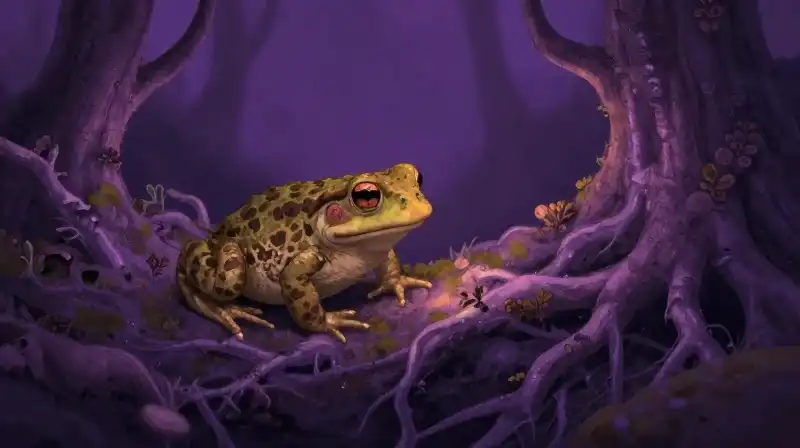 From her initial appearance, Thumbelina’s life is governed by the urgent, if somewhat aggressive, “marriage-minded” intentions of the creatures around her [1]. She must continually evade a line of potential suitors—including toads, moles, and cockchafers—all vying to claim her as a bride [1]. These creatures do not merely represent obstacles; they embody restrictive social structures. The toad’s family, for instance, represents a passionate but confined passion [1], while the mole and the frog king later serve as even larger, more powerful symbols of fixed expectations and “proper” places [2].
The Allure and Danger of Confinement
Throughout the narrative, the author contrasts the vibrant life of the outdoor world with the oppressive nature of confinement. Her life takes sharp turns: she uses resourceful bursts of wit—such as with the help of a friendly fish and a butterfly—to evade capture [1], and seeks refuge in the limited world of an old field mouse during a harsh winter [1]. However, even this perceived stability with the mouse fails to offer true happiness [1]. The constant movement required to survive these attempts to categorize and confine her underscores the tale’s core conflict: the tension between personal desire and external, often “correct,” societal paths [1].
The Symbolic Divide: Sky Versus Subterranean Earth
>The narrative skillfully employs contrasting settings to drive its emotional and thematic weight [1, 2]. The vibrant, sunny expanse of the field of flowers acts as Thumbelina’s ultimate spiritual home—it is where she truly belongs [1]. This is fundamentally opposed to the restrictive worlds offered to her, most notably the dark, silent underground realm of the mole.
The Rejection of the Mole’s World
The critical turning point in Thumbelina’s journey occurs when the field mouse suggests she consider marrying the subterranean mole [1]. This proposal is not just a romantic suggestion; it is a thematic test. Thumbelina rejects the mole’s lifestyle precisely because it lacks sun and sky [1]. This moment is perhaps the most lucid point of her character arc. She does not reject the mole out of spite, but out of a fundamental need to exist within the expansive, natural world [1, 2]. By choosing the promise of light and openness over the comfort of the known, dark interior, Thumbelina firmly asserts her spiritual autonomy [1, 2]. Her heart belongs to the “open skies and the wider world” [2].
The Tiny Power of Kindness and Resourcefulness
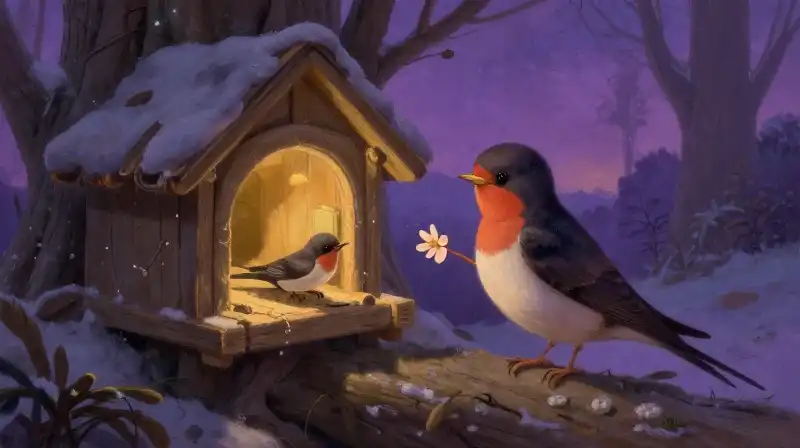 >What allows a creature as small and vulnerable as Thumbelina to survive these imposing conflicts? It is not just sheer luck, but a combination of quiet resourcefulness and profound kindness. During the difficult winter, while seeking shelter, she does more than just hide; she engages in an act of genuine compassion by tending to an injured swallow [1, 2]. By singing and listening to his stories, she uses a gentle form of communication and mutual respect to find warmth and companionship [1]. This ability to nurture, even in the bleakest circumstances, demonstrates that her resilience is not hardened strength, but gentle inner conviction [1].
The Climax of Self-Determination: Choosing Maia
>Thumbelina’s journey is not one of compromise but of escape and transformation. Having navigated the various attempts to “fix” her in a defined role, she ultimately chooses freedom as her destination [1]. This path leads her to a far-off land where she meets her ideal partner: a flower-fairy prince who matches her in stature and spirit [1].
The Gift of Flight
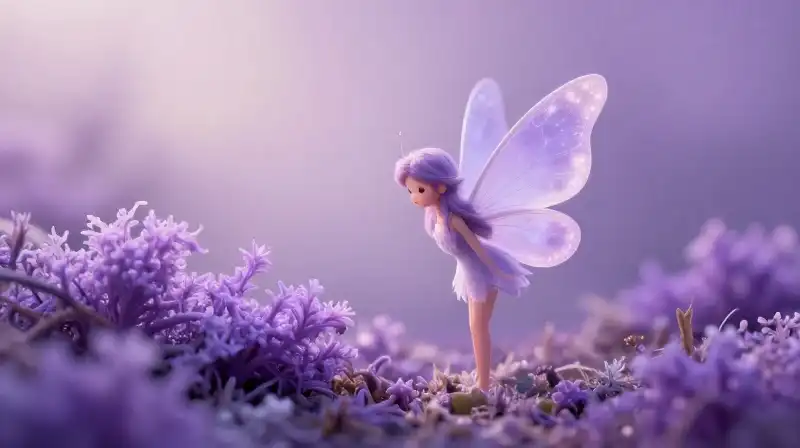
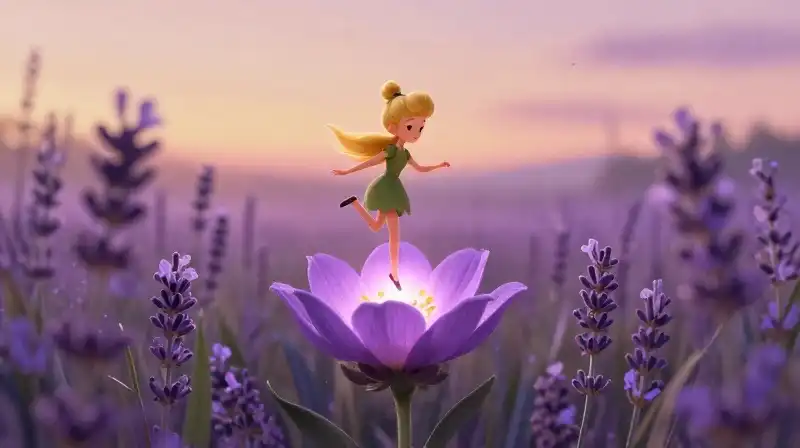
The fulfillment of her journey is symbolized by her receiving wings from this new partner [1]. This gift is profound—it is not merely a physical ability, but the final confirmation of her freedom. She abandons her previous name to adopt the beautiful new name Maia [1]. The ability to travel “from flower to flower” signifies her liberation from the single, defining moment of her emergence and the narrow confines of her life; she has achieved perpetual self-determination by choosing a love that expands her world, rather than contracts it [1, 2].
Different Tales, Different Tones: A Comparison of Versions
>Depending on the audience and the intended age-range, different interpretations of Thumbelina exist, ranging from the original, more sharply contrasted 1835 text to softer modern retellings.
| Feature | Original H.C. Andersen (1835) | Softer Retellings / Modern Adaptations |
|---|---|---|
| Core Conflict | Survival against aggressive, often restrictive, “marriage-minded” creatures [1]. | Finding self-worth and inner peace while overcoming small obstacles [2]. |
| Emphasis | The active struggle for autonomy against societal/biological limitations [1, 2]. | The comfort of family, nature, and the inherent goodness of the small world [2]. |
| Tone | More dramatic, emphasizing the necessity of escape and defiance [1]. | More soothing, emphasizing warmth, nature, and gentle companionship [1]. |
Thumbelina: An Essential Guide for Bedtime and the Classroom
The tale is beautifully adaptable for various reading styles and age groups.
Guidance for Younger Readers (Ages 3-6)
Focus on the visual contrast. Use the walnut-shell cradle as the cozy starting point, but emphasize the bright, lovely colors of the sunny field as the ultimate destination [1, 2]. Discuss the characters not as antagonists, but as confused or overly-eager creatures who don’t understand the simple joy of being herself. This approach focuses on her kindness and her journey toward friendship [1].
Guidance for Older Children (Ages 7+)
For this age group, delve into the thematic weight. Discuss the symbolism of the subterranean world versus the sky. You can explore the idea of ‘self-determination’ and how Thumbelina made a conscious choice about the life she wanted, rather than accepting the easiest or most common path [1, 2]. This allows for discussions about pursuing passions and making choices that align with one’s authentic self.
A Synthesis: Why Thumbelina Still Matters
What makes the enduring appeal of Thumbelina so remarkable is that her story is fundamentally a quiet manifesto for the individual. It demonstrates that true strength does not come from having the biggest voice or the most impressive dwelling; it comes from having the unwavering clarity to know what your heart truly desires [1, 2]. Thumbelina teaches us that freedom is not just a location or a lack of limitations, but the power to choose a love and a life that matches our deepest, most expansive need for the natural, beautiful world [1, 2].
Sources
- Thumbelina — en.wikipedia.org
- Thumbelina — readthetale.com
Frequently Asked Questions
How did the story of Thumbelina end?
Thumbelina ultimately chose freedom, which led her to a far-off land where she met a flower-fairy prince. She received wings from this new partner, symbolizing her liberation, and she adopted the beautiful new name Maia. The ability to travel from flower to flower signified her achievement of perpetual self-determination.
Related Articles