
What is a Fairytale Retelling? A Guide to Modern Stories

Introduction
What happens when you take the familiar magic of a classic fairy tale—the whispered promise of enchanted forests and the weight of ancient curses—and give it a vibrant, challenging new voice? A fairytale retelling is not simply a rewrite; it is an act of re-examination. It invites us to look past the comfortable version we first read as children and see the intricate human heart, complex cultural roots, and overlooked power dynamics within those stories [1]. These modern interpretations take the foundation of familiar motifs—the sleeping beauty, the wicked stepmother, the lost prince—and reshape them to better reflect the complexities of the world we inhabit today. It’s a space where the “happily ever after” might come with hard-earned lessons, where the villain isn’t always purely evil, and where the heroes are finally allowed to be deeply flawed, intelligent, and in control of their own destinies.
What Defines a Fairytale Retelling?
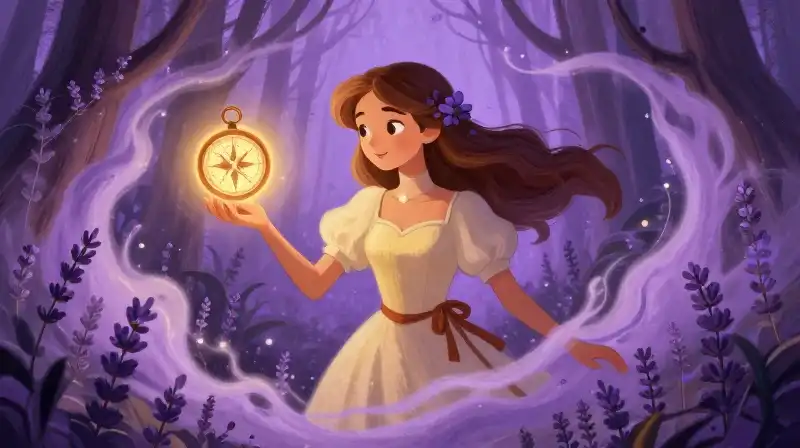 At its core, a retelling works by shifting the narrative focus. Where the original folk tales often placed the weight of the story on an external force—a curse, a magical intervention, or the grace of a prince—the modern retelling places that agency firmly in the hands of the protagonists [1]. They are no longer passive recipients of fate; they are active agents. The evolution of the genre allows for many different creative approaches. Sometimes the change is subtle, deepening the psychological traits of established characters [2]. Other times, the transformation is radical, using the familiar structure of a classic tale as a springboard to explore entirely new themes like systemic inequality or cultural identity. For example, *The Lunar Chronicles* by Marissa Meyer offers a series of well-regarded reimaginings of classics like Cinder (Snow White), demonstrating clever ways to twist and modernize original story beats [2].
The Modern Lens: Agency, Inclusivity, and In-Depth Character Study
One of the most profound movements within contemporary retellings is the concerted effort to address the gaps and limitations of the original folklore. The industry is increasingly focused on making these stories inclusive, often designing works that are empowering for both men and women and that specifically include people of color [1]. This thematic shift means that readers are looking for more than just a “prettier” version of a classic; they are seeking stories that offer genuine depth.
Power and Agency in the Modern Hero
The shift in power dynamics is perhaps the most defining characteristic. In traditional versions, characters often wait to be saved. Modern retellings challenge this passive role, showing characters who are resourceful, fiercely determined, and who take responsibility for their own narrative [1]. Uprooted by Naomi Novik, for instance, takes the structure of a Polish folktale and reimagines the dynamics of power and magic [2].
Deepening the Villain
Another major area of growth involves the characterization of the antagonist. Instead of being one-dimensional obstacles, modern villains are frequently given complex motivations, making their actions understandable, if not excusable. Recommendations for reimagined characters include *Ash* by Malinda Lo (Cinderella) and *The Shadow Queen* by C.J. Redwine (Snow White) [2]. This nuanced approach elevates the reader’s experience, allowing for rich thematic exploration rather than simple good-versus-evil binaries.
Genre Variations: From High Fantasy to Cultural Myth
 Fairytale retellings are a genre umbrella, and within that umbrella, you will find immense diversity depending on your taste.
- The Dark & Heavy: For readers seeking serious thematic weight, authors like Robin McKinley offer works that delve into the harsher realities of power and magic, such as *Spindle’s End* (a Sleeping Beauty retelling) [2]. These stories often contain mature elements and are designed for older teens or adults.
- Cultural Recontextualization: Some of the most brilliant retellings take the structural elements of a classic but transplant them into entirely different cultural settings and mythologies. Elizabeth Lim’s *Six Crimson Cranes* is a notable example, drawing upon Eastern mythology and the six swans [2].
- The Mashup/Hybrid: This style blends multiple classic tales into a single narrative. *Wintersong* by S. Jae-Jones is a brilliant mashup, combining elements of *Beauty and the Beast* with the lore of a Goblin King [2].
- The Whimsical & Light: Not all retellings are grim. For those seeking a lighter, more imaginative read, certain collections like L. Palmer’s *Pippington Tales* offer whimsical takes on traditional stories [2].
Navigating the Family Tree: Practical Recommendations
Finding the right retelling depends entirely on the age and emotional needs of the reader. Here are practical suggestions for different experiences, suitable for parents and educators:
For Young Readers (Early Learners & Comfort)
If you are looking for soothing stories or gentle adaptations, collections by authors like Donna Jo Napoli, Jane Yolen, and Robin McKinley are excellent starting points, as they frequently contribute to the retelling genre with accessible, magical narratives [2].
For Middle Grade & Young Adults (Challenging Tropes)
These selections are ideal for readers ready to tackle more complex themes and challenge the status quo. Look into Soman Chainani’s *The School for Good and Evil* (which explores different paths of morality) or the collection *Language of Thorns* by Leigh Bardugo, featuring reimagined tales like Little Mermaid and Hansel & Gretel [2]. Marissa Meyer’s *The Lunar Chronicles* is also a perfect entry point for these themes [2].
For Dark Fantasy & Complex Themes
These titles require an older reader and are focused heavily on the mechanics of power and moral ambiguity.
- House of Salt and Sorrow (12 Dancing Princesses adaptation) or Lost Boy (Captain Hook adaptation) exemplify the popularity of the “Goose Girl” trope in modern retellings [2].
- Robin McKinley’s works and other dark fantasy options offer intense explorations of fate and agency [2].
| Style/Approach | Typical Focus | Example Title/Author | Best For |
|---|---|---|---|
| Power Shift (Agency) | Protagonist takes control; rejecting passive roles [1] | Uprooted (Naomi Novik) [2] | Readers who appreciate strong female leads |
| Inclusivity & Depth | Diverse representation and complex character backstories [1] | Six Crimson Cranes (Elizabeth Lim) [2] | Readers interested in cultural myth |
| Dark Adaptation | High stakes, moral ambiguity, psychological depth [2] | Robin McKinley’s works [2] | Older readers/YA seeking mature themes |
What Does a Fairytale Retelling Allow Us To Explore Deeper?
More than just offering entertainment, the act of retelling allows for a deeper examination of universal archetypes and human experience. The “river” motif, for instance, which appears across various tales, often symbolizes the passage of time, inevitable change, and the emotional currents of life [[1] mentions rivers/stories]. By placing characters in these symbolic environments, modern retellings invite the reader to reflect on concepts like growth, loss, and transformation, rather than just plot movement. The modern retold fairy tale is a mirror. It holds up a familiar story, showing us not just who we were told the hero should be, but who they *could* be if given the chance to break the script. It is a testament to the enduring power of the narrative when it is combined with a fresh, fiercely intelligent perspective.
Sources
- Fairy Tales Retold — fairytales-retold.com
- Recommendations for reimagined/retold fairy tales? : r/YAlit — reddit.com
Frequently Asked Questions
What is a fairytale retelling?
A fairytale retelling is an act of re-examination that looks past comfortable original versions to reveal the intricate human heart and overlooked power dynamics within stories. At its core, it shifts the narrative focus, placing agency firmly in the hands of protagonists who are active agents rather than passive recipients of external forces.
Is A Court of Thorns and Roses a fairytale retelling?
The provided article does not mention *A Court of Thorns and Roses*, and therefore it is not possible to confirm whether it qualifies as a fairytale retelling based solely on this text.
Related Articles