Why the Fairies Outshine Cinderella: A Deep Dive into Sleeping Beauty

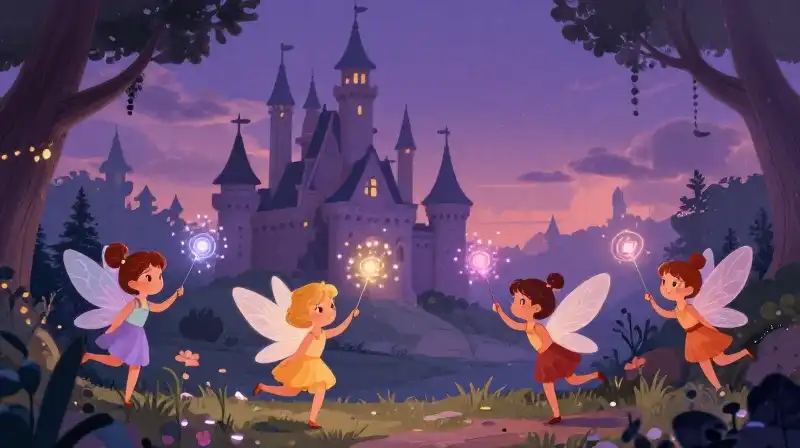
Introduction When a child settles down for a story, the choice of fairy tale often determines the mood of the evening. Is it the gleaming, hopeful escape of Cinderella, or the lush, complex, and often mysterious world of Sleeping Beauty? Both stories hold deep places in the collective imagination, yet critical analysis often points to a fascinating disparity: while *Cinderella* captures our hearts with her resilient spirit, *Sleeping Beauty* frequently offers a richer, more nuanced tapestry through its supporting characters. This isn’t a simple battle between good and good; it’s a deeper examination of narrative drive. By looking past the protagonists, we can see how the architecture of *Sleeping Beauty*—its evolving folklore, its compelling characters, and its dramatic stakes—allows the supporting cast, particularly the three fairies, to outshine even the most charming hero. The Conflict Between Resilience and Exhaustion A common praise for Cinderella is her enduring kindness and perseverance [2]. She is the archetype of the victim who endures her circumstances with grace. However, a closer look at the emotional landscape of the character reveals a surprising complexity. Despite her gentle nature, Cinderella is not always a model of stoic patience; she exhibits significant moments of frustration and emotional exhaustion while enduring her life of servitude [2]. Her struggle is often one of passive endurance—she suffers, she hopes, and she waits. Contrast this with the narrative engine of *Sleeping Beauty*. The conflict there is not solely reliant on the princess’s personal endurance, but on the complex relationships and willful decisions of the fairies. The traditional folk version, categorized as Aarne-Thompson Type 410 [3], centers on a magical curse, but the drama truly ignites in the *will* of the characters who participate in—or resist—that magic. The three fairies, rather than being mere plot devices, are portrayed as independent agents. Their internal struggles, their will to sacrifice, and even their subsequent disagreements within the narrative give them a level of complexity that often supersedes the singular, determined struggle of Cinderella [2]. The Strength of the Supporting Cast: The Three Fairies If you are looking for the narrative spark that makes a story move, the three fairies of *Sleeping Beauty* are perhaps the finest examples. They function as the true emotional anchors of the story. Unlike some allegorical fairy tale helpers, these fairies possess personality and agency. Why the Three Fairies Excel in Characterization
Their strength lies in their active involvement in the plot’s climax. Critics argue that these characters are not just spectators; they are the active drivers of the story’s resolution, contributing meaningfully to the action and stakes [2]. They are not just “nice helpers”; they are powerful beings who must make choices and face consequences. Their ability to challenge each other and sacrifice themselves grounds the story in human (or fairy) emotion, making them far more compelling than simply observing Cinderella’s journey [2].
Beyond the Damsel: Prince Phillip’s Role
Furthermore, the male lead in *Sleeping Beauty*, Prince Phillip, is often regarded as more developed than Cinderella’s Prince Charming. His motivation is rooted in a willingness to marry for genuine love, and crucially, he demonstrates the courage necessary to confront a formidable foe—the dragon [2]. This portrayal shifts the focus from passive rescue to active, brave intervention, adding a layer of maturity to the romantic tension.
The Archetype of Evil: Maleficent and the Dragon
In both tales, the antagonist is essential for driving the action, but Maleficent represents a potent and truly iconic form of evil [2]. She embodies a singular, concentrated force of darkness. Her transformative power is not just cosmetic; it is elemental. Her transformation into a dragon, breathing searing green fire, is cited as a key element defining her formidable and utterly terrifying nature [2]. This portrayal of Maleficent is far more visually and dramatically arresting than many of the more whimsical villains found in other tales. She is the perfect representation of pure antagonism, and her powerful, dramatic shift ensures she remains a captivating and formidable presence, making her a standout villain in the grand pantheon of storybook darkness [2]. The Evolution of the Tale: From Folklore to Feature Film To fully appreciate the complexity of the story, we must recognize its long history. The tale of Sleeping Beauty has roots stretching back centuries, demonstrating how a core archetype can be endlessly reinterpreted.
Its origins are complex, tracing back to the medieval courtly romance *Perceforest* (c. 1330–1344) and the Catalan poem *Frayre de Joy e Sor de Paser* [ca] (c. 1320–1340) [3]. Giambattista Basile’s version, *Sun, Moon, and Talia* (1634–36), provides an important, darker historical marker, featuring the explicit and potent detail that the princess, Talia, is discovered and even impregnates herself while in a profound state of unconsciousness [3]. It is only through later refinements, such as Perrault’s 1697 adaptation, that the story became the “pared down” and more subtle version we often recognize today [3].
When the story entered the modern animated era, each adaptation prioritized different strengths. While the 2015 live-action *Cinderella* was criticized for lacking character urgency and feeling too mellow [2], the animated versions of both tales achieved legendary status through technical mastery and artistic vision. Disney’s *Cinderella* holds the historical significance of being the first feature-length animated movie, featuring classic cell-shading that gave the gown transformation sequence immense technical grace [1, 2]. Conversely, *Sleeping Beauty* is celebrated for its breathtaking visual artistry and profound musical composition, utilizing a more classic narrative style [1].
Comparative Analysis: Archetype vs. Execution For readers who enjoy analyzing the craft of storytelling, looking at how the major players are rendered reveals why certain versions resonate more deeply.
| Element | The Cinderella Archetype | The Sleeping Beauty Archetype |
|---|---|---|
| The Hero’s Arc Endurance and hope through suffering [2]. | Agency and confrontation against powerful magic [2]. | |
| Key Emotional Driver | Frustration and exhausted resilience [2]. | Willful sacrifice and internal fairy dynamics [2]. |
| The Antagonist | (Often subtle or focused on social status). | Maleficent: Iconic embodiment of primal evil (dragon transformation) [2]. |
| Core Strength | Character strength and the charm of the Godmother [2, 1]. | Supporting cast leads and the richness of visual composition [2, 1]. |
| Finding Depth in Your Bedtime Story Selection The choice between these two tales depends entirely on the thematic depth you wish to impart. If you are looking for a story about overcoming quiet, daily hardship and the promise of eventual reward, *Cinderella* offers a deeply comforting, resilient narrative. For parents seeking to discuss agency, complex relationships, and the dramatic power of collective action, *Sleeping Beauty* is an incredibly rich choice. The three fairies allow for natural discussion of choice, sacrifice, and even disagreement—powerful themes for budding moral reasoning. Ultimately, while *Cinderella* invites empathy for the protagonist’s struggle, *Sleeping Beauty* invites analysis of the dynamics around the central event. It is the complexity of its various components—from the ancient roots of Basile’s dark vision to the elegant defiance of its fairies—that allows it to remain a perpetually fascinating choice for those who love stories that unfold with true depth. |
Sources
- Which pre-renaissance princess film is the best: Snow White, Cinderella, or Sleeping Beauty? : r/disneyprincess — reddit.com
- Disney Animated vs. 1 – Cinderella vs. Sleeping Beauty — healed1337.wordpress.com
- Sleeping Beauty — en.wikipedia.org
Related Articles