What Castle Inspired Sleeping Beauty? The Story of Neuschwanstein

Introduction
When you look at the iconic gates of Disney’s Sleeping Beauty Castle, there is an immediate feeling of pure magic—a sense that a fairy tale has stepped right off the page and into a vibrant, gilded realm. This castle, shimmering with its fairytale perfection, is a staple of modern storytelling, representing grandeur, wonder, and the ultimate culmination of childhood dreams. Yet, the specific silhouette and opulent atmosphere of this world are not products of pure fantasy. They are deeply rooted in a very specific, very real 19th-century vision of the Middle Ages. The majestic structure that served as the primary blueprint for Disney’s most iconic fantasy architecture is the sprawling, ethereal palace of Neuschwanstein in Bavaria, Germany. To understand the magic of Sleeping Beauty, one must first journey to the breathtaking, romantic landscapes of this actual castle.
The Birth of a Royal Dream World
 Neuschwanstein is not a medieval castle in the traditional sense; it is a meticulously planned escape, a masterpiece of “castle Romanticism” [1]. Its creation was the personal, extravagant dream of King Ludwig II of Bavaria. Ludwig did not build this palace to serve as a state seat or a center of royal administration; he built it as a private retreat where he could indulge his idealized vision of the Middle Ages, far away from the administrative duties and realities of Munich [1, 2]. The castle stands as a symbol of a powerful, yet deeply personal, creative vision.
Music and Myth: The Romantic Purpose
Ludwig’s vision was deeply interwoven with the world of Romanticism, particularly the musical genius of Richard Wagner. For the King, Neuschwanstein was intended to be more than just a grand home; it was to serve as a worthy “temple” to remind him of Wagner’s legendary operas, such as *Tannhäuser* and *Lohengrin* [1, 2]. The architecture, therefore, becomes a stage for mythological inspiration. The castle’s interior drama is structured around these grand theatrical themes, with Ludwig even insisting on designs from the stage designer Christian Jank, who often drew inspiration from the drafts of scenic painters (coulisse) [1]. This blend of high art, mythology, and opulent residence gives Neuschwanstein its unparalleled dramatic atmosphere.
Blending Eras and Styles
If you look closely at Neuschwanstein, you will notice it is an eclectically styled historicist palace, rather than strictly adhering to any single medieval period [1]. It is a fascinating fusion of architectural languages. The predominant style is Neo-Romanesque, but it seamlessly blends elements of Gothic, Byzantine, and general Romantic architecture. This creates an intensely picturesque, almost “non-functional” fairytale look [1]. Instead of the strict, practical design of a real defensive stronghold, Neuschwanstein prioritizes the “fantasy” element. This elaborate aesthetic, inspired by various romanticized settings—including the reconstructed Wartburg near Eisenach and the Château de Pierrefonds—is viewed entirely through Ludwig’s highly personal, idealized lens of the past [1].
The Symbolism of the Setting and Swan
The physical location of Neuschwanstein contributes heavily to its legendary status, providing the dramatic, enchanted atmosphere that is crucial for its connection to modern storytelling. Perched on a rugged hill, the castle overlooks the narrow Pöllat gorge and is framed by the tranquil Alpsee and Schwansee lakes [1, 2]. This setting—the majestic castle towering over deep valleys and sparkling water—perfectly captures the sense of isolation and wonder inherent in many classic fairy tales. Within the castle itself, a powerful, recurring symbol is the “swan” (Schwan) [2]. In the regional name “Schwangau,” the swan plays a key role. Beyond this geographical link, the swan functions as a symbol of purity and grace within the castle’s aesthetic, a motif that resonates strongly with the gentle, transformative themes often found in the tales of Sleep and Awakening.
From Bavaria to Disneyland: The Disney Connection
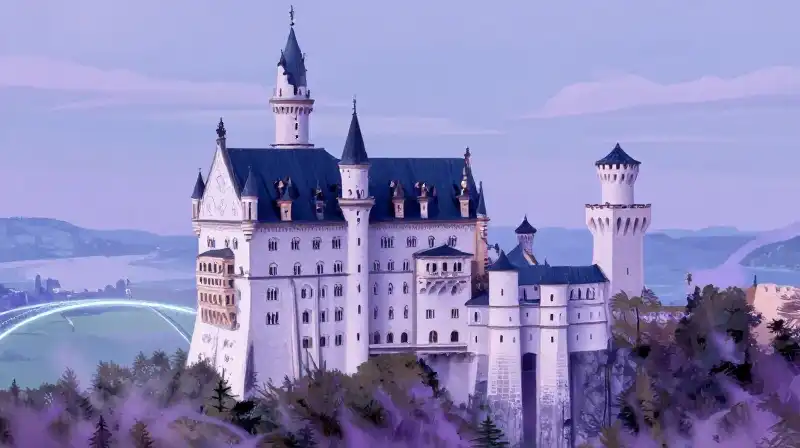 One of the most frequently asked questions regarding the Sleeping Beauty Castle is what specific historical structure it was inspired by, and the answer is elegantly simple: Neuschwanstein [2]. Walt Disney and his designers were famously captivated by the castle’s fantastical qualities. They utilized Neuschwanstein as the primary model for constructing the magical settings of Sleeping Beauty Castle at Disneyland [2]. This direct lineage is a perfect example of how the “real” inspires the “magical.” The real Neuschwanstein, with its impossible beauty and blend of historic styles, provided the physical template. Disney then took that template and translated it through the lens of cinematic fantasy, transforming a 19th-century historicist palace into the ultimate emblem of fairytale bliss.
A Practical Note on Visiting the Original Castle
For those interested in experiencing this blend of history and fantasy in person, Neuschwanstein is one of Germany’s most beloved tourist destinations, drawing millions of visitors annually [1, 2]. While the structure itself is a 19th-century marvel built with modern advancements (like steel frameworks and steam cranes), the experience remains steeped in romantic myth.
Synthesis: The Power of Manufactured Wonder
What is the true magic of Neuschwanstein, and why does its legacy matter to storytellers and readers? It’s the successful marriage of history and imagination. It proves that a setting can be simultaneously a grounded historical artifact and a limitless source of fantasy. For parents reading this, Neuschwanstein offers a lesson in creative scope: just as Ludwig II built a palace that was impossible in reality, storytellers create worlds that feel profoundly real despite being utterly fantastical. It encourages us to look at the structures and settings in children’s stories—the towering castles, the enchanted forests—not as random backdrops, but as deeply layered creations of human ambition, history, and artistic vision. ***
Sources
- Neuschwanstein Castle — en.wikipedia.org
- Neuschwanstein Castle in Germany — neuschwansteintickets.com
- Bayerische Schlösserverwaltung — neuschwanstein.de
Frequently Asked Questions
What Disney castle was inspired by Neuschwanstein?
Neuschwanstein served as the primary blueprint and model for Disney's most iconic fantasy architecture. Walt Disney and his designers specifically utilized the historic palace as the primary template for constructing Sleeping Beauty Castle at Disneyland.
Related Articles