Sea Witches Explained: From Norse Spirits to Celtic Hags

Introduction
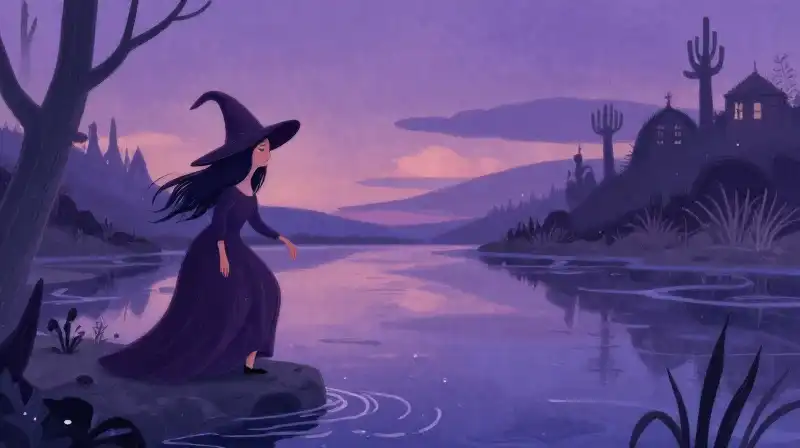
Every child has known the thrilling—and sometimes terrifying—power of the ocean. For generations, it has been a place of magnificent promise and sudden, unpredictable rage. And presiding over this volatile domain are the Sea Witches: beings who don’t simply inhabit the sea, but wield its deep, shifting power. They are characters that bridge the gap between the known and the mythic, representing the sublime chaos of the tides and the secrets held beneath the waves. For parents and educators looking to delve deeper into the archetypes that shape children’s literature, the Sea Witch offers a rich terrain—a perfect blend of elemental magic, cultural history, and compelling narrative tension.
These figures are far more nuanced than the damsels or sirens we might simplify them into. A Sea Witch is not merely a villain; she is often a barometer for the balance of nature itself. Whether she helps a struggling fisherman or lures a sailor to their fate, she embodies the unpredictable nature of the deep. When we look at the knots she might weave or the foam she dissolves into, we are looking at how ancient cultures perceived the boundaries between the natural world and human intent. To understand the Sea Witch is to understand the primal relationship between humanity and the vast, beautiful, and dangerous ocean.
The Fabric of the Tide: Defining the Sea Witch Archetype
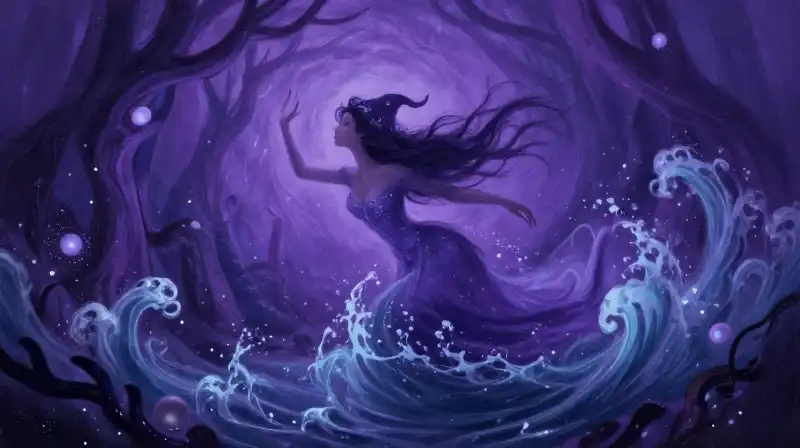
At its heart, the Sea Witch is a mythological entity intrinsically bound to the waters of the global ocean. They possess a unique, supernatural kinship with the tides and currents, often holding sway over the journeys and outcomes of those who navigate the blue [2; 1]. The term itself is a shimmering catch-all for various figures across human history, reflecting the diverse ways different cultures imagined the transition between the human world and the elemental world.
More Than Just a Witch: The Range of Sea Forms
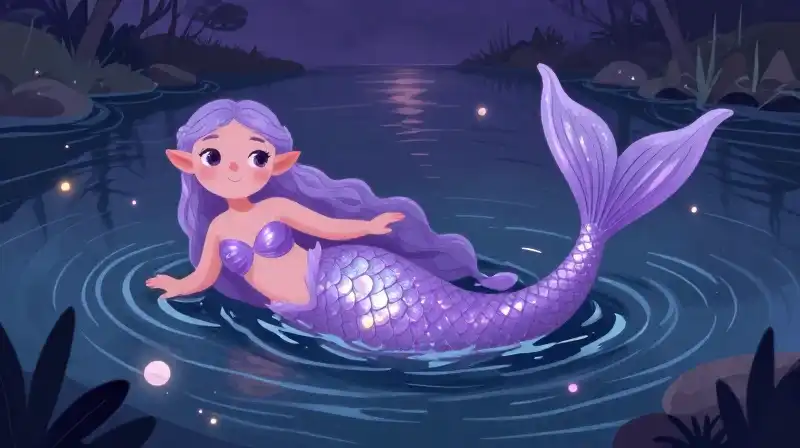
One of the most illuminating aspects of the Sea Witch is her shapeshifting nature. She is rarely confined to a single form. She can be encountered as an elemental force—a sentient piece of the chaotic water [3]. She can manifest as a classically beautiful fairy or siren, a mysterious creature like the Selkie, or she might appear as an ordinary human woman [3]. This fluidity means that the Sea Witch can be a source of profound guidance or a source of terrible doom, depending entirely on her actions and the circumstances of the voyage.
There is a subtle but important distinction noted in various folklore traditions: some Sea Witches are strictly Fae, existing solely within the sea’s domain and potentially helping or harming seafarers. Others are human women who possess Fae ancestry, linking their power to the moon’s phases and controlling the ebb and flow of tides along the shore [2]. This suggests that Sea Witches are not just users of magic, but often conduits of fundamental celestial and elemental forces.
The Language of Knots: Magic and Intent
If the sea is the canvas, magic is the brush, and the knots are the most powerful tool of the Sea Witch. A common and fascinating motif found across multiple traditions is the use of complex knots as containers for magical energy [1; 2]. These knots are not merely decorative; they are “bound” with intention and spell. A Sea Witch might tie a knot to capture healing properties, to predict the direction of the wind, or even to generate and deplete specific types of atmospheric forces [1; 2].
In many tales, such as those detailing ancient Norse traditions, a traveler might purchase a three-knotted rope from a Sea Witch, hoping the charm would ensure a safe passage across the perilous ocean [1; 2]. This reflects a deep-seated cultural need to quantify and control the uncontrollable. The knot, in this context, transforms chaos into order—a tightly wound symbol of a hope that holds true, even when the surrounding waters are churning [1; 2]. Furthermore, various myths show the concept of “tying the wind,” suggesting powerful figures—whether deities like Aeolus or even mythical Sea Witches in medieval lore—could harness the winds themselves [1; 2].
Global Faces, Local Fears: Sea Witches Across Cultures
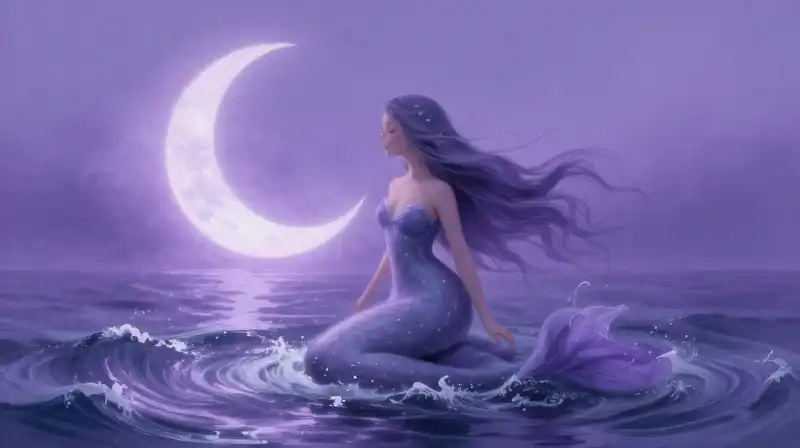
The Sea Witch archetype has taken on wildly different flavors depending on the geography and cultural anxieties of the communities that developed them. Examining these diverse figures provides a marvelous look at how different societies view the relationship between man, woman, and the uncontrollable power of nature.
The North Atlantic Cold: Norse and Celtic Magic
In the cold, fierce waters of Northern Europe, the Sea Witch often carries a heavier weight of malevolence. In Norse mythology, Sea Witches were specifically female spirits depicted as mermaids or selkies, wielding a malevolent influence that was inextricably linked to the rhythm of the moon [1]. Their power was often channeled through the movement of the tides and the shift in the weather, making them a source of both awe and profound dread.
The Celtic tradition offers a slightly more monstrous, storm-battered interpretation. In the folklore of Ireland, the Muireartach—or “hag of the seas”—is a figure of striking, terrifying appearance. She is described as a blue-skinned, one-eyed hag with jagged teeth, serving as a potent symbol of the sheer power and unpredictability of a raging storm at sea [2].
Echoes Across the World: Asia and Slavland
The fear of the sea is universal, but the spirits that govern it are uniquely local. In Indonesia, there is the malevolent spirit Suanggi, while in Slavic mythology, the water spirit known as Vodyanoy holds sway over the lakes and rivers [2]. Though not strictly “sea” witches in the nautical sense, these figures share the deep characteristic of being primordial guardians of watery domains, influencing fortune and danger alike.
The Transformation of the Villain: From Myth to Modern Screen
The archetype of the Sea Witch has proved remarkably adaptable to modern narrative structures. When we look at popular media, we see how the ancient, diffuse power of the Sea Witch is often channeled into a specific, narrative-driven antagonist, such as Ursula in Disney’s *The Little Mermaid* (1989). Ursula is a modern embodiment of the Sea Witch, reimagined as a half-human, half-octopus mythological hybrid, or Cecaelia [1; 3]. She takes the traditional themes of demanding power and corrupting mortal endeavors and frames them through the lens of a grand dramatic conflict.
Similarly, the figure of Morgana, as seen in *The Little Mermaid II: Return to the Sea*, represents a specific, high-stakes version of the Sea Witch. Her powers are focused on luring sailors to their ultimate deaths. In this modern portrayal, the dramatic consequence of her power is often depicted as her dissolving into sea foam—a poetic reversal of her ability to manipulate the deep [3; 1].
| Figure | Cultural Origin | Primary Role/Power | Archetypal Connection |
|---|---|---|---|
| Muireartach | Celtic (Ireland) | Embodiment of storm rage and chaos. | The Hag of the Sea |
| Norse Sea Witches | Norse Mythology | Influence over tides and moon cycles; malevolence. | Lunar Elemental |
| Ursula | Modern Adaptation (Disney) | Corrupting magic and demanding ultimate control. | The Grand Adversary |
Addressing the Deep Questions: Defining the Sea Witch
What type of witch is a sea witch?
The term “sea witch” is not a classification in a scientific sense, but a mythological descriptor. A Sea Witch is fundamentally a supernatural being with an elemental bond to the ocean [2]. Depending on the specific lore, she might be classified as a Fae creature, a nature spirit, or a hybrid. The key takeaway is that her “witchcraft” is always rooted in the forces of the sea—the tides, the winds, the marine life, and the chaotic depth. She is an embodiment of liminal power, existing on the edge of human comprehension and natural law.
The Sea Witch in Story: Symbolism and Ideas for Bedtime
For parents and educators using these themes in children’s stories, the Sea Witch provides several rich symbolic layers that can be gently explored. Her presence can guide discussions about fate, balance, and the idea that even the most powerful forces are governed by natural rules.
The Symbolism of Grey Magic
A fascinating concept in Sea Witch lore is “Grey Magic”—the practice of magic that exists not purely in the realm of light or pure shadow, but operates in the chaotic middle. This aligns perfectly with the Sea Witch’s role, as she works to balance the chaotic, volatile forces of nature like immense wind and crashing water [2]. This is a wonderful concept to introduce to older children: that power doesn’t always have to be purely good or purely evil; it can be a force of necessary equilibrium.
Using Ocean Components for Wonder
A practical detail to consider for young storytellers is how Sea Witches utilize their environment. Many folklore tales show them leveraging marine elements—like smooth driftwood, iridescent shells, and floating debris—to fuel or focus their spells [2]. Instead of using an overly dramatic crystal ball, a Sea Witch might use a piece of polished blue sea glass. This grounds the magical elements in something sensory and real, making the fantastical elements relatable and tangible for young listeners.
The History of Fear: From Folklore to Social Terror
It is important to contextualize the Sea Witch within human history. In 17th-century Northern Norway, the figure of the sea witch became a deeply tragic and terrifying part of actual history, linked to widespread witch trials. Women were frequently scapegoated for storms and maritime tragedies. These trials represent a critical historical insight for educators: the Sea Witch is often a projection of society’s deep-seated fear of the uncontrollable forces of nature, particularly the ocean. When using these tales in a classroom, it is vital to ground them in the understanding of cultural history and social anxieties, rather than presenting them merely as scary stories [1].
Synthesis: The Enduring Magic of the Sea Witch
Ultimately, the Sea Witch is more than just a creature of a storybook; she is a mirror for humanity. She reflects our fear of the vast, unknown ocean, our respect for the unpredictable power of nature, and our deep-seated need to impose order (the knotted spells) upon chaos. Whether she is the Celtic Muireartach or the modern Ursula, she serves as a potent reminder that the world is vast and that profound power often resides where the land meets the deep. By exploring the Sea Witch, children are encouraged to see the complex interplay of beauty and danger, light and shadow, and the enduring magic found in the tides.
Sources
- Untwisting the Knotted History of Sea Witches — ancient-origins.net
- Secretive Sea Witches #folklore — ronelthemythmaker.com
- Sea Witches | Villains Wiki | Fandom — villains.fandom.com
Frequently Asked Questions
What type of witch is a sea witch?
The term "sea witch" is a mythological descriptor, not a scientific classification, identifying a supernatural being with an elemental bond to the ocean. Depending on the specific lore, they may be classified as a Fae creature, a nature spirit, or a hybrid. Ultimately, their witchcraft is always rooted in the chaotic forces of the sea, such as tides and winds.
Related Articles