

Little Red Riding Hood: Comparing Vintage vs. Gentle Bedtime Tales

Introduction
Some children’s stories stand the test of time, becoming cultural touchstones that are recited, reshaped, and reimagined across generations. Among these legends, “Little Red Riding Hood” occupies a unique space. While often dismissed as a simple warning about obedience, the tale is a profoundly rich text, acting as a foundation for discussions on empathy, deception, and the subtle magic of the natural world. However, because the narrative holds both sweet charm and frightening suspense, parents and educators often face a critical decision: which version to share at bedtime? Do you lean into the dramatic intensity of the original source, or do you choose a gentler alternative to keep the narrative tension high without the fatalistic outcomes? This comparison of the vintage and modern adaptations will provide a guide to help you select the perfect story to deepen your child’s understanding of these iconic characters and themes.
The Great Divide: Vintage vs. Gentle Endings
The choice between the two versions of “Little Red Riding Hood” is often a choice between intensity and soothing comfort. The core narrative—a child delivering provisions to a sick elder while traversing a beautiful forest—remains consistent, but the consequences vary dramatically, providing parents two distinct textual traditions for bedtime. The first is the classic, vintage adaptation derived from Charles Perrault [2]. The second is a gentler, modern retelling designed specifically for contemporary family reading [1].
The Intensity of the Classic Tale ([2])
In the Perrault tradition, the story takes its full, dramatic weight. This version includes dark themes and violence, notably the wolf eating the grandmother [2]. However, this stark intensity is balanced by rich details that make the journey feel significant. The protagonist is typically equipped with traditional, heartfelt items—fresh butter, new-laid eggs, and a nice cake [2]. When the climax arrives, the villain is vanquished by Hugh the woodman and his dog, Trim, who physically take down and kill the wicked wolf [2].
The Comfort of the Modern Adaptation ([1])
For those seeking a more gentle approach, the modern telling offers a high-stakes but ultimately comforting experience. In this adaptation, the grandmother is safely locked in a closet, avoiding the fatal consequences of the original version [1]. The provisions she receives are warmer and more tactile: a jar of golden honey, warm muffins, and herbal tea [1]. When the wolf is finally defeated, a passing woodsman uses his axe to scare the villain away rather than killing him, allowing the story to maintain a sense of hopeful resolution [1].
Ultimately, if a child is sensitive to darker imagery, the “feel good” alternative of [1] is highly suitable for soothing bedtime reading, yet [2] provides those seeking deeper historical context or more “actionable” discussion points about dangers.
| Feature | Vintage Adaptation ([2]) | Gentle/Modern Adaptation ([1]) |
|---|---|---|
| Grandmother’s Fate | Eaten by the wolf (Dark Theme) | Safely locked in a closet (Comfort) |
| Typical Provisions | Fresh butter, new eggs, nice cake | Golden honey, warm muffins, herbal tea |
| Villain’s Capture | Killed by Hugh the woodman and his dog Trim | Scared away by a passing woodsman’s axe |
| Thematic Focus | Survival, definitive confrontation | Sensation, suspense, and care |
The Colors and Symbols: Red and the Forest Path
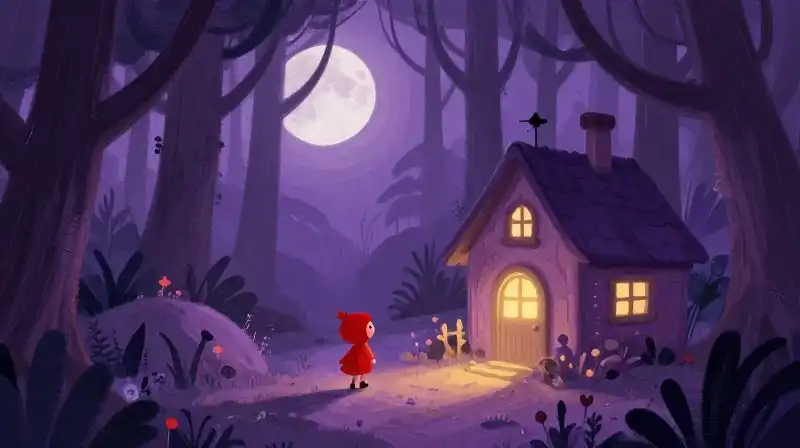
The most iconic element of the tale is, of course, the protagonist’s scarlet cloak. This bright red garment serves as much more than just an identifier; it is a powerful symbol of her identity and her vulnerability. She is named for the vibrant red cloak and hood sewn by her family, a color that is so vivid it is described as fluttering behind her like a flag [2].
Beyond the immediate visual of her bright attire, the story uses the setting of the forest to teach children about the complexities of the natural world. The forest is not a single monolithic entity of dread; it is painted with enchanting imagery that serves a specific narrative purpose. Depending on the version, her journey is filled with sensory details: picking wildflowers to distract her from the path [1], or watching squirrels crack nuts, observing bees gathering honey from wild thyme, and chasing white and yellow butterflies [2]. This deliberate use of “distracting nature” imagery subtly communicates the beautiful but ever-present dangers found off the beaten path.
Analyzing the Antagonist: Deception and Instinct

The wolf is not merely a lurking monster; he is a master of sophisticated manipulation. He is portrayed either as a cruel, greedy creature [2] or a sneaky gray wolf [1], but his primary danger lies in his ability to pretend to care. He executes his plan by suggesting that the child gather wildflowers in a sunny meadow to keep her busy and divert her from the path to the grandmother’s cottage [1]. This deception is what transforms the tale into an essential early framework for teaching “stranger danger.”
The Language of Suspense
The iconic, repetitive dialogue concerning the wolf’s features—the large eyes, the oversized ears, and the teeth hidden beneath a nightcap and glasses—is preserved across both the vintage and gentle versions, providing a rhythmic, suspenseful build-up. The confrontation is highly interactive, functioning as an engaging call-and-response opportunity for reading aloud. The protagonist’s pause upon entering the cottage because “something felt strange” [1] is a crucial moment that shifts the narrative from a simple errand to a thrilling exercise in intuition.
Applying the Moral Lens: Stranger Danger and Empathy
One of the most practical uses for this tale in a parenting or classroom setting is its function as a guide for “stranger danger,” especially in the vintage source [2]. The story encourages children to develop instincts. Parents can use the explicit actionable discussion questions found in some tellings to help children respond when strangers ask for personal information, reminding them that dangerous strangers do not always appear as obvious, hairy monsters [2].
Equally powerful, however, is the element of familial gratitude and empathy. The story reinforces the warmth of home and the importance of helping those who are unwell. Whether the protagonist thanks her rescuer with a muffin and a smile [1] or is prompted to discuss how they can help make sick loved ones feel better [2], the narrative grounds the dramatic elements in genuine human connection. It is a lesson in both caution and compassionate care.
How to Choose the Right Tale for the Reader
Deciding between the gentle modern tale and the vintage dramatic version depends entirely on the child’s age and your goals for the reading. For toddlers or very young children, the gentle version offers high emotional engagement without the paralyzing fear of fatal outcomes. For children in the elementary age range, the vintage version offers richer textual depth and provides compelling material for discussing ethics, deception, and the power of the woods. Using the tale to explore deception and instinct is particularly effective in this age group, where they can process the moral ambiguity of the wolf’s motives.
Ultimately, “Little Red Riding Hood” transcends its simplicity. It is a vibrant map of human relationships—warning us about who we should trust, acknowledging our need for community, and celebrating the enduring power of a striking scarlet cloak as both a symbol of youthful vibrancy and the signal of a journey filled with profound magic and necessary caution.
Sources
- Little Red Riding Hood — readthetale.com
- Little Red Riding Hood — storyberries.com
Related Articles