
Three Little Pigs Bedtime Story: Lessons in Diligence and Safety

Introduction
Before the glow of the nighttime lamps, the simple magic of a well-told story can do far more than simply lull a child to sleep; it can plant seeds of understanding and resilience. The classic tale of the Three Little Pigs, often reduced to a quick chase and a final collapse, holds far deeper currents of human endeavor and responsibility. It is a story of growing up, of the delicate balance between immediate gratification and long-term security, and of finding one’s footing in a world that often feels unpredictable. For the parent or educator, the story becomes a potent, accessible metaphor, perfect for a gentle evening discussion.
The Pigs: A Study in Choice and Consequence
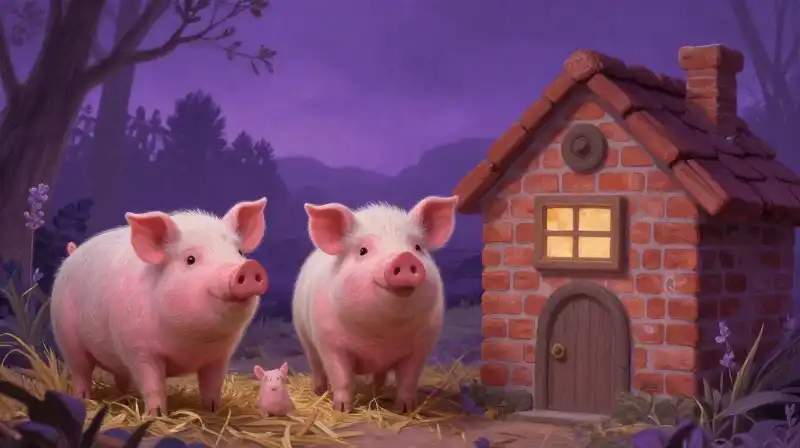
The narrative introduces us not merely to characters, but to a trio of differing philosophies, represented by three little pigs—Porky, Petunia, and Percy. Their decisions about the materials used for their dwellings serve as the primary metaphor, charting a fascinating transition from childhood ease to the responsibilities of independent living [1].
The Temptation of the Easy Way
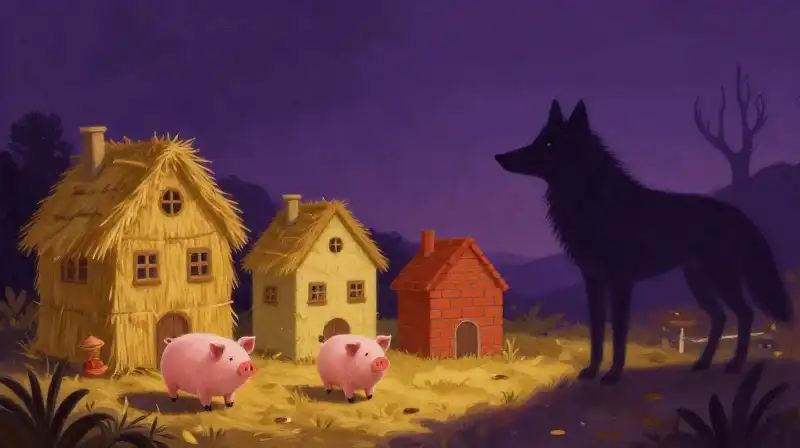
Porky and Petunia represent the pull of convenience. Their choice of straw and sticks is understandable, rooted in a desire for immediate, effortless enjoyment. The “cozy straw house” offers a fleeting sense of relief and immediate relaxation, but this choice is ultimately fragile, allowing vulnerability to take root. Their houses, which Crumble under the Wolf’s pressure, symbolize the inherent instability of prioritizing ease over preparation [1].
The Value of Dedication
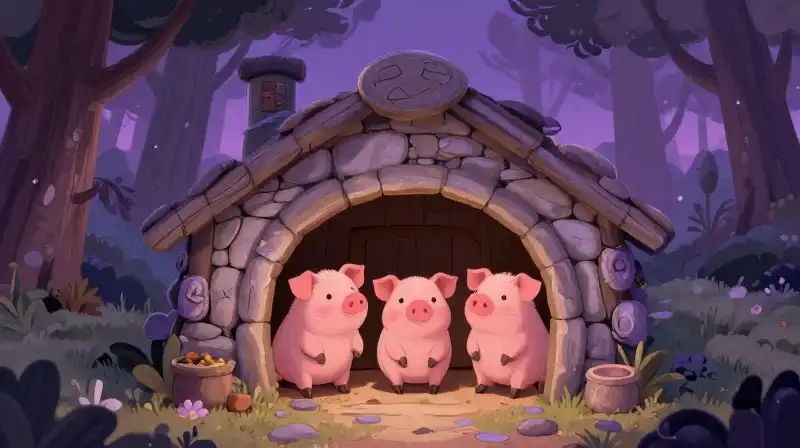
Percy, by contrast, chooses the brick. His dedication, requiring more labor and time, ultimately yields permanence and safety. The brick house is a symbol of structure and commitment. It does not just stand; it endures, representing a growth mindset and the understanding that true security is built brick by brick through diligence and care [1]. The core of the story is the gradual transition of these siblings into responsible individuals, learning the necessity of taking things “well” and “carefully” [2].
The Big Bad Wolf: The External Challenge
In the narrative, the Big Bad Wolf is not simply a monster; he functions as the external challenge—the relentless pressure, the obstacle, or the danger that tests one’s preparedness. He represents the forces of the world: impatience, laziness, or the consequence of neglecting responsibility [2].
His pursuit provides the necessary tension that gives the story its dramatic pacing. When he demands entry, the pigs’ dialogue, such as the rhythmic declaration, “Not by the hair of our chinny-chin-chins!” [1], transforms the conflict from a purely physical confrontation into a lively, rhythmic moment that is perfect for immersive storytelling and discussion [1]. The Wolf’s persistent attempts underscore the constant demands placed upon those who have taken the easy route, forcing the reader to witness the consequences of those shortcuts.
Symbolism of the Setting and Materials

The setting and the building materials provide a rich, tangible language for children to understand complex themes. The contrast between the homes is highly symbolic, giving children concrete objects to tie to abstract ideas.
The Architectural Metaphor
| Material | Symbolic Meaning | Life Lesson (Thematic) |
|---|---|---|
| Straw/Sticks | Impulsivity, speed, lack of depth. | Short-term gratification leads to vulnerability. |
| Brick | Perseverance, planning, foundational integrity. | Diligence and commitment ensure long-term safety. |
Guiding Discussion: Age-Appropriate Lessons for Parents and Educators
This tale offers versatile material for various age groups, moving beyond a simple scary narrative into a framework for discussion [1].
For Younger Readers (Ages 4-6): Focus on Rhythm and Emotion
At this age, the story’s value lies in its auditory and visual elements. Emphasize the repetitive rhythm and the “cozy” descriptions of the initial houses, juxtaposed with the strong, comforting feeling of the brick house. The story’s soothing conclusion—guiding the “sweet little dreamer” to find happiness in a “sturdy home” [1]—is perfectly suited for the wind-down routine.
For Older Children (Ages 7-12): Focus on Growth Mindset and Agency
The older child can engage with the thematic analysis. Discussions can focus on agency: *What was Percy capable of that the others were not?* This moves the conversation from simply surviving the wolf to exercising agency and making intentional, responsible choices. The story provides a foundational basis for discussing how choices shape outcomes, tying directly into the concept of a “growth mindset” [2].
The Journey to Sleep: A Narrative of Tranquility
Ultimately, the function of the Three Little Pigs story in a bedtime context is highly comforting. Despite the initial threats and the intensity of the conflict, the narrative resolves by reinforcing a powerful sense of security. The final reflection is never purely about defeat; it is about the reward of stability. The conclusion encourages children to dream of “hard work, determination, and the joy of finding safety,” creating a powerful, positive mental association between the story and the tranquility of sleep [1]. This thematic closure—the attainment of a safe, secure harbor after a period of challenge—is why it remains such a popular and effective bedtime story [1].
The legacy of the Three Little Pigs lies in its profound simplicity. It takes a world of complex values—diligence, foresight, and personal responsibility—and presents them through three vulnerable, yet relatable, little siblings. It assures children that effort matters, and that even in a world of challenges, careful planning can build a safe, sturdy place to land.
***
Sources
- The Three Little Pigs — readthetale.com
- The Story of the Three Little Pigs | Bedtime Stories — storyberries.com
Related Articles